A Visit to Linnestad Farm
A Visit to Linnestad Farm
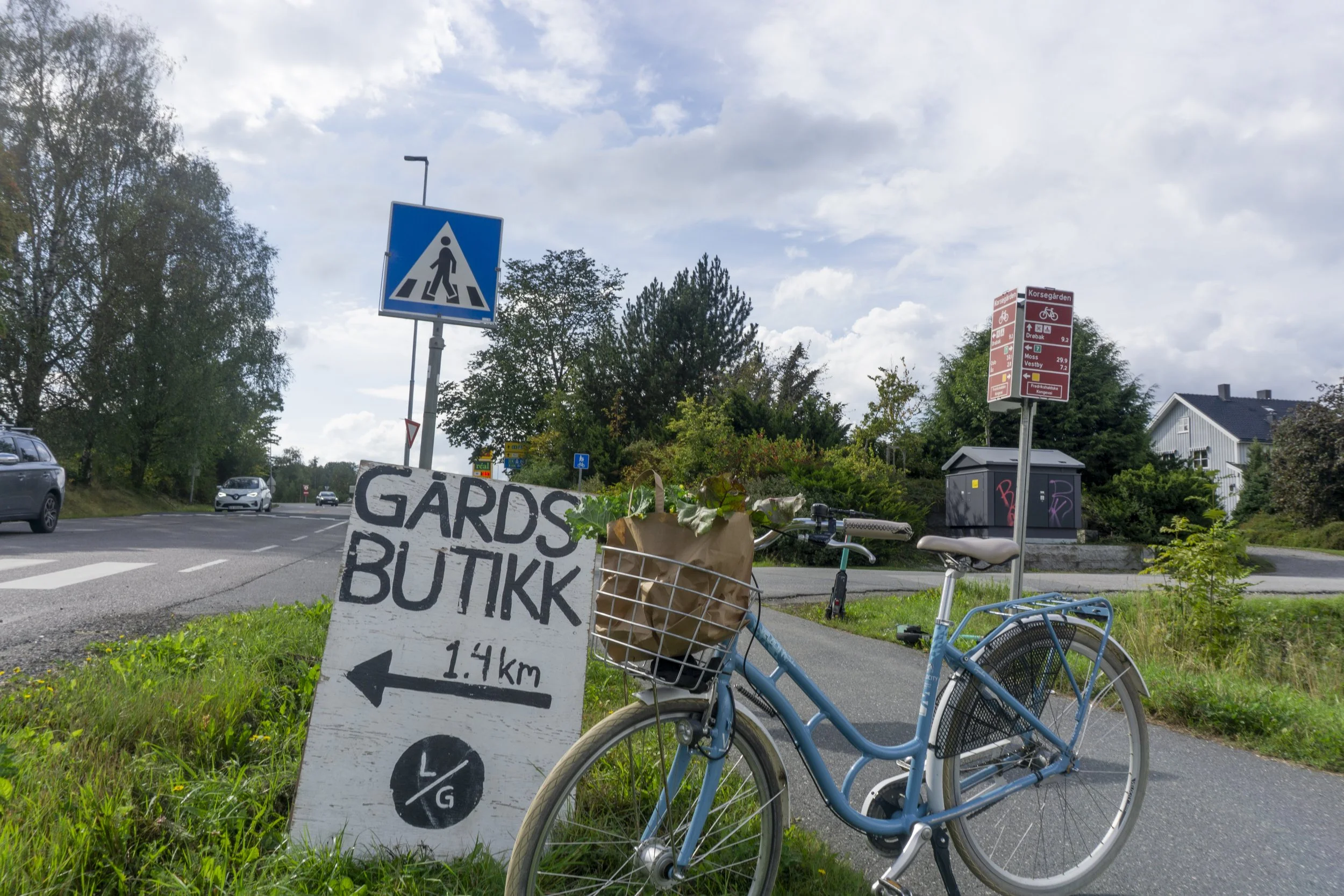
If you cycle from Campus and turn left onto Gamle Mossevei, you’ll eventually find a small country road winding between golden fields on your left. Follow it, and it will lead you straight to Linnestad Farm.
Photojournalist: Marie Tjelta
Translator: Theodor Kalager
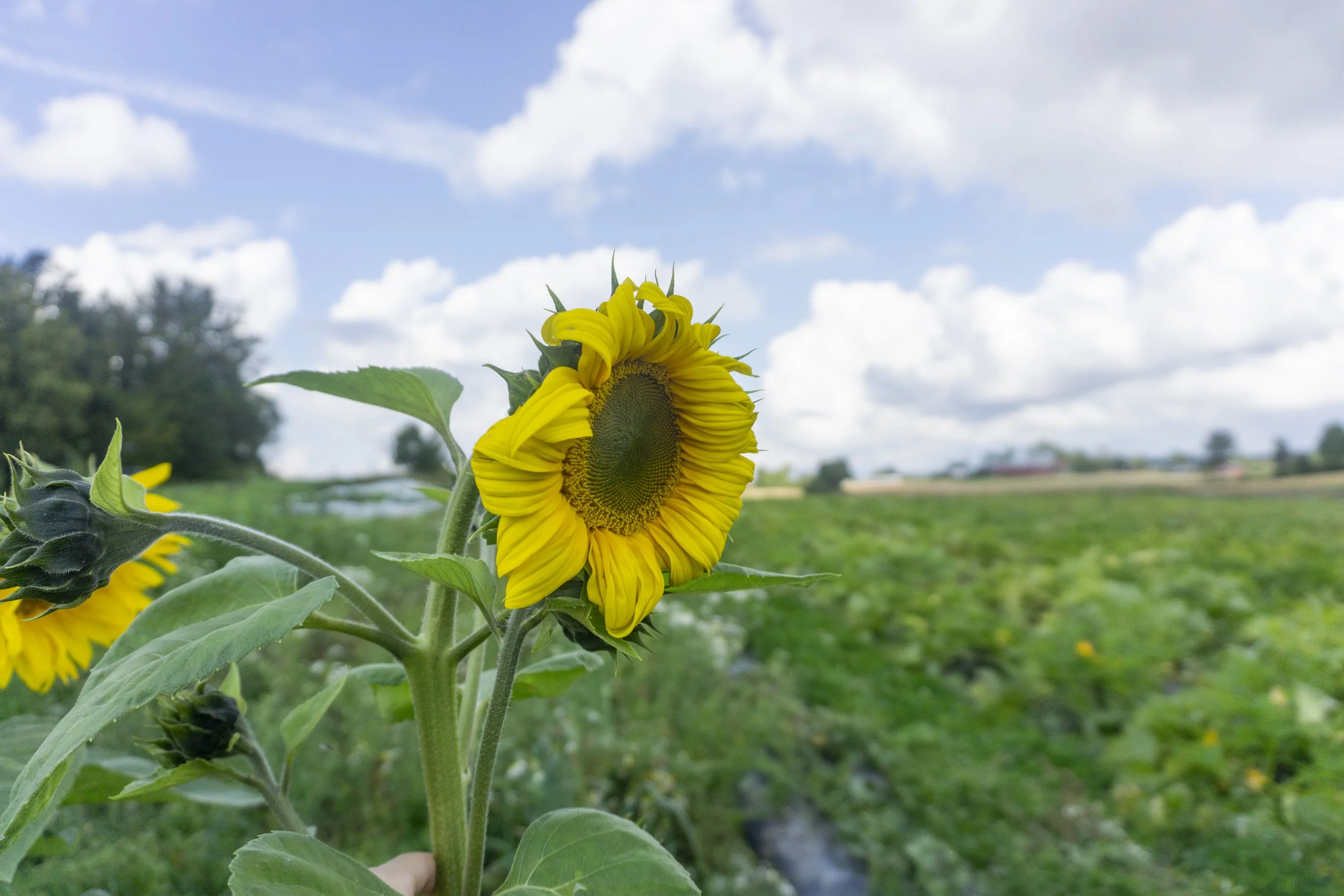
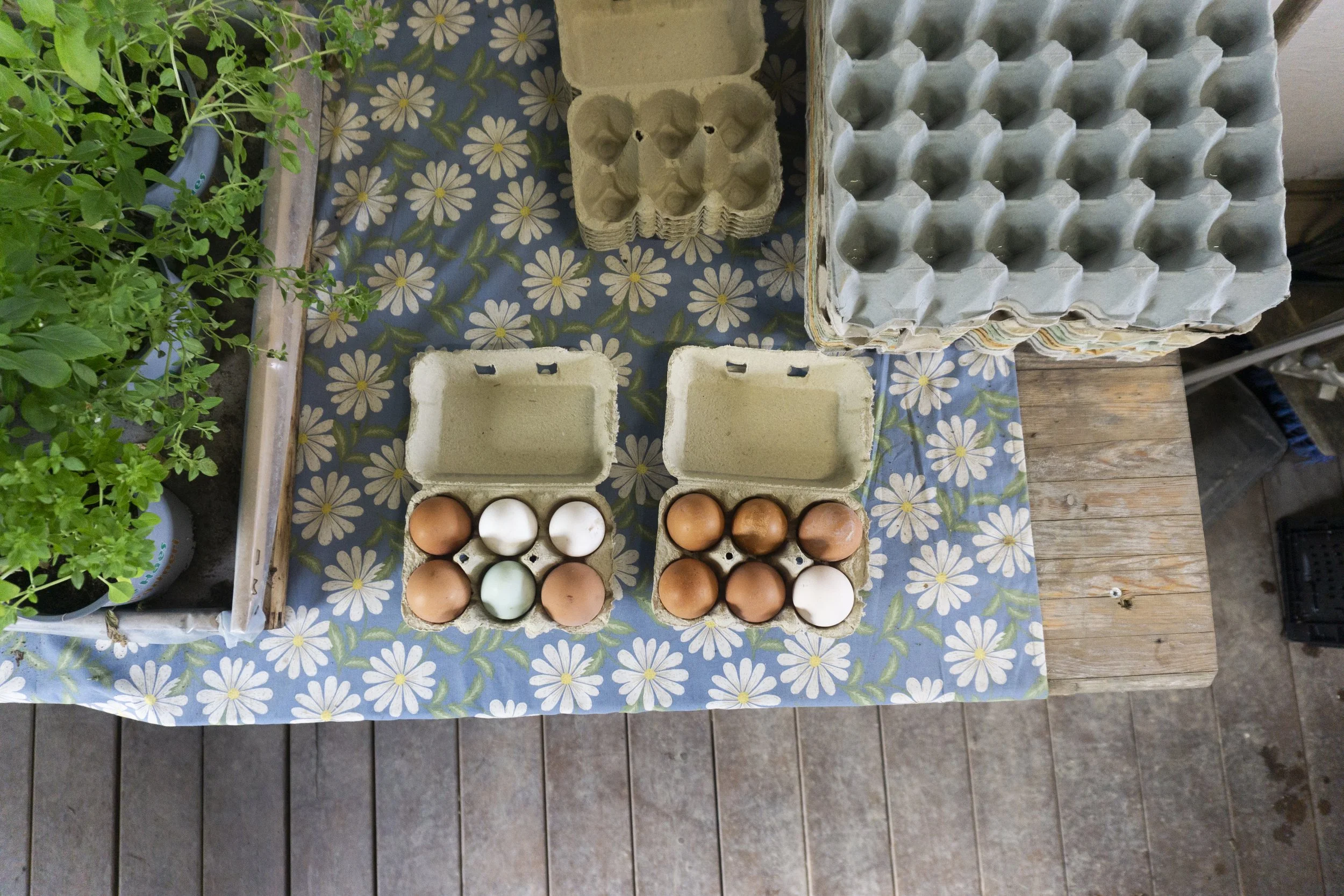
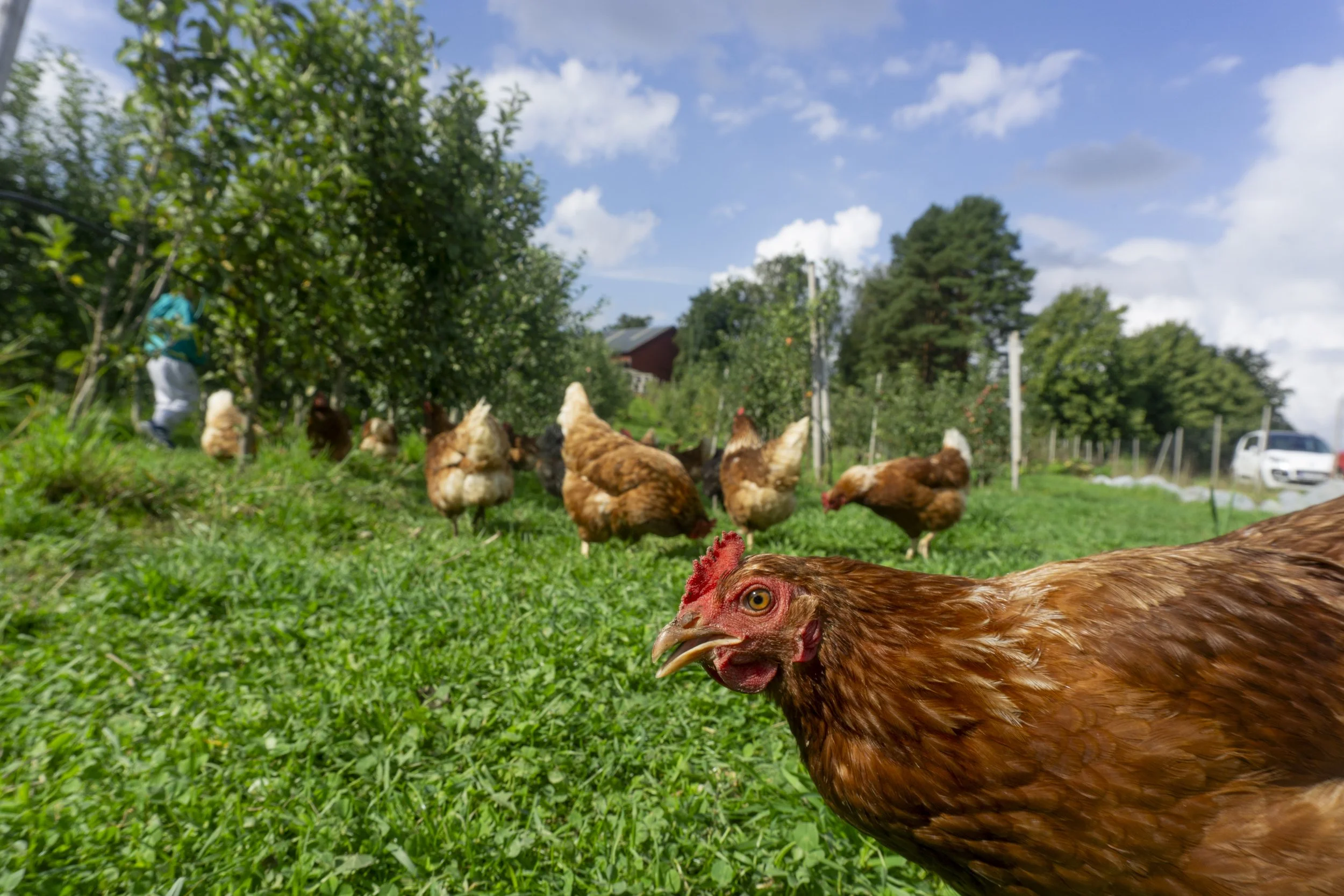
There’s no mistaking that you’ve arrived when you hear the buzzing life of bees, see butterflies dancing, and hear the cheerful clucking of hens. Around the courtyard, green plants and sunflowers lift their heads toward the afternoon sun. Here, the land is cultivated organically and sustainably – without pesticides or artificial fertilizers. The principle is simple: from soil to table, fresh and local.
Behind this initiative is Morten Jerven, a lecturer in development studies at NMBU. What made him choose this life, and how does he make it work? Tuntrèet sat down with Morten over a cup of coffee to hear the story of Linnestad Farm.
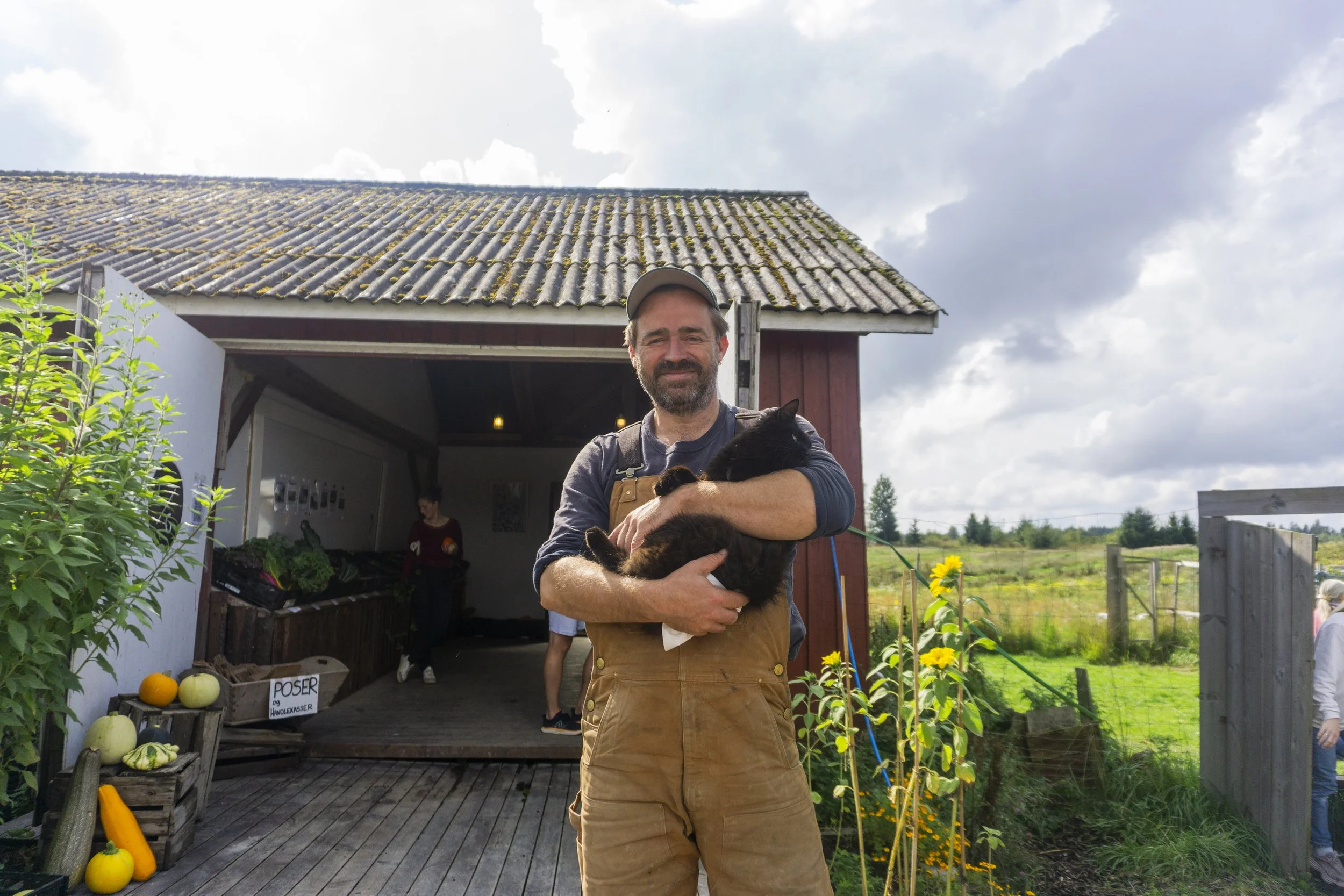
The farm shop is located in a red-painted house, open and welcoming, with tables and benches outside and hens strolling under the apple trees in the backyard. Inside, crates full of vegetables await: kale, beets, corn cobs, herbs, pumpkins, and squash – all harvested the same day. You can also buy honey and eggs from the farm. If you drop by on the weekend, you’ll be greeted by the smell of freshly baked waffles and freshly brewed coffee. Students are also considered, with a 30% student discount and a special offer on the “super squash” for 25 kroner. I sit down with Morten outside the farm shop. He’s wearing brown carpenter’s trousers and a down-to-earth smile.
How Linnestad Came to Be?
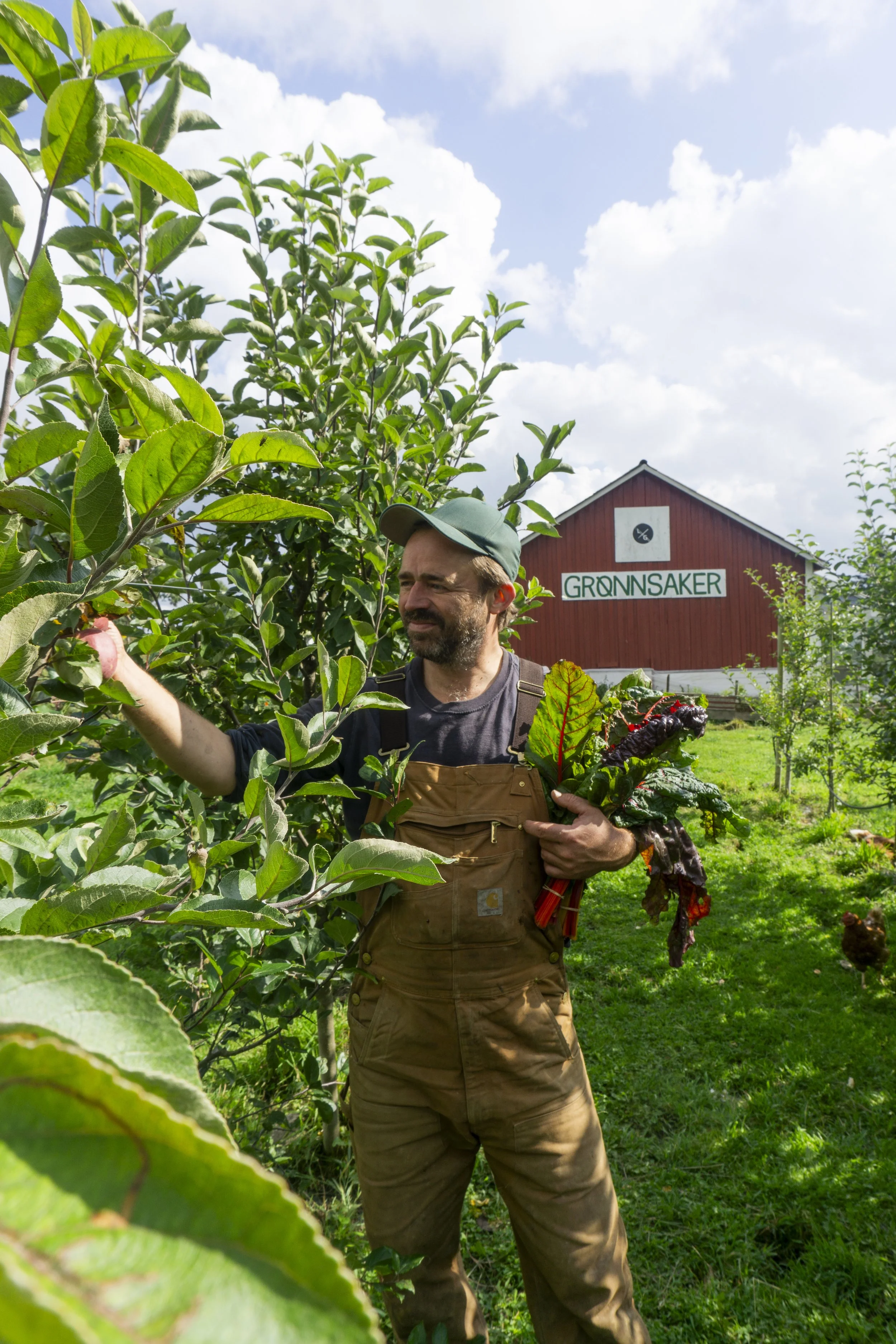
Morten was born and raised on Linnestad Farm in Ås. Like many young people, he once dreamed of getting far away from his hometown. He set off on an academic journey that took him to several countries, including London, where he earned a PhD in economic history. In 2014, he was offered a job at NMBU, and when he returned to Ås, the idea of creating something new on the family farm began to take root.
It all started as a reaction to the lack of organic vegetables in Ås. Morten had lived on the west coast of North America and in France, where he had become accustomed to a much richer selection. He could cook healthy and flavourful meals from scratch using high-quality ingredients. When he came home, he discovered that this wasn’t possible in Ås. Like many other farms in the municipality, the land at Linnestad had long been leased out for commercial grain production, where pesticides were a given. But Morten wanted something different. Together with two other students from the university, he began cultivating a small half-hectare plot. “We started simply, with seeds and potatoes,” he says, pointing to a part of the field. Eventually, they grew more than they could eat themselves – and that’s when they started selling the surplus.
It was around this time that restaurants in Oslo began to take an interest in high-quality, organic, and locally sourced ingredients. Today, they run both a farm shop and supply REKO-rings and Michelin-starred restaurants in Oslo – including the three-star restaurant Maaemo. They also supply the Prime Minister’s residence and the Royal Palace with what has been called “the world’s best strawberries.” Their produce also reaches students through BUA.
These days, Morten alternates between teaching, reading, and writing – and spending his free time growing organic vegetables. Since 2014, Linnestad has become a completely new farm. “Just look at how it looks here,” he says, letting his gaze sweep across the landscape. He smiles: “Since I switched to organic farming, it smells different, it sounds different. I have frogs, mice, rats, and birds.” Life has returned to the farm.
Farming With Nature – Not Against It
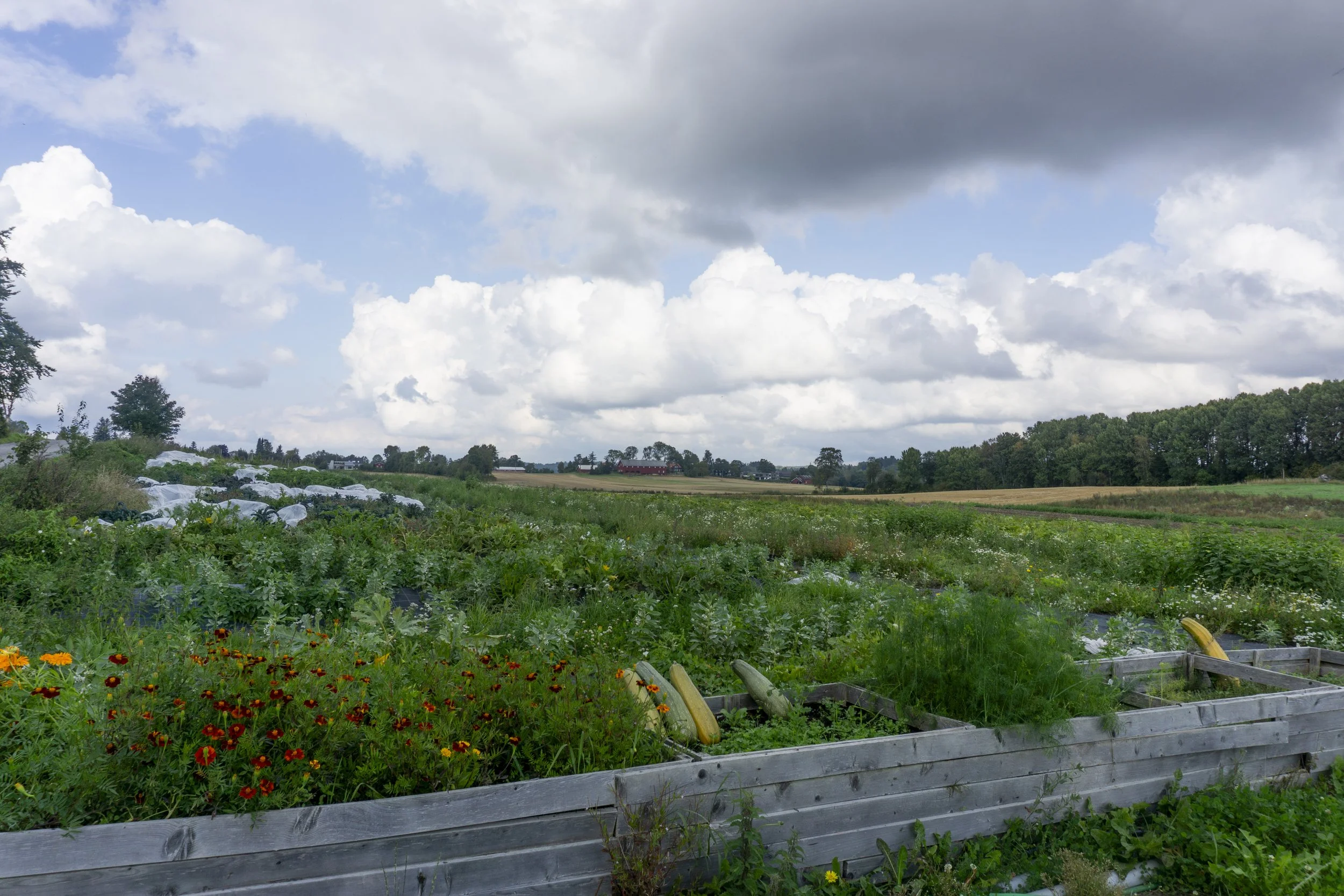
Morten emphasizes that Linnestad farms with nature, not against it. “Sixty decares is enough to produce barrels of food that go straight from the field to the table – ideally consumed just a few kilometers from where it’s harvested.” Still, he’s noticed that organic farming faces resistance. “If there’s one thing Norwegian farmers fear, it’s losing their pesticides,” he says. He points out that even Jon Almaas, in Jon Blir Bonde, faced criticism after speaking positively about organic farming. Morten himself has encountered resistance from local farmers and politicians.
He holds up a bunch of kale from a crate. The leaves are fresh and green, but with small holes here and there. “Many people are afraid of vegetables like these, because kale-worms have been at them. But that’s a good sign. Think about the vegetable in the store that’s so full of chemicals that the worm doesn’t dare take a bite – do we really want to eat that?” To keep weeds and pests at bay, they use other methods: crop rotation, row planting, flaming, mechanical weeding – and most importantly, hands. “Organic farming means we care about quality at every stage. Most of the vegetables here are hand-sown, hand-weeded, and hand-harvested. Every single vegetable has been treated like a small piece of craftsmanship several times throughout the process.”
He sighs a bit over how agriculture is measured, especially when comparing commercial and organic farming. You can’t just focus on calories per square meter; you must also consider nutritional content, sustainability, biodiversity, and how much water and carbon the soil retains. “It’s a skewed equation,” he says.
Morten believes we can change what and how we eat. “I eat meat, but we don’t need to eat as much as we do today. If you cook with good vegetables, the pork chop or dry chicken fillet often gets pushed aside – and you discover how much flavour the vegetables actually have.”
At Linnestad, the same principle applies to animals as to vegetables. “The organic umbrella doesn’t fully capture how well our hens live,” Morten says. He explains that regular organic eggs often come from hens that live much like in industrial systems – with only theoretical access to the outdoors and still traumatized. “Our hens roam completely free. They’re called pasture hens and live with 7–8 roosters. The flock is cared for by the roosters.” The hens wander around the apple orchard, mowing the grass, fertilizing, and eating fallen fruit that helps prevent disease. “Other laying hens are worn out after twelve months, eventually featherless and no longer laying eggs. Ours live a natural life cycle.” Morten walks over to the orchard and gives the visiting children some old bread to feed the eager hens.
Students and the Farm
Morten especially hopes that students will discover the farm. Linnestad has collaborated with both BUA and Food Sharing when they’ve had surplus vegetables, and the farm has also been a workplace for several students. Sometimes they’ve organized volunteer days with waffles or soup, where students can fill their bags with what they harvest. Others have been paid by the hour. “I have a personal interest, as a professor, in students eating well and healthily. I also think it’s great that people become more aware of organic products – especially here in one of Norway’s largest agricultural municipalities. And I believe the student group at the university can be a driving force for changing attitudes and policies in Ås municipality in general.”
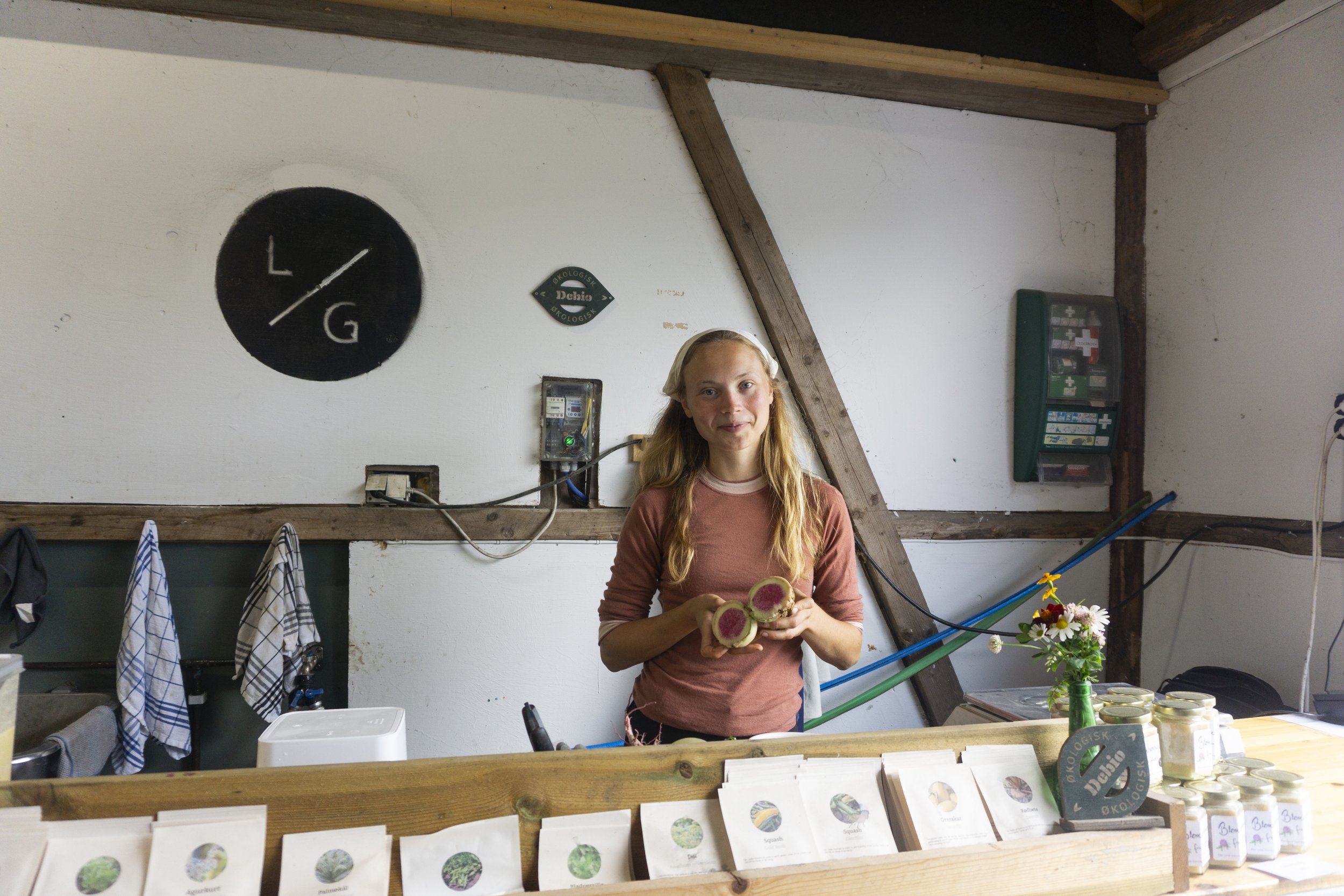
In the farm shop, we meet Ingeborg Græsdal, who’s behind the counter. She’s in her third year of a bachelor’s in International Environment and Development Studies and has worked regularly on the farm since she met Morten through a course. “I like having something different from my studies – something I can do with my hands,” she says. Ingeborg emphasizes how valuable it is to combine theory with practice: “It gives you something completely different than what you can read about.” She highlights how pleasant the workplace is – and the customers who care about where their food comes from. Many families with young children come to shop, but also for the experience. “Being able to show kids where food comes from – and even let them pick apples or squash themselves – I think people really appreciate that.” When asked which of the vegetables they grow is her favorite, Ingeborg answers without hesitation: “Watermelon radish.” She grabs one, slices open the yellow radish and reveals a bright pink core. The journalist gets a taste: fresh, sharp, and full of flavour. “Every fall I pickle several jars of these. Pickled radish with dill, parsley, and spring onion – it’s one of my absolute favourites.”
With a bike basket full of vegetables, Linnestad Farm disappears behind the hilltop. It feels good to see with your own eyes where food comes from, and to get a clearer picture of our food systems – with their strengths and weaknesses. Being aware may be the most important thing we can be as consumers and students.