TO NOT GET INTO AN ASSOCIATION
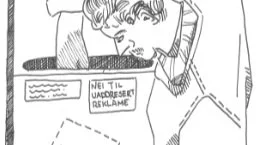
TO NOT GET INTO AN ASSOCIATION

In Ås, the student association life is flourishing like never before. There is something for everyone, from those who dance to those who sing, from those who drink to those who knit, and even those who love to dress up as pirates. A truly unique world of opportunities, but is it really open to everyone?
Journalist: Marie Tjelta
Illustrator: Anna Bjørke
Translator: Sofie Palmstrøm
Web-distributor: Martha Ingeborg Evensen
Behind the lively association facade, there is a backside that is not always visible. The traditional and well-established associations keep a close watch on their ranks, and they themselves decide who gets to join the fun and who must remain on the outside. With a growing student population, the chance of becoming a part of these exclusive circles has become increasingly slim.
Even though the majority of those who apply to these associations get rejections, it remains a highly stigmatized topic. We now want to give a voice to those who have received the bitter rejection and did not get into the association of their dreams, and explore how this affects student life in Ås.
Those Who Were Rejected
We got in touch with three different students who have experienced rejections from associations. Two of them wish to remain anonymous, while Synne Louise Stromme has chosen to provide her full name. We’ll refer to the anonymous ones as “Nora” and “Emma.” Synne and Nora were interviewed together, while Emma answered the questions in writing.
Why did you want to join an association?
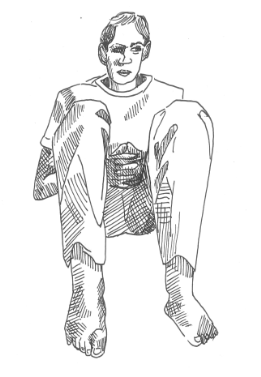
“For the social aspect, simply put,” says Synne. “To expand the social circle, for the security of being part of a group and experiencing new things.” Emma enjoys singing and, therefore, applied to one of Ås’ choirs as it offered a nice combination of being social and meeting people with the same interest. “The opportunity to be a bit peculiar with a group of people,” Nora laughs. She describes club life as a bubble within the social environment in Ås. A bubble within a bubble.
How did it feel to be rejected, and how did it affect you mentally and socially?
Synne says she applied to the same club twice. The first time, she didn’t take it too hard not getting in because she was new and just threw herself into it. Besides, she had other responsibilities and engagements. However, the second time was much harder than she had expected. “Now, I’ve completed several volunteer positions and was looking forward to joining a social club where the focus was mainly that, but then you get a rejection, and you’re left thinking that “now I don’t belong to a group anymore””. It’s not as easy to dive into all the weird stuff happening here in Ås when you don’t have a group to hang out with.”
Nora and Emma also share that receiving the rejection itself is very painful. Emma had already envisioned her life in that association, so getting rejected felt like a blow in the face. “You spend the whole day waiting and waiting, and when it finally arrives, you’ve built up thoughts in your head, so it can be very heavy when you finally get the rejection,” Nora adds. Moreover, it becomes difficult and embarrassing to meet the club members again when they know you didn’t make it. “How open can you be with them about how disappointing it was, in a way?”
Synne also mentions that it can be especially hurtful because you’ve given so much of yourself. In the initial interviews for many social associations, they set the bar pretty high. “You’ve opened up and exposed yourself, and then you get the rejection on top of it, and it becomes a bit extra difficult... you’ve been vulnerable in front of some people, but it ultimately didn’t matter,” Nora adds. “You can feel from some associations how strict this admission process is. They will look at you thoroughly to see if you’re good enough for them”. Synne concludes, saying that even though it’s supposed to be fun to apply, it can be quite taxing on a person.
Emma says she had a good time studying with many close friendships in Ås despite not being part of an association. However, she feels like she’s missed out on a small part of the student experience at Ås. “Are you in any associations?” It almost feels a bit embarrassing to say I’m not, even though I have friends and I’m active in other aspects of student life.”
Do you still want to apply to an association? Has the rejection affected your motivation?
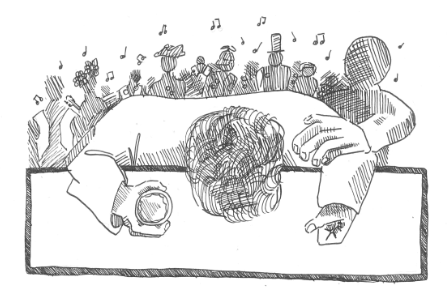
Nora says that in the first few days after the rejection, she was very down, but eventually, motivation and enthusiasm returned. “Fuck no, I’ll try again, I’ll make it, I know what I need to work on.” However, after a few weeks back in normal life, Nora wonders if this is what she truly wants. Instead of focusing on what’s wrong with her for not getting in, she’s taken a step back and asked herself if it’s the right thing for her.
For Emma, the answer is no. “In the years after I was rejected, I didn’t have much desire to apply again. I had the mindset that if they don’t want me, I don’t want them.”
Synne says she feels torn about applying again. “I’m a bit hesitant about trying again, but I also know that there are other associations that might suit me.” Nevertheless, life goes on, and it’s difficult to control what will happen during the semester while waiting to apply again. Suddenly, you end up with new responsibilities because you needed something to fill your time, or it’s time to write a bachelor’s or master’s thesis.
Nora further notes that the long gap between admissions held each semester is very demotivating. Over the course of half a year, you see the club having a lot of fun, and you can’t help but feel like an outsider. “I catch myself thinking: oh, now they’re doing that, I could have been there and been a part of it, but instead, I’m on the other side... it pushes me in the opposite direction... I just want these feelings to stop.” Moreover, the fear of facing another rejection can also hinder the motivation to apply again. If you put in even more effort the next time, it becomes even heavier to face rejection.

Do you have any advice for other students in the same situation who have been rejected?
Both Synne and Nora say that talking to friends helps. “Just be straightforward and say it sucks.” Speaking about your feelings and getting positive feedback from friends can greatly help with self-esteem and mental health. “It’s important to use the support network around you,” Nora continues.
Synne points out that it’s important to distance yourself from the situation and look at it logically. “It’s hard to remember, but associations have limited space. One has to keep in mind that they can’t accept everyone who applies every time; otherwise, it wouldn’t be an association anymore.” Nora adds that there are often practical reasons for not getting accepted, such as not needing more people of a certain gender or not having a need for what you can contribute.’
Emma emphasizes that being part of an association is not mandatory for a meaningful student life. “You can volunteer in the community, attend events with a study association, or maybe join a sports team. And if you really want to join, there’s no shame in applying again, even though I didn’t dare to.”
Is there something the student community should change?
Synne points out that associations should consider how they promote their admissions. Many associations go all out during the recruitment period, trying to get everyone to apply. They can make you feel special, and that the association wants you. She emphasizes that this can lead to not having a realistic view of the admissions process and can result in even greater disappointment if you receive a rejection. “It’s a huge blow when you don’t get in, especially when you’ve been encouraged by everyone in the association to apply.” Nora adds that associations could consider giving hints about how many members they need and what kind of people they’re looking for.

The student community should also promote the idea that it’s okay to start your own initiatives. “If you feel like you don’t have a place where you belong, start something yourself!” encourages Synne. Associations should primarily be places where you can find like-minded individuals. Moreover, it should be easier to join activities without being part of an association, adds Emma. “There are many events mainly for associations; maybe it should be made more accessible and acceptable to sign up as a group of friends.
Behind the Association Facade
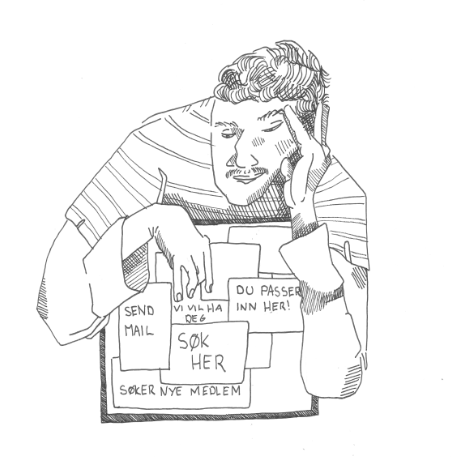
Tuntreet contacted the associations in Ås to get a better understanding of how many students apply and how many don’t get in. It was difficult to obtain a clear answer. Many of the exclusive old associations are secretive and want to keep admission figures hidden - even from their own members. Nevertheless, we received some anonymous responses. The most concrete answer we got was that a few years ago, everyone who applied to this particular association was accepted, but as the club became more established, they had to reject more applicants. “Last year, 72% of those who applied were accepted, but this year, there were many applicants, so we could only accept 37% of them.” Another association mentioned that 30% of applicants were accepted, and this had been a consistent trend in recent years. Some stated that they have a limit on how many members they can accept according to their statutes.
One of the choirs in Ås, however, replied that they couldn’t share their admission numbers, but they wanted to clarify why not everyone gets in. “What I can say is that we often have more applicants than the number of members we take in. There’s also a great variation in how many we want to accept each year, and of course, how many choose to apply... You can be unlucky and not get into the choir precisely because your voice isn’t needed that semester, but it might be needed the next. That’s why many members apply multiple times before they are accepted.”
More “Open” Associations
How do different support networks for students at NMBU, like Ås Health Center and SiÅs handle the outsiderness that can come as a consequence of the association life?

Tuntreet reached out to Ås Health Center, where we received a response from nurse Pia Lund Eriksen Onsaker, who was willing to comment on the issue. We asked if the Health Center had noticed how association life affects students’ mental well-being. “Being part of an association can mean a lot to new students in terms of making friends, counteracting loneliness and outsider status, and contributing to a community, taking responsibility, and experiencing success. Unfortunately, ShoT statistics show a negative trend in mental health. Being social in association life is something that, for many, can have a positive impact and, ideally, serve as a counterbalance. However, it presupposes that students are well-received in the associations.”
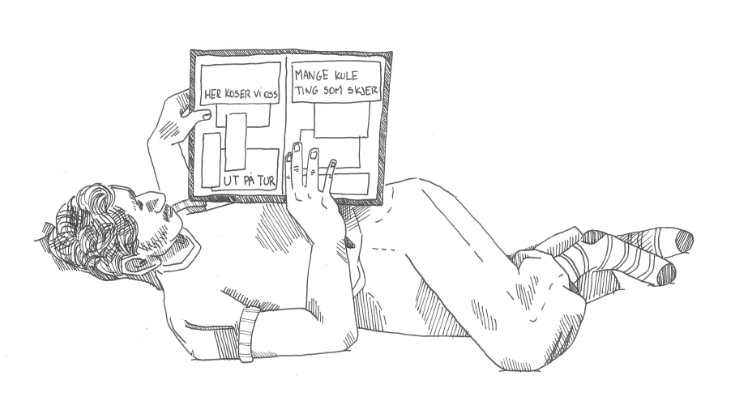
SiÅs Student Life Center has also noticed how clubs affect students’ daily lives and health. Student Life Coordinator Marit Raaf has actively worked to promote more “open associations.” She explains, “I think many students carry experiences from the past of not being good enough, not being popular enough, not being part of the right group, or not being on the coolest “russebus”.” She goes on to explain that moving away from home offers the opportunity to start anew. Both new friends and activities are on the horizon. Therefore, experiencing another rejection, even if there’s no other explanation than not fitting in with the others, can be very challenging.
Both Raaf and Onsaker mention that there are many so-called “open associations” on campus without admission tests that are eager to have more members. They believe these associations are important and should be promoted. In collaboration with AU and Samfunnet, the Student Life Center launched the “Open Association” project during the spring. From the autumn semester, the open associations have their own stamp in Thorvald and Tora, and Samfunnet’s website provides an overview of all open clubs.
It’s easy to forget those who fall into the shadow of the vibrant association life in Ås. Far from few receive rejections; in fact, most applicants are turned down. Nonetheless, it feels lonely and heavy. Should this be changed, or is it simply a result of having associations in Ås? Regardless of whether you stand on the outside or inside the association threshold, perhaps it’s time to start talking about it.