Lack of space in the Veterinary building’s 63 000 m²
Lack of space in the Veterinary building’s 63 000 m²
Last year it got known that the university has decided to co-locate animal sciences, aquaculture and veterinary medicine under the same roof in the Veterinary building. This is a decision that in retrospect has gotten a sea of complaints from the veterinary and veterinary nursing students, that already feels like there’s too little room in the building. As most “non-VET-students” here at NMBU, it was difficult for me to understand that a 5-year-old building of 63 000 m² that cost 9,8 billion lacks space. Therefore, I saw no other way out than to take a deep dive into both the building and the sea of complaints.
Journalist: Mari Sofie Skjærseth
Photographer: Lars-Børge Waag Strømsvik
Translator: Helene Edith Nylehn
The Veterinary building
The building of the Veterinary building was decided in 2008, after a fusion of the Norwegian School of Veterinary Science and at the time the University of Environment and Life Sciences was passed by Stortinget. The work started in 2016, and the finished building was officially opened in fall of 2021. The building had a total budget of 9,8 billion (originally 6,9 billion) and is one of the most expensive university buildings in Norway, as well as one of the most advanced buildings withing veterinary medicine, science and diagnostics in Europe.
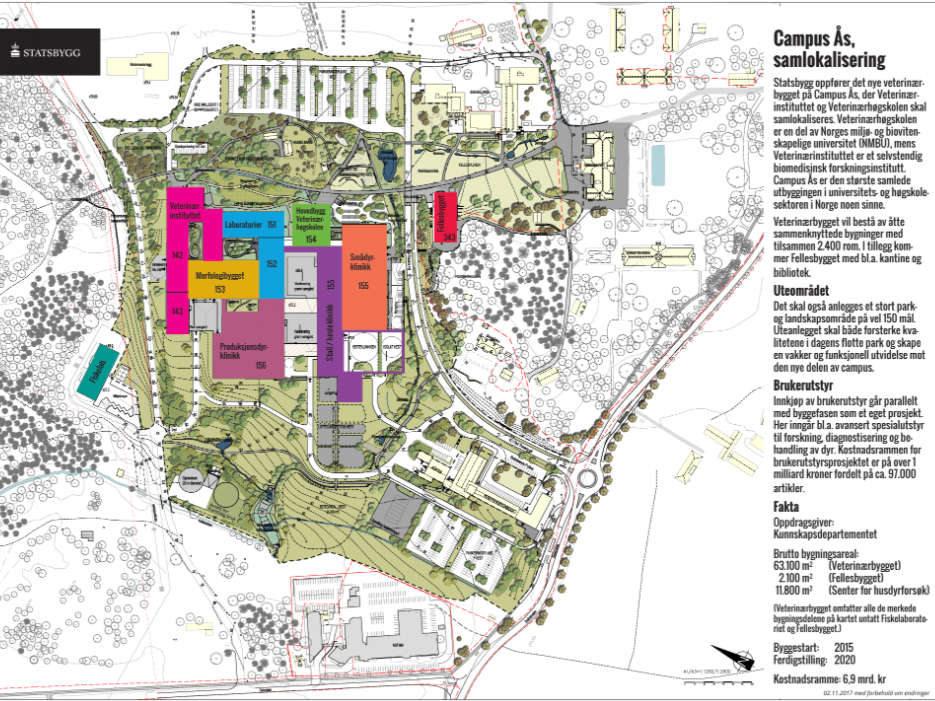
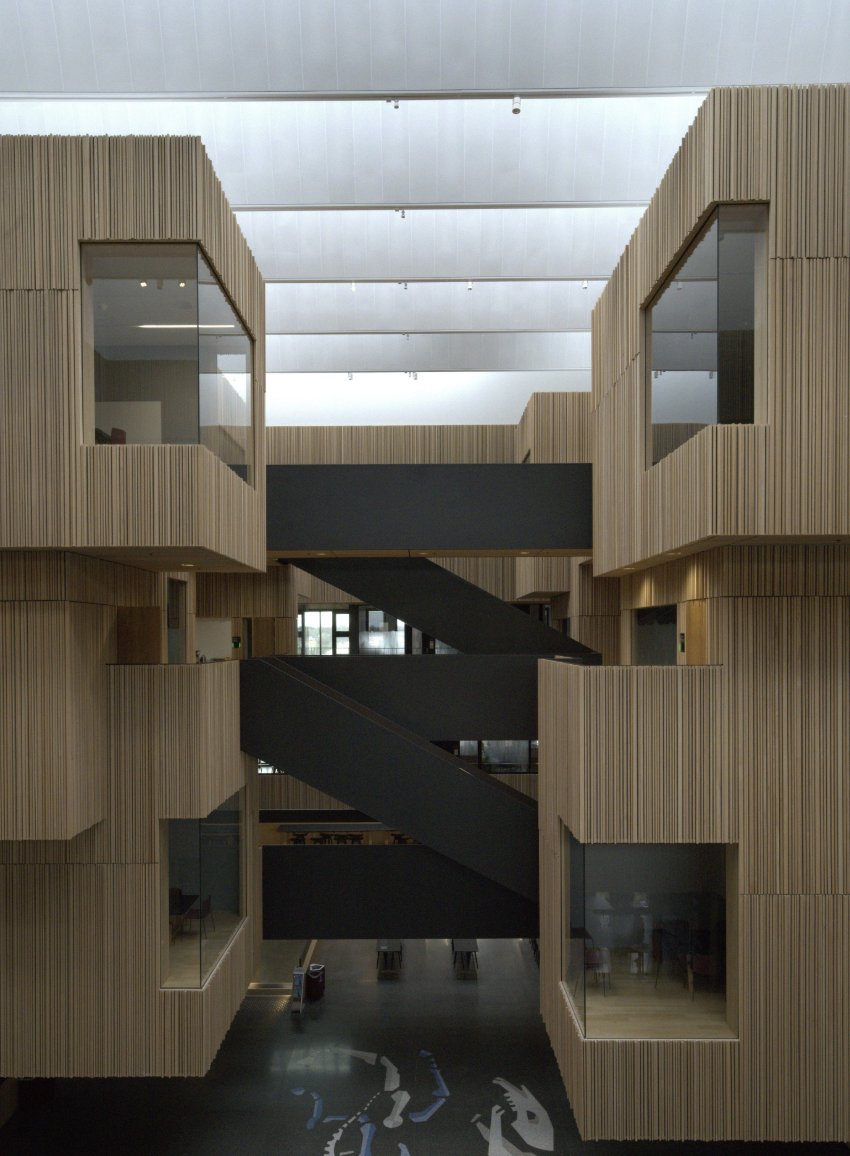
The Veterinary building is actually a complex of eight buildings meant for research, teaching and clinics, with a meeting point in the entrance Hippocampus. Therefore the high ceiling has a symbolic meaning. According to the architectural firm behind the Veterinary building, Fabel Arkitekter, this is one of Norway’s most difficult and extensive buildings projects ever. The reason for this is the wide range of complex functions that must be perfectly coordinated, such as infection control, handling of biological material, laboratories and animal care. In addition, the building is designed to accommodate around 700 students and 900 staff members, spread across 2400 rooms.
The building consists of, amongst other things:
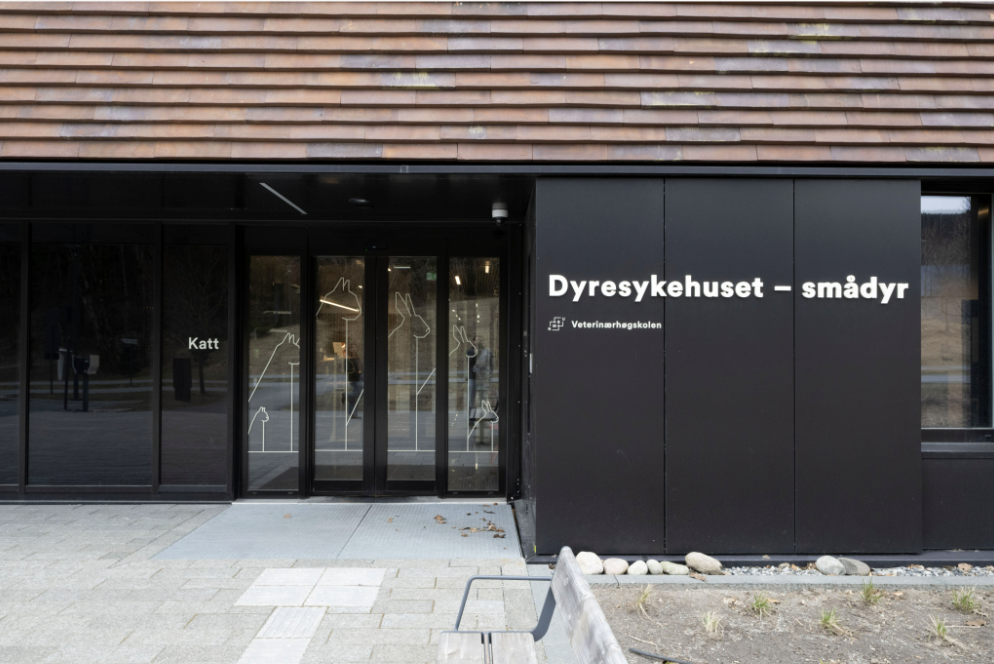
One veterinary hospital of ca. 14 000 m²
7 floors with laboratories of ca. 14 000 m²
1700 m² with technical rooms
800 office spaces
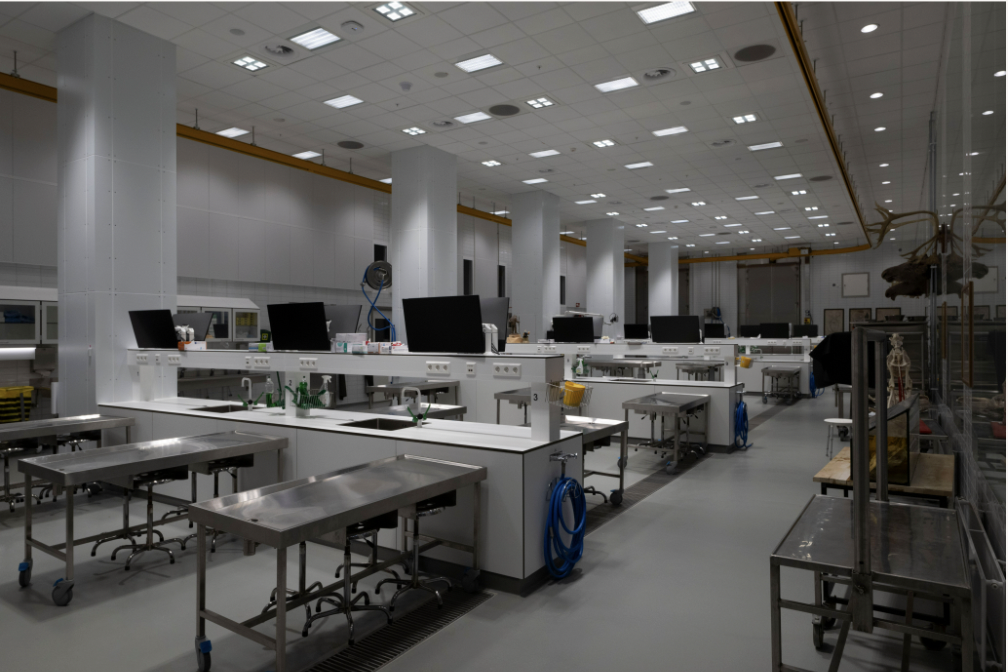
49 horse stalls 21 artworks worth 17 million NOK 16 autopsy- and dissection halls
9 operating rooms
7 teaching rooms
As well as a new 150-acre park
Co-location
Even though it has been argued that a co-location between VET and parts of BIOVIT is good for the connection of academic communities and fostering greater collaboration across disciplines, it is no secret that the main driving force behind it is financial considerations. The university board has orders from the government to lower their costs by reducing land use by 5-10%. A co-location between these faculties would make it possible to remove the Animal science building and with that get closer to the goal on reduction in area.
Lack of space and communal areas
To get a more concrete understanding of the complaints from the student masses regarding the co-location, I have collected feedback from over 100 students during my deep dive – mostly veterinary students. Which have been overwhelmingly negative, where almost all of them complain about the lack of space and good communal areas.
Even if VET-students, especially the younger years, now lives well with the rest of the student masses here at NMBU, the faculty still has their own traditions, events and identity. Several are therefore sceptical about the moving, either because of the fear of how it will affect their distinctive culture and the feeling of their own veterinary school, or because the students that will be moving in can experience bad integration. Yet the responses are split, where several are positive of getting other students in and thinks it can be exciting and good socially.
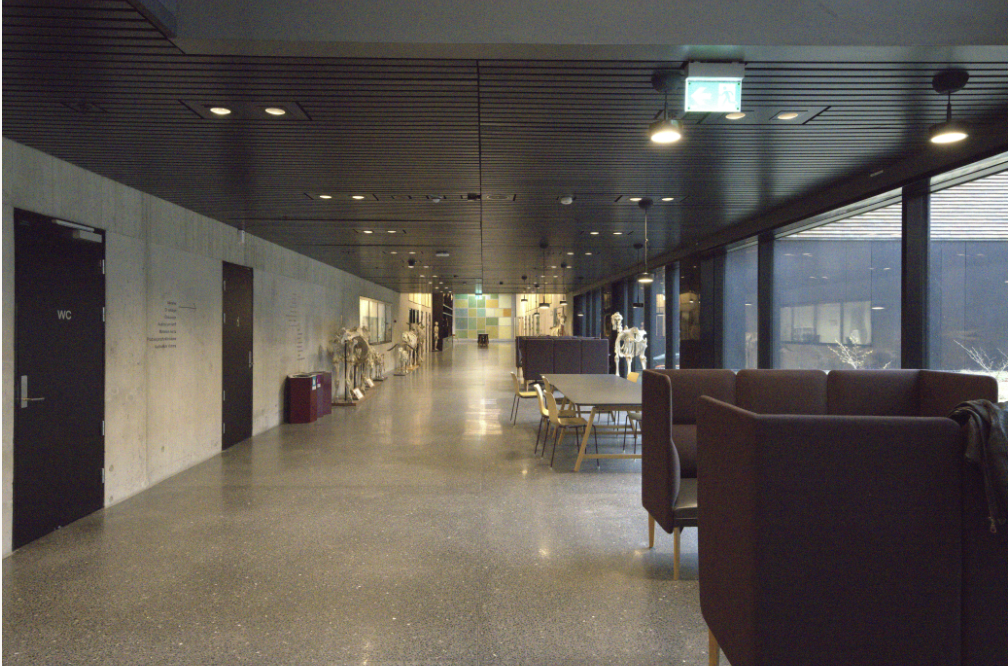
What everyone seems to be negative to on the other hand, is the lack of space. Because even though the building is big, there is actually very little of the area that students have access to. Several bring up that there is already a battle for the group rooms even in the evening, especially during exams. It is also mentioned that several of the auditoriums are too small for full veterinary classes, lacking study areas, communal areas and not least, places to sit during lunch. The seats that exist are seen as bad and lacking, particularly high tables with bar stools are mentioned several times. Which is why people are scared that the co-location with get negative consequences for the student environment, both for VET- and BIOVIT- students.
On the question of how students perceive that the administration and faculty respond to the situation, several feel very little informed and heard. It’s mentioned that the lack of space has been in discussion for a long time, but without any noticeable change and response. Many sit with a feeling that the administration doesn’t care or doesn’t realise how bad the lack of communal areas and space is and will be. In addition to the frustration over lacking change from the administrations side, it’s mentioned that there’s been episodes where students themselves have taken initiative to creating better seating and communal areas, to then see the administration/EIA remove or change it without providing equally good solutions. Even though most are happy with the building’s aesthetics purely in terms of appearance, it seems like the frustration regarding space is increased by the amount of unused area that exists. Impressive, stylish rooms, such as Hippocampus, only serve to highlight the problem when you see the amount of unused floor space and open air.
The move-in
Among animal science and aquaculture, the mood is perceived as more unsure and nervous. Several have heard about and expressed concern regarding the lack of space, as well as a fear of being passed around the building. Some also show a concern that it seems to them like the veterinary- and veterinary nursing students don’t want them there, and don’t want to become a source of frustration for the other students. Again, bad information and communication is being brought up. This amplifies the uncertainty, especially when the moving is going slow and has been postponed several times. Apart from the uncertainty and the negative responses from VET, most seem generally positive to the moving – as long as they actually get space and their own social areas.
In total, after having read 110 pieces of feedback, it’s very clear to me that the Veterinary building has a serious problem of prioritizing aesthetics over the comfort of students, in addition to poor communication, that together has impacted the students negatively. My best recommendation is that the administration must get better at receiving feedback, and either implementing it or explain why it might not work. It would also be a good idea to provide a greater number of comfortable, student-friendly seating areas, furniture and social spaces. As well as learning the concept of «space efficiency » and maybe, possibly (definitely?) burn the bar stools in Hippocampus.