Glowing Ashes and Resolution = Revolution?
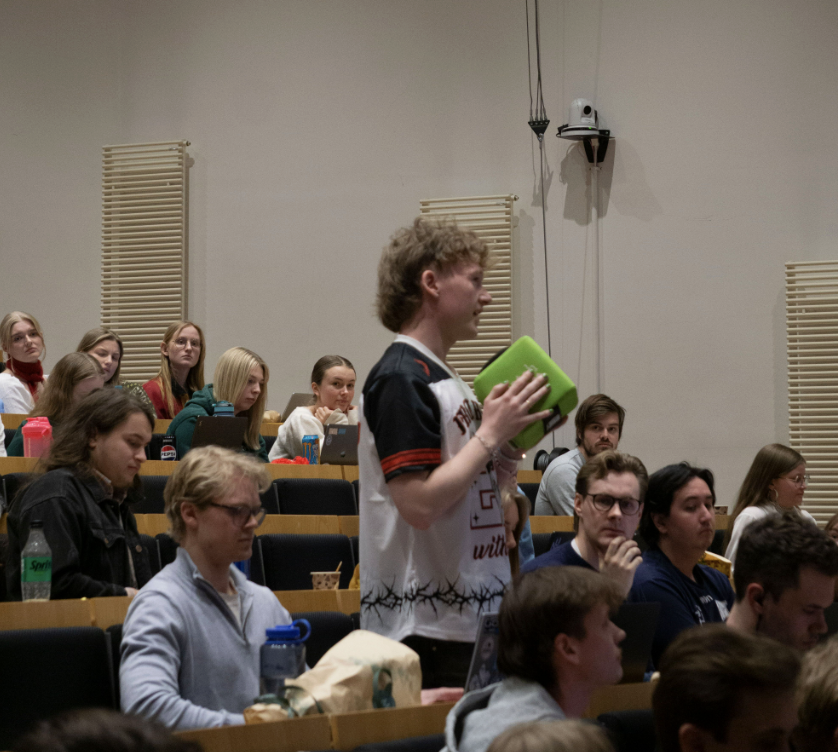
You’re done in the reading hall at 4 o’clock and have the whole afternoon to do whatever you want! What should you do? Tusenfryd? Eika? Maybe a coffee at Klubben? No, no, no. There’s only one right answer; general assembly!
Journalist: Siren Vårvik Matre
Photograph: Marie Tjelta
Translator: Helene Edith Nylehn
Translator: Ida Jystad
I don’t have many GA’s under my belt, but I still believe this to be a distinctive one. It all started at 17:08 in Åstveit Auditorium the 23rd of march. The lecture hall was full of snacks, GA-bingos and technical problems with the voting system. The general assembly was ready.
Resigning leader of Samfunnet, Oskar Solberg Lægland, started the party with an encouragement to not take the volunteering for granted, and announced that Aud. Max. is under status of «we think it will work». Hans Hovenhet Hestehoven blessed us with their presence and a status update. Samfunnet i Ås could proudly present that they had reached a total of 74% of their goals. Their financial reins had been a bit loose, which resulted in a deficit for 2025, but (and this is a big but, dear reader) Tuntréet made a profit! That hasn’t happened since… who knows. This year the paper turned in a «historically good surplus», to quote the resigning head of economics at Samfunnet.
Samfunnet has used over half a million on pizza, so I hope you got full during your community service.
After some change in the articles of association came the resolution. The resolution was whispered about before the pea soup, during the pea soup and after the pea soup.
The grammar police were out in force, nitpicking the articles of association before the climate accounts was presented.
The election committee got to both stretch and bend and then it was time for election. The position of editor got four times as many candidates as last semester (four candidates). The one and only candidate for leader of Samfunnet started their appeal with «I don’t love Samfunnet». Ragebait? I don’t know, but it worked at least. Either there was something calming in the pea soup or the resolution that tired people out because several elections went extremely peacefully. Luckily the benching party started when it was turn for head of administration and election committee. (And I have to thank Markus (unknown surname) for getting benched three times so I could cross it off my bingo).
Six good hours later the general assembly out in the dark march evening. All in all, it was a GA with good fire in it. Yes, it was a bit tight on spaces, long lasting and a few too many reports to keep focus up. But GA-meme-groups, soup and «the best debate GA has seen» got the hours to fly by.
The newly elected;
The Board of Samfunnet
Kristian Lund Vang – leader
Silje Kvernmo Stengrimsen – Head of Finance
Lisa Vo – Head of Events
Tuntréet:
Laura Wanvik – Editor
The business committee:
Karoline Skybak – Events coordinator
Selma Hegge – Administrative manager
Daniel Arne Olsen – Career Day Coordinator
Board of House and Finance:
Magnus Schie Larsen – Student representative
Election committee:
Isabel Daae
Trygve Refsnes
RESOLUTION = REVOLUTION ?
A resolution is “a decision, determination, or statement made by an organization or assembly,” according to the statutes of Samfunnet i Ås. You may already know what a resolution is, but for those who, like me, had not heard of resolutions before this spring’s General Assembly, I thought it was appropriate to include a definition.
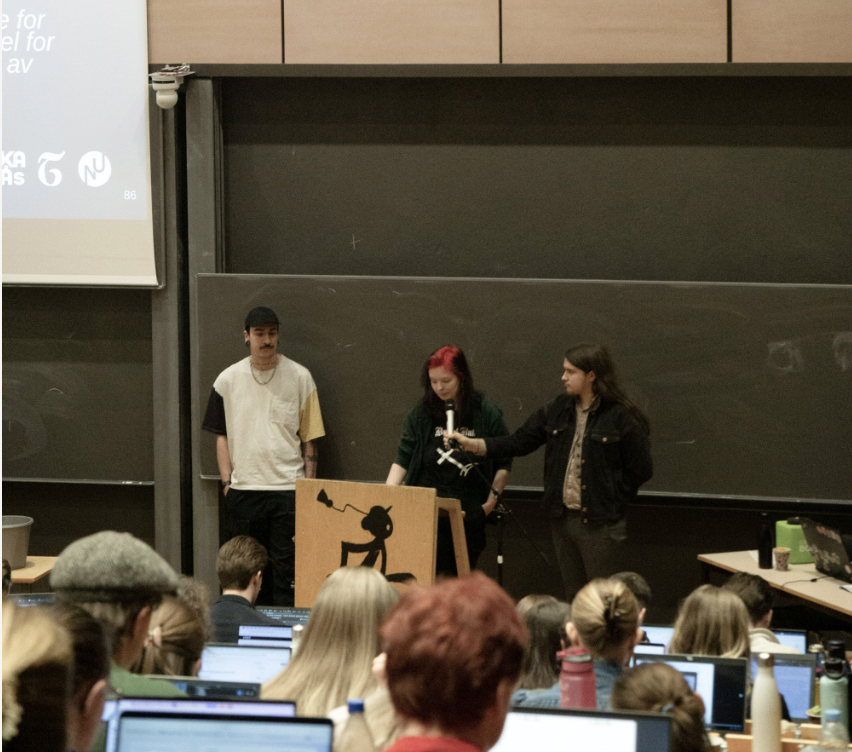
There is always one event that steals all the attention after an occasion. Sturla Holm Lægreid at the Olympics, or Will Smith and Chris Rock at the Oscars. For this spring’s General Assembly, it was case 8.3: Resolution concerning internal culture at UKA i Ås and Samfunnet i Ås in general, submitted by Radoslaw Dworak, Ronald Spro Lamarque, and Tonje Elise Holberg Rokstad. The resolution divided its criticism into three points. The first was over-professionalization. The criticism here was that the Society has become too rigid and formal, and that “volunteering has to be fun in order to function.” The second point concerned finances and the fact that money does not flow back to the volunteers. The final point was secrecy. The resolution pointed to what it described as excessive secrecy during UKA i Ås, which leads to others losing a sense of ownership of the festival. “A volunteer is just a servant meant to keep the machine running,” to quote the resolution proposal.
The House and Finance Board (HF) responded, stating among other things that “we do not agree with everything or believe all of it is justified.” They referred to the improved financial situation of Samfunnet, which previously had to live “from hand to mouth.” They emphasized that they aim to generate as much income as possible from the business sector (through NU revenues and UKA i Ås’ sponsors), and as little as possible from those contributing within the Society. In addition, they pointed out that the size and structure of the organization naturally lead to a degree of professionalization.Regarding secrecy, HF stated that it is necessary in some cases (e.g., due to privacy concerns), but that the intention is not to act in secrecy, and that the Board of Samfunnet and UKA i Ås can explain the basis for all decisions they make. They also highlighted surveys and evaluations that are sent out to capture suggestions for improvement.
This discussion in the case documents formed the basis for the debate at the General Assembly. There, people passed the microphone around as if it were dodgeball in elementary school. Members, committee members, and committee leaders alike contributed to the debate with their opinions and experiences. The spirit of volunteering in Ås was discussed, as well as the idea that “you no longer see the benefits of being a volunteer.” It was also debated whether this was an appropriate topic for the General Assembly at all, or whether it should instead have been addressed internally within the committees, as some committees were mentioned more than others.
The Board of Samfunet stayed out of the debate until the end, when the Leader of Samfunnet, Oskar Solberg Lægland, spoke. He spoke “on behalf of Samfunnet i Ås as an organization,” including the UKEboard. This was later clarified by the Leader of Samfunnet on the forum “Have you heard that…”, as it had not been clear during the discussion that continued online.
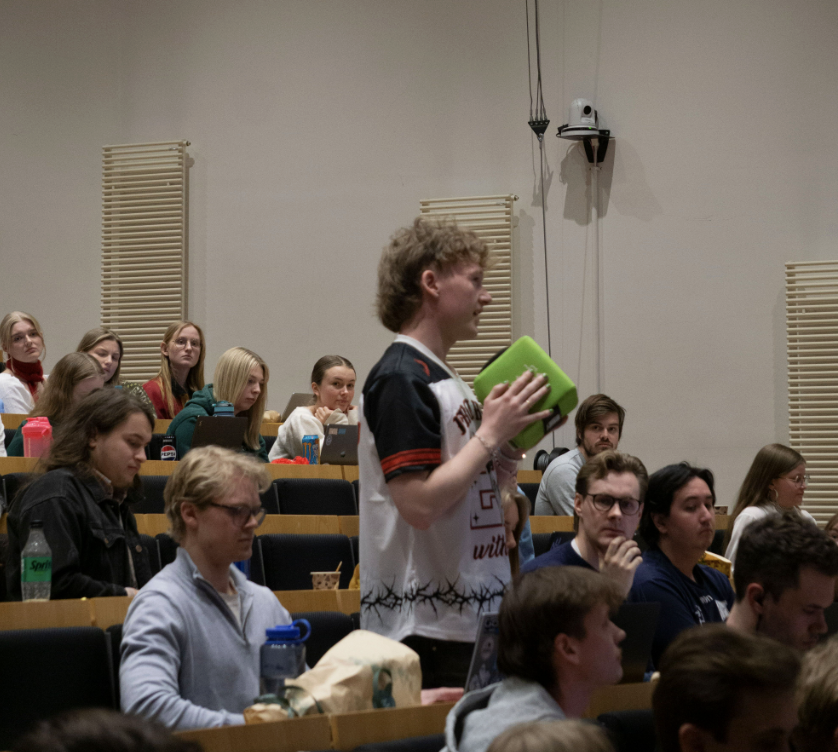
During the debate, there was encouragement for exactly this, that the discussion should continue in low-threshold forums such as “Have you heard that…”. Therefore, use Tuntréet as a forum for debate! Do you have something you are dissatisfied with? Submit a reader’s letter! It doesn’t have to be perfect. Engagement, debate, and communication are more important than spelling mistakes (apologies for any proofreading errors). As our editor-in-chief says: “you can find us at tuntreet@samfunnetiaas.no or in the bodega ;)”.
Finally, the debate had to be concluded as it was time to vote. The resolution proposal did not receive a majority and was not adopted.
I contacted various leaders within the Samfunnet i Ås and the authors of the resolution to hear their thoughts on the debate at the General Assembly.
Holberg Rokstad, one of the submitters, felt it was unfortunate that the proposal was not adopted but was positively surprised that the vote was so evenly split. “Another positive outcome of the resolution is that I have now learned more about what the House and Finance Board actually does, and that my own threshold for asking questions is lower,” she said. The three submitters had agreed beforehand that the only negative outcome would be “if there was NO discussion,” which was certainly not something they needed to worry about. Holberg Rokstad believed it was a very good discussion, especially given how many members participated.
There was broad agreement that it was a good discussion among everyone I contacted. Head of UKA i Ås Marlene Zimmermann said, “it was good to hear that people could speak so openly about situations that have been frustrating and at times difficult to deal with.” The UKEboard believes they already have good platforms for feedback and want it to feel safe to raise issues with them. Regarding the resolution itself, Zimmermann supports HF’s response and believes that the purpose clause in the statutes is broad enough to “formally encompass the topic.”
The editor-in-chief of Tuntréet, Hanna Lindeman, stated that “what I feel is missing from the resolution is something more concrete to work towards.” This was also the main criticism raised during the General Assembly, the challenge of actually following up on the resolution. Lindeman described the debate as “incredible to follow” and long overdue, given the level of participation. In hindsight, she believes Head of UKA i Ås should perhaps have said a few words, as the festival was among those most frequently mentioned. She believes the root of the issue is that elected representatives need to improve how they communicate and receive feedback.
The UKEboard also supports HF’s response but will take the input and perspectives from the debate forward in their work. They appreciated the length and level of participation in the debate, even if it went off track at times. They hope that “the debate will help lower the barrier to speaking at the General Assembly and, in the long term, create more engagement at what are our most important meetings.”
This debate contained countless experiences, opinions, and perspectives, but ultimately it was the discussion itself that mattered most. Having an open dialogue about what works and what doesn’t is the first rule of making any relationship work. So, if you want Samfunnet i Ås to stay together, discussion is necessary.