TO SHOT OR NOT?
TO SHOT OR NOT?
Shot! Best known as the little glass filled with something burning, less known as the Student Health and Wellbeing Survey (SHoT) (and moderately known as the title of a song by LMFAO, as well as another word for a photograph, an injection, a gunshot, and/or an attempt). Every four years, the Norwegian Institute of Public Health conducts a survey mapping students’ lives and health. On that occasion, Tuntréet carried out a similar, small survey focusing on students’ drinking habits. The findings were not shocking and were fully in line with the national results, but we’ll go through them anyway!
Writer: Laura Wanvik
Illustrator: Ine Høe Kvame
Translator: Ida Jystad
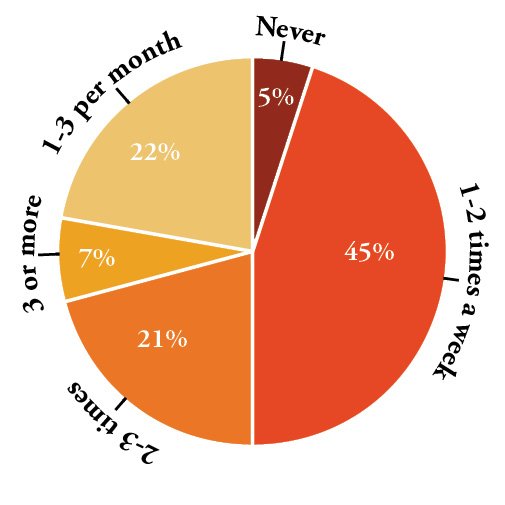
It’s no secret that students drink more than most people, but in Ås the secret may be even less well kept than every were else. This is most likely because there’s only one place to go out: Det Sagnomsuste Samfunnet (SSS). With several events each week, bodega nights, quizzes, parties, and concerts, there’s certainly no shortage of opportunities to drink, should one feel tempted. According to the results of our survey, based on a potentially representative and definitely random selection of 154 students, a full 73% report drinking at least once a week, and 28% of these drink up to three times a week.
How often do you drink?
The outline of the Ås bubble can grow rather thick over the course of a semester, and as we know, intoxication only makes visibility worse. In other words, it’s quite easy to forget what the Ordinary Adult World (OAW) looks like, especially when it comes to average alcohol consumption. According to dietary guidelines from the Norwegian Institute of Public Health, you should technically NEVER drink, so it doesn’t take much before your alcohol habits are considered unhealthy. The definition of alcohol addiction, on the other hand, includes tolerance development, a strong urge to drink, problems controlling intake, and continuing to drink despite knowing the harmful consequences. Again, the threshold for meeting some of these criteria may be lower than one might think.
At the same time, many responses from the TT survey indicate an awareness of the contrast between the student-life bubble and reality. One might even get the impression that the collective awareness that “students drink a lot” actually makes students drink even more. When asked whether they are satisfied with their own drinking habits, responses included:
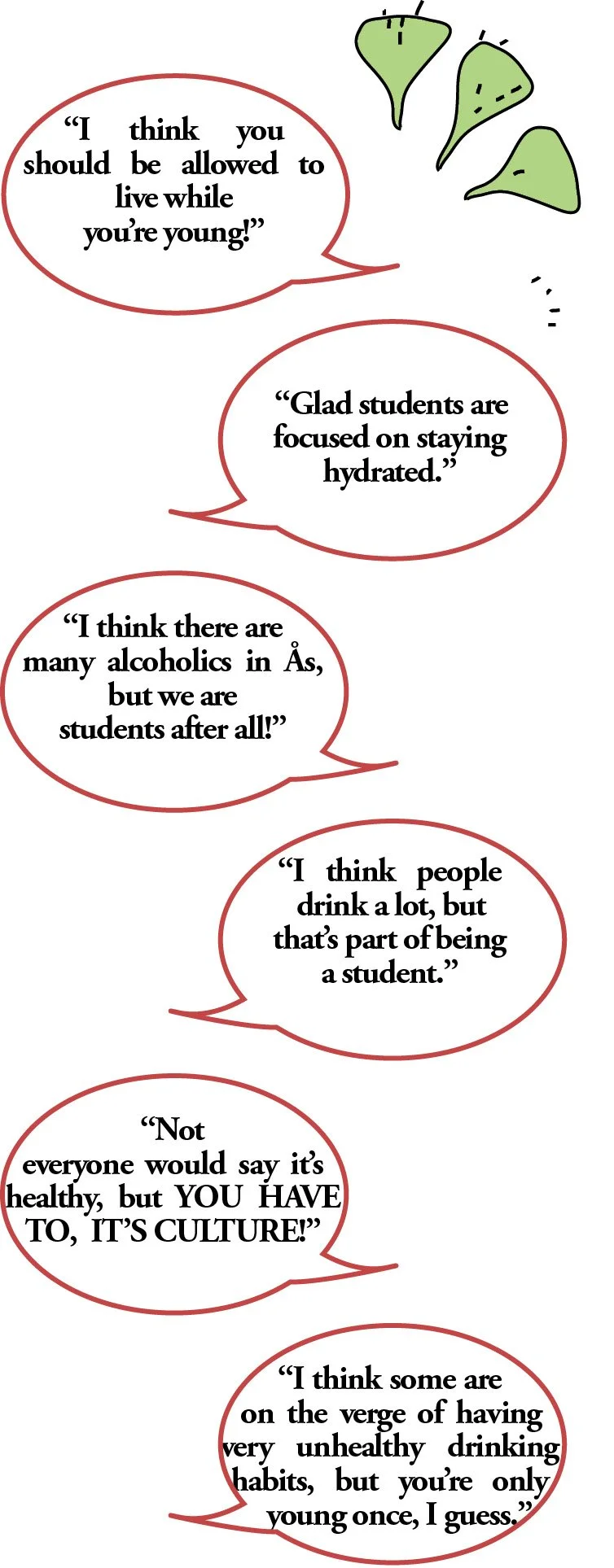
The attentive reader may notice that implicit in some of these responses lies the logic that student life = alcohol. This equation may be one of the main sources of the normalization of excessive drinking described by many students in the survey. If this mindset truly exists among students, the question arises: is our entire drinking culture built on one giant case of peer pressure? Everyone-drinks-a-lot-because-they-think-everyone-else-drinks-more, sort of? And if student life = alcohol, is the alcoholic the ultimate student? We asked whether people experienced drinking pressure in Ås, and the responses were as follows:
Do you experience drinkink pressure?
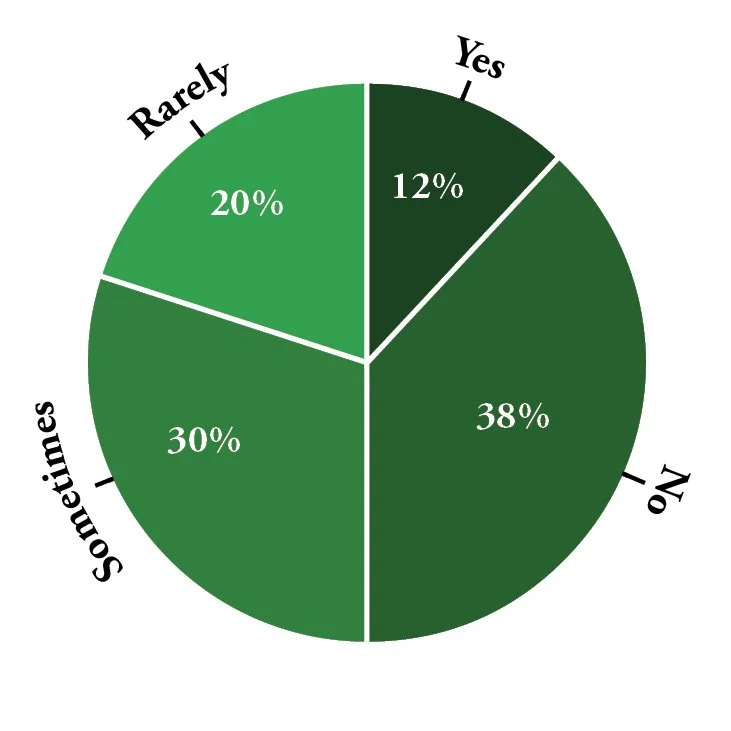
The form this pressure took varied among students:
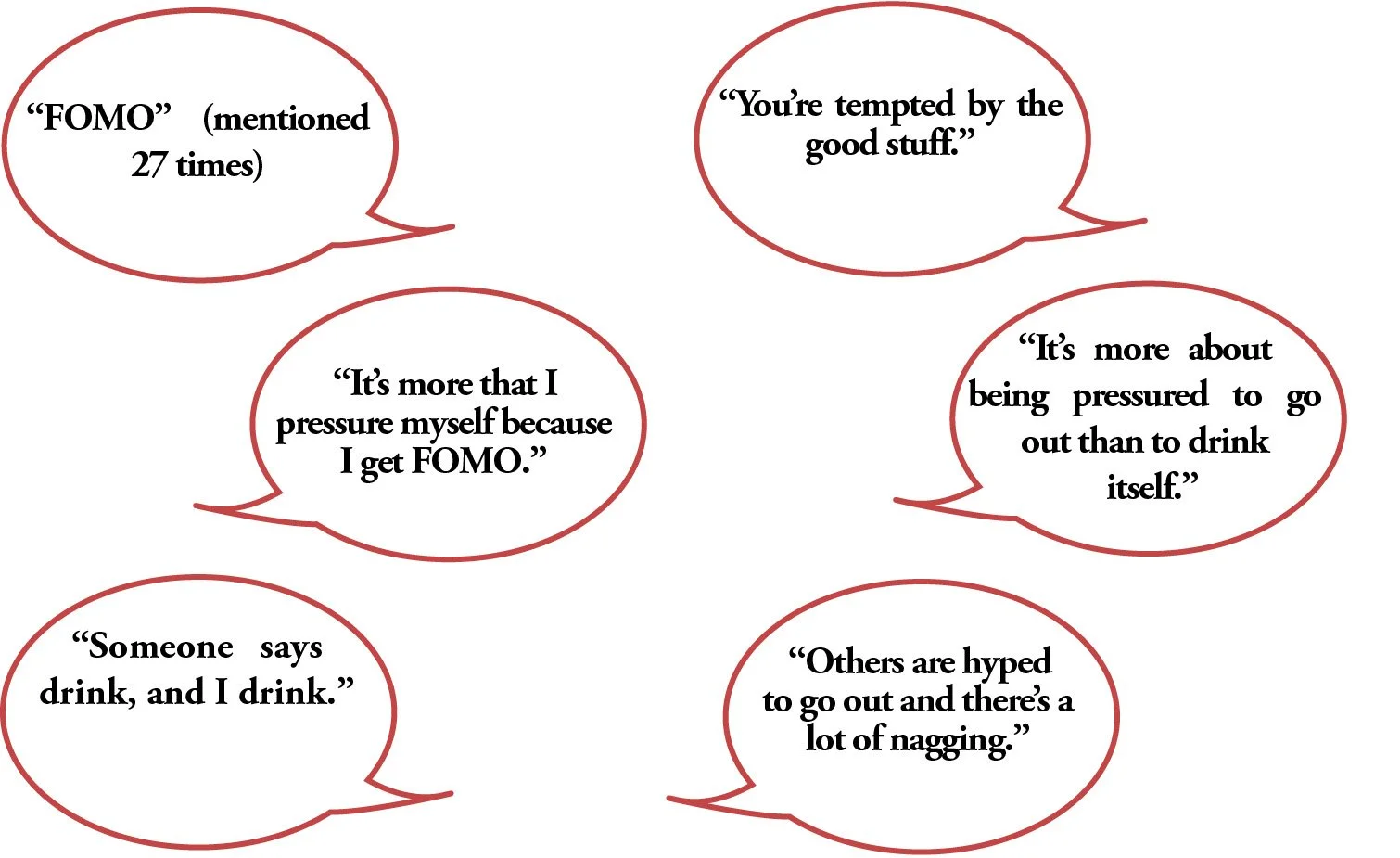
So yes, a fair amount of pressure was reported. But! As a counterbalance, many students also describe an active, inclusive, and unproblematic culture. When asked how they would describe the drinking culture in Ås, a diverse range of answers poured in. A beloved child, once again, has many names:
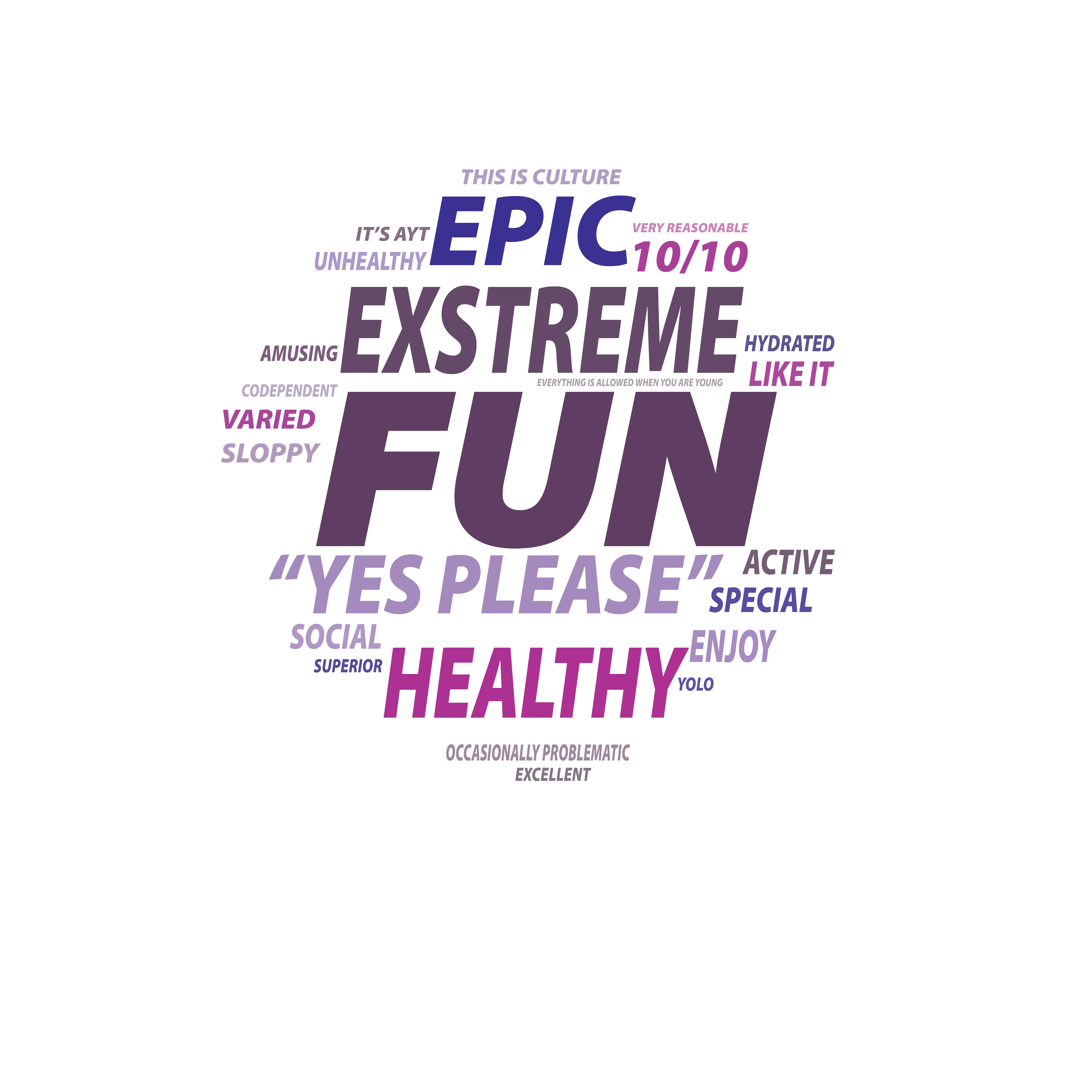
In other words, the matter is neither settled nor one-dimensional, and perhaps one single word is not enough to capture our diverse and tradition-rich drinking culture. It may ultimately come down to each individual’s background and environment in meeting student life, but the need for more in-depth answers remained. Sivert Aarflot (25), former Marketing Manager at Samfunnet, agreed to a (written) interview to share his perspective:
What positive aspects do you see in today’s drinking culture in Ås?
“In principle, it’s difficult to argue for positive sides of alcohol. However, I think it’s naïve to ignore alcohol’s place in everyday life and the role it has and has had in everyday culture”, Sivert begins. “In Ås, even though the drinking culture is large and visible, I don’t think it’s promoted in a harmful way. Much of the drinking culture is about people liking to meet, party, and spend time at social events, where alcohol becomes a natural part of the event”, he continues.
Regarding those who do not drink, Sivert writes: “I see that there is room to say no to alcohol, to abstain, or to have ‘quiet nights.’ In my experience, the drinking culture is not as focused on the type and quantity of alcohol itself, but rather on the situations and events typically associated with drinking, like going to a party or a concert.”
Tuntréet also interviewed Synnøve Skårland, a fourth-year student who does not drink. We met to talk about how she experiences party culture as someone who abstains. Synnøve describes the drinking culture in Ås as quite divided:“It’s kind of either-or. Either people drink quite a lot and have alcohol at the center of social events, which I feel many of the student associations do, or you’re with people who also don’t drink and create your own activities outside of ‘alcohol events.’”
As a member of the Swing Club and Laget, Synnøve feels she has found a social circle that suits her well, where she meets many like-minded people who don’t drink much. Still, she acknowledges that students who don’t drink may be more vulnerable to social exclusion and somewhat dependent on finding alternative social arenas.
“People often assume you don’t want to join things if you don’t drink, but that’s not the case for me. I like going to parties, and I think it’s fun to go to Samfunnet sober”, Synnøve says. “I’d actually like to go more often!”
Regarding drinking pressure, Synnøve says she experiences very little of it. “Once I made up my mind, I don’t find it hard to say no. I think those who usually drink but want to take it easy one night have a harder time with drinking pressure. For them, it’s an option they have to decline all evening, but for me it’s not really a question”, she says.
Here, our two interviewees agree. Sivert also writes: “I think the amount and expectations around alcohol can come as a shock to first-year students who haven’t had the same relationship with alcohol before. It can be overwhelming, and it can be very hard to say no and take an abstinent position, if that’s what you actually want. It might also cause those who wish to abstain to avoid more social situations.”
Synnøve adds: “I think it’s easy to become dependent on alcohol in Ås without noticing it, because you rarely drink alone. Even if you drink at a harmful level, you’re usually with others, so you don’t stand out as much.” This is also what the Norwegian Institute of Public Health expressed concern about in the 2022 SHoT survey, where they found that 4 out of 10 students have a harmful or risky relationship with alcohol. Whether that has changed four years later remains to be seen, but in any case, it’s probably still too many struggling. alene.
So, in an attempt to conclude: saying something general about the drinking culture in Ås is difficult. Alcohol habits come in all shapes and forms and are ultimately up to the individual to regulate. But! Whether you drink or not, a lot or a little, beer or aquavit, we can all agree that student life should primarily be about learning, friendship, and good vibes. The latter is probably best preserved if we take care of those around us, listen to ourselves and each other, and perhaps listen a little less to the FOMO-devil on our shoulder.
When so many students feel some degree of drinking pressure, perhaps it’s time to break out of the drinking-is-culture castle in the air and give each other more space to do what suits us best. Of course, that’s easier said than done—there’s probably a reason people are still searching for Aristotle’s golden mean 2,500 years after it was conceived. But it’s worth a try, I guess.
If this attempt to balance humor and a rather serious topic hasn’t reassured you, and you need someone to talk to, you can contact:
RUSinfo (915 08 588 / chat)
Kirkens SOS (22 40 00 40 / chat), or
Mental Health (116 123) available 24/7