Don´t Shoot the Horse Before the Race is Over
Don´t Shoot the Horse Before the Race is Over
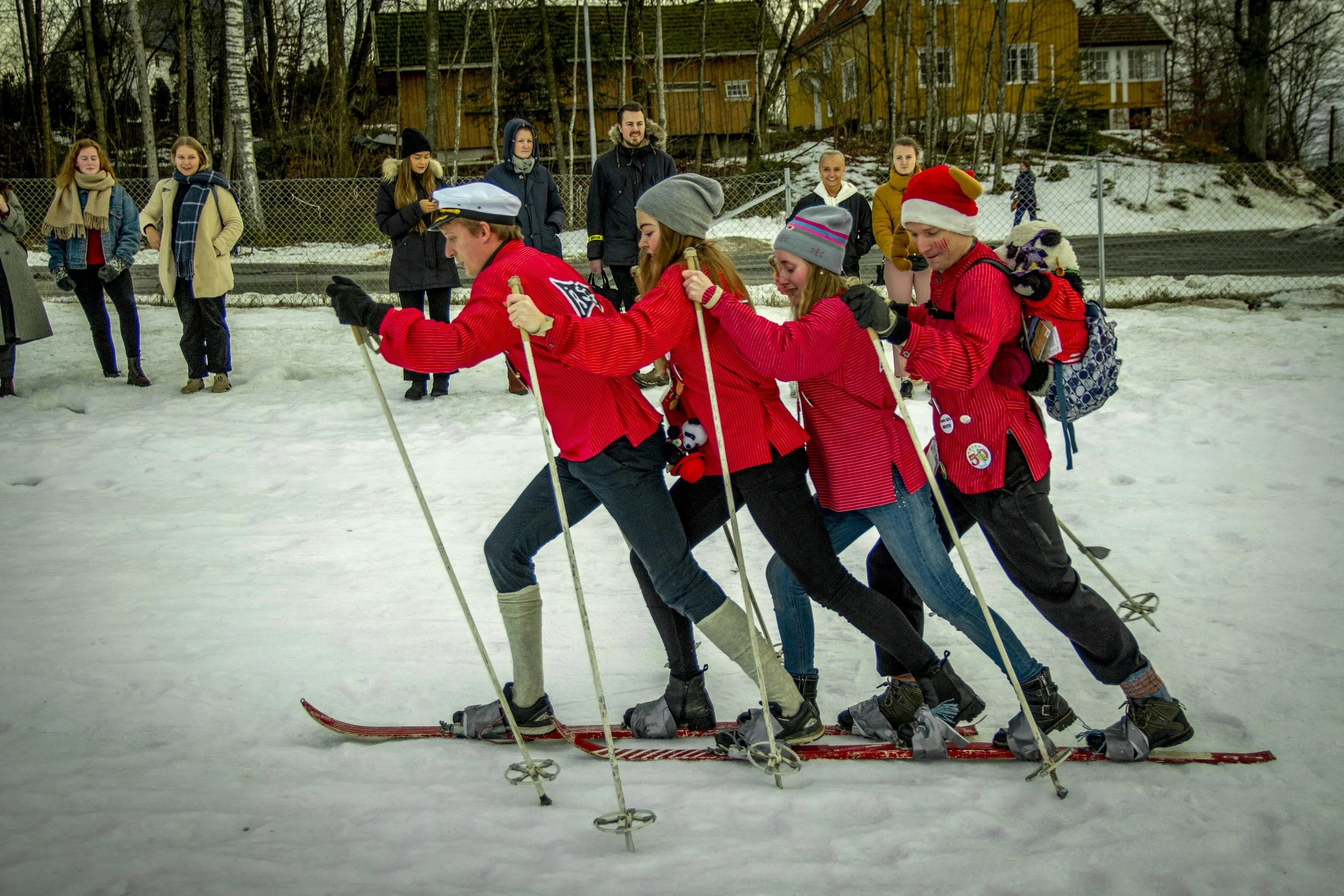
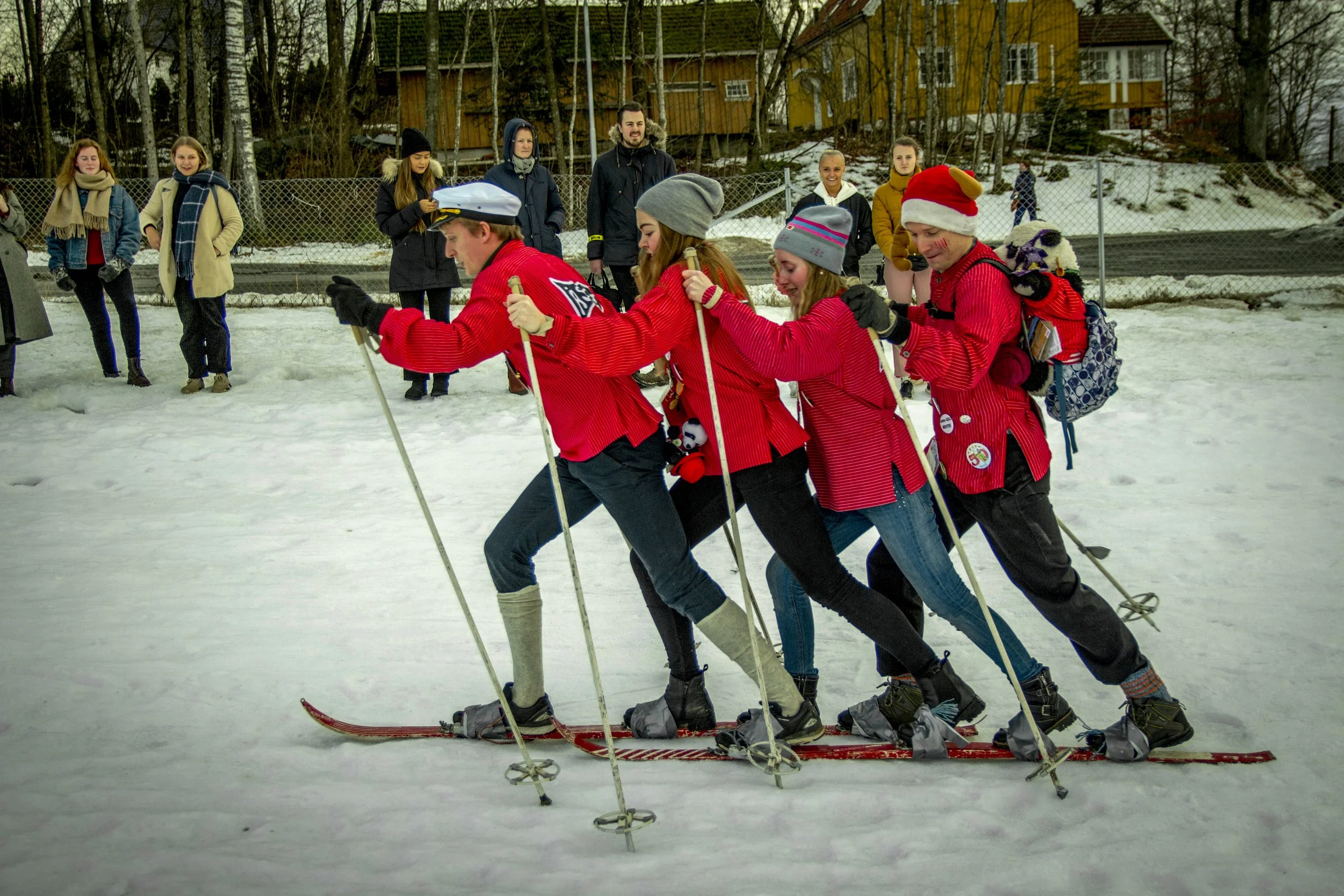
What did people in Ås do during winter back in the day? In search of good winter sports stories from the area, Tuntréet reached out to local historian Håvard Steinsholt. He could, among other things, tell how the skiing community in Ås helped change the sport of skiing for the better, and how this “almost” resulted in a horse massacre.
Journalist: Trygve Bø Kongsbakk
Translator: Marie Gulbjørnrud
It was stated in the printed edition of TT01 2026 that the images from the ski jump were archival, but this is not correct. The correct credit is Helge Stikbakke.
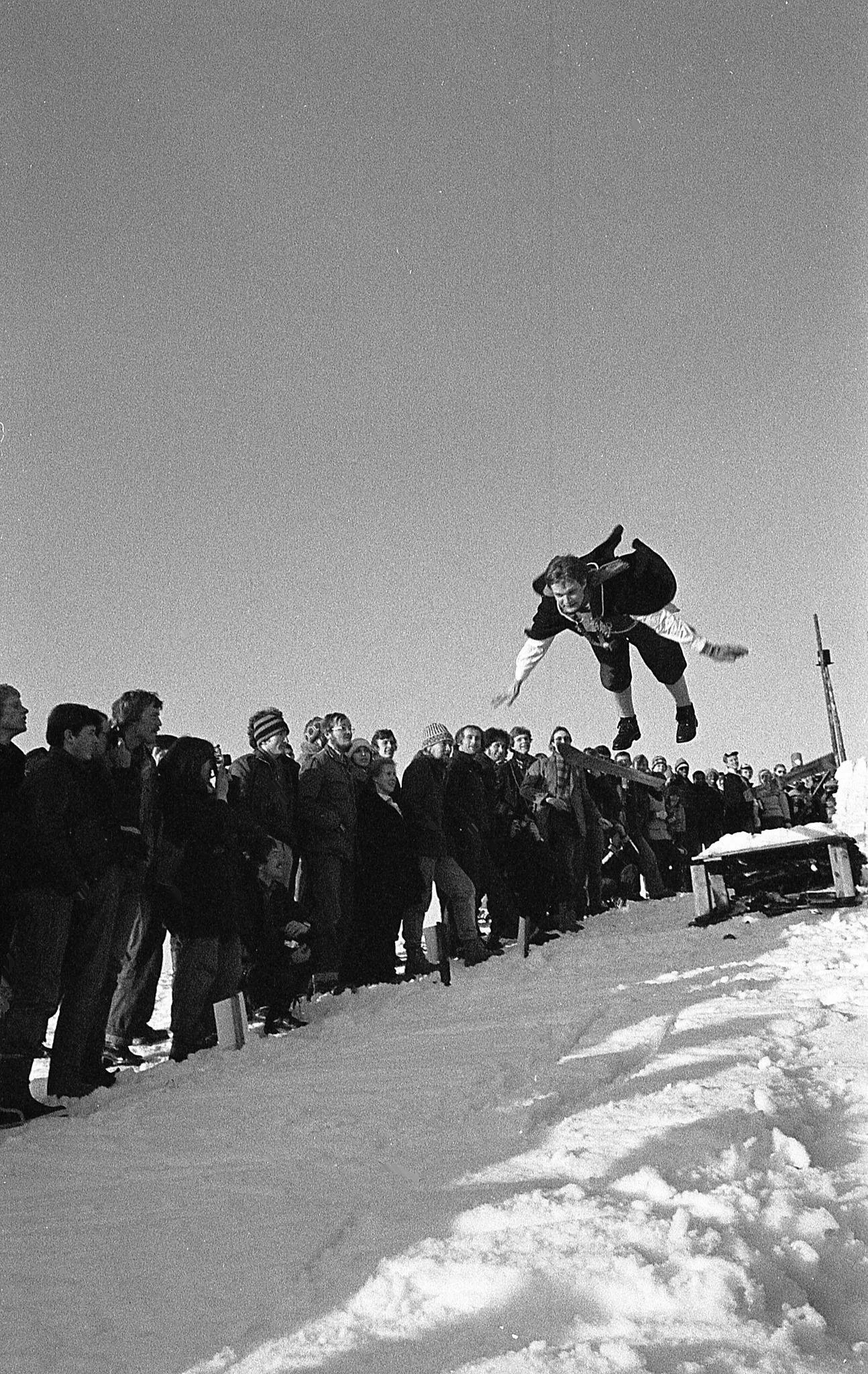
Photo: Helge Stikbakke
Tuntréet meets Steinsholt outside Boksmia. It quickly becomes clear why we meet precisely there. Based on an interpretation of an old article from Akershus Amtstidende about a Nordic combined competition on campus in 1892, he has reasoned that the first known ski jumping hill in Ås must have been in this area. Ski jumping was the most popular event back then, and it concluded the Nordic combined competition, which also included cross-country skiing. In the article you can read that a man named A. Utsond won, but Steinsholt wonders if the newspaper journalist missed the name, and whether it might rather have been the Telemark native Anders Upsond who soared the farthest on the hill down toward the Duck Pond. Upsond, he explains, was a big name in skiing at the time and an early ski entrepreneur. In Stockholm, Upsond started a professional skiing school where the Swedish royals were among the students.
A Long History of Winter Sports
The first groomed cross-country ski trail in Ås came in 1972. Before then, trails had to be packed down manually. Four men were required, two to create the ski track itself and two to make tracks for planting ski poles. The fact that it was Den Høiere Landbrugsskoles (Skiløberforening The Skiers’ Club of the Higher Agricultural School) who organized the first Nordic combined race shows that an active ski community already existed as early as in the 1890s.
For cross-country competitions, it was long kept secret beforehand where the course would go. “Maybe it was out of fear that you could cut some corners if you knew the route”, Steinsholt wonders. Even with secret trails, there were some recurring ones. Among them was the student trail, which ran from Storebrand to campus, continued into Nordskogen, via Bergfossen and Dylterud, and returned to finish at Storebrand. To be a good cross-country skier at that time, it wasn’t enough to be fast. The racers also had to be capable of overcoming the natural and unnatural obstacles the trail offered. These could be anything from pasture fences to streams, roads, and ravines. “Jumping fences on skis was a part of the sport in itself. Some people were really good at it,” Steinsholt says.
Student Sports
There was a sharp divide between student sports and the “civilian” sports. Students largely kept to themselves, and the student championships were a major event. In the winter disciplines, there were reportedly more meeting points and greater harmony between the two groups. “It wasn’t as bad as in football and track and field. There it was a hate relationship.” The students and the local ski club joined, among other things, forces to build a floodlit ski trail in Nordskogen in the 1960s. “It was damn tough. They used every uphill they could find over there,” Steinsholt recalls.
Winter sports events of the past of the more student-esque variety live on today through PB’s Hup-Cup and Kurt Stille’s Memorial Race. Steinsholt shares that the ski jump in-run in early editions of the Hup-Cup, began on Professor Bøhmer’s veranda at the top of the hill by Pentagon, and that the hill therefore bore the fitting name Bøhmerwaldbakken. Even back then, it was a competition filled with lofty leaps and rock hard landings.
One tradition that has fallen by the wayside, however, is the Thorvald Trimmer Tremila where both trained and untrained students would claw their way through 30 kilometers of forest before a proper party awaited at the finish line. While competition was fierce for the prestigious top spots on the results list, for the rest of the pack it was the fun, excitement, and the ensuing festivities that were the main motivation.
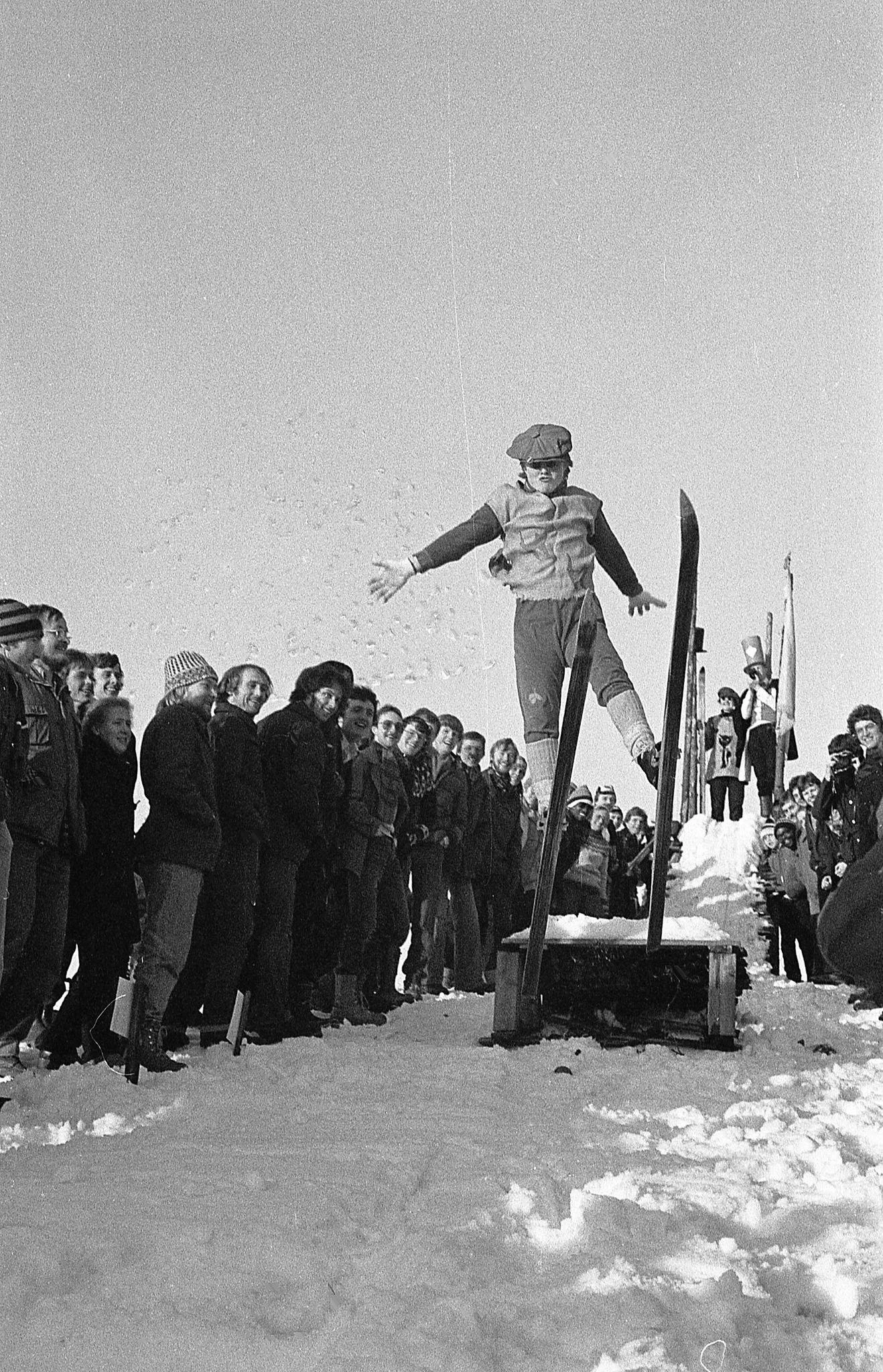
Photo: Helge Stikbakke
A Fight for Equality
According to Steinsholt, the ski community in Ås played a central role in the fight for gender equality in cross-country skiing during the 1960s. Norway was lagging behind when it came to gender equality in sports. During the 1952 Olympic Games in Oslo, women were for the first time allowed to compete in cross-country skiing. The only country that voted against it was Norway itself. In the years following, women’s competitions were introduced outside of the Olympics as well, but for a long time only events with style judging were permitted for girls. In Ås and Follo, people were not satisfied with this, and in 1962 girls were allowed to participate in the local winter games, much to the Federation’s great irritation.
In their fight against the Federation, they gained support from other clubs, and eventually girls were finally allowed to compete in the rest of the country too. At the ten-year anniversary of the girls’ entry in 1972, Ås Sports Club was honored with the privilege of hosting the girls’ main national race.
As the time for the girls’ main national race in Ås approached, the lack of snow became critical. The little snow that could be found here and there was scraped together, but it quickly melted away. For a long while it looked like the event would have to be moved, but just before the final decision was made, a heavy snowfall began. Suddenly the pendulum swung all the way to the opposite extreme, on the verge of cancellation due to too much snow. The newly purchased snowmobile meant to groom the trails couldn’t handle the sheer volume of snow. Fortunately, the course manager was a solution-oriented man - and, as it happened, the head of the Home Guard in Ås. He therefore saw his chance and called in the soldiers for a snow-packing exercise. The resulting tracks ended up being so nice that the riding club was tempted to test them out on horseback. “Never has there been such a big chance for cheap horse sausage in Ås as then,” Steinsholt chuckles.
If you wish to read more about ski jumping hills in Ås, Steinsholt wrote a longer article about the 51 known ski jumps in the municipality in the 2020 edition of Follominne. If you are more interested in Ås Sports Club’s history, you can read from his anniversary chronicle, which includes a section of local tall tales, published for the club’s 100-year anniversary in 2022.