A mouldy start
A mouldy start
In the last few years, Studentsamskipnaden i Ås (SiÅs) has received an average of 3-4 complaints of mould a month. Mould are fungi that grow well on wood, and in the worst case, they can cause rotting. Some tenants have reported mould in showers and kitchens, while others report the smell of mould coming from their bedroom. How did they report this, and how did SiÅs handle it?
Journalist: Li Li Than Winn
Fotograf: Jørgen Berg Yndestad
Translator: Eva Weston Szemes
Discolouring or mould – ABC
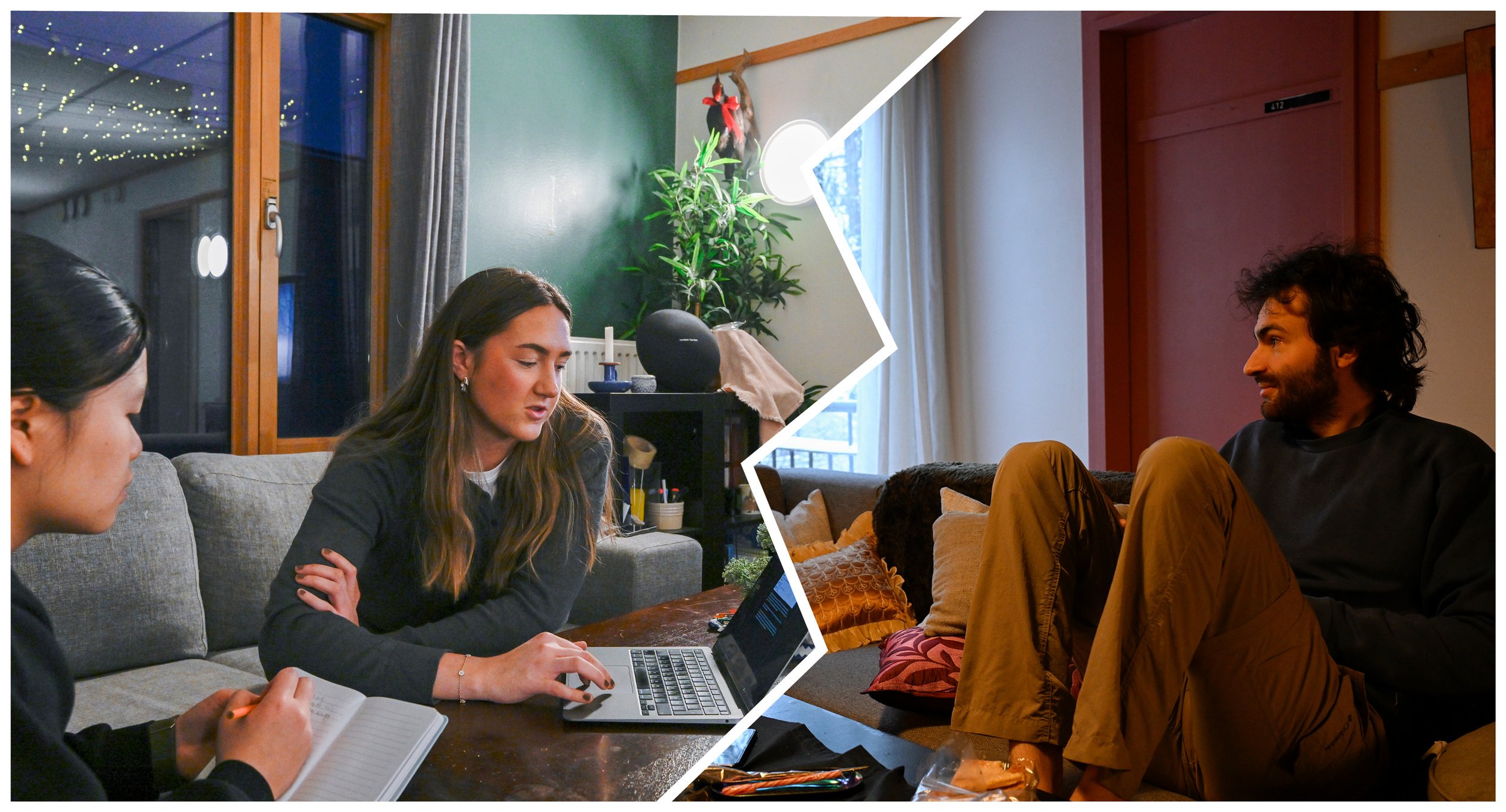
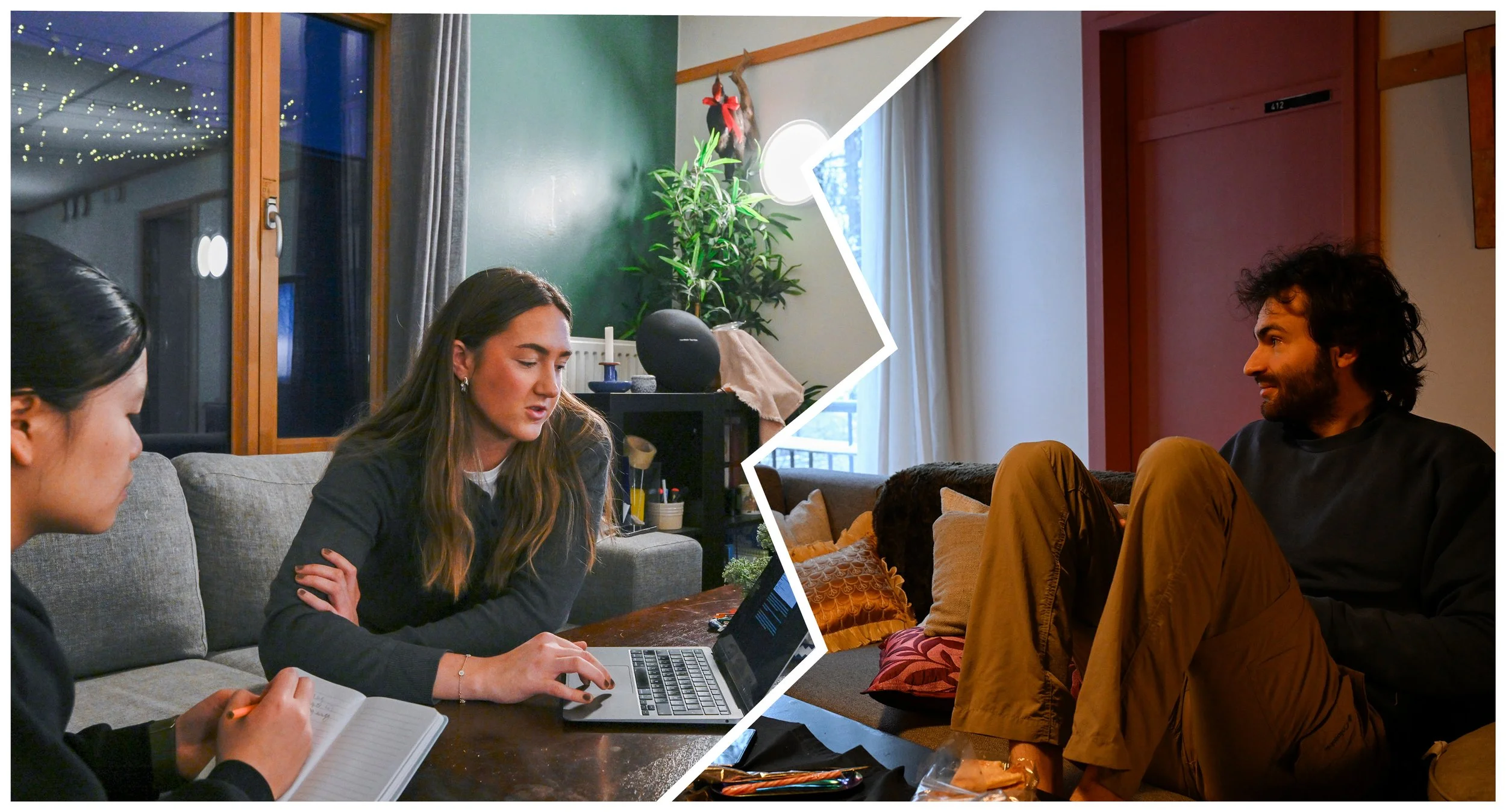
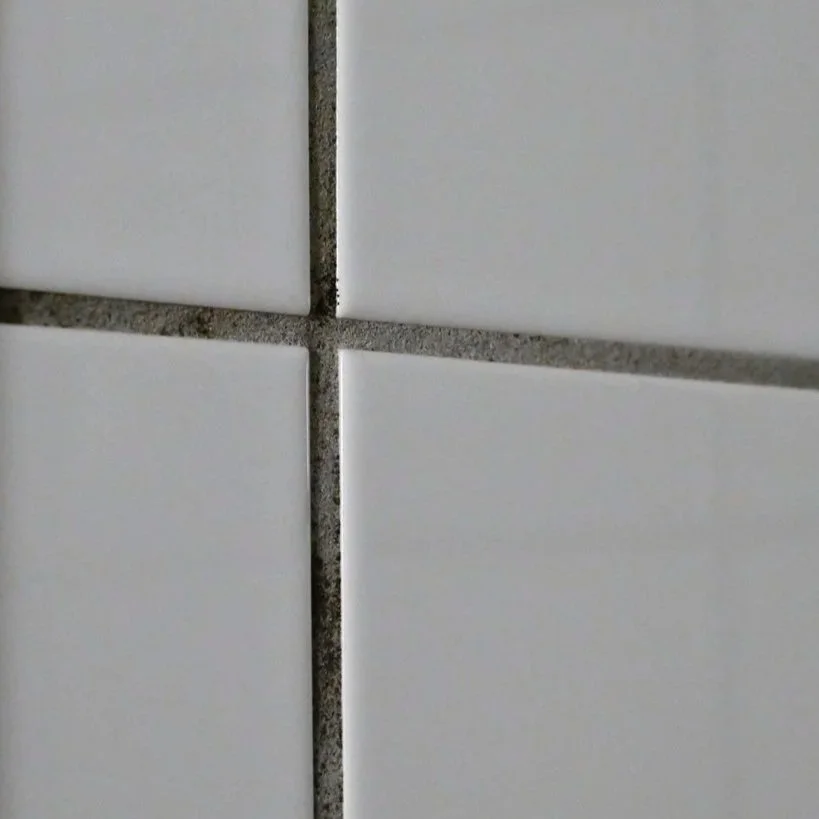
In the autumn of 2023, Marnix Peeters moved into Arken, one of the older buildings of Pentagon I. Like everyone else, he filled out a form about the state of the flat when he moved in. Here, he pointed out that there was a lot of black mould in the shower and that the ventilation in the shower was too weak. He also added that the mould could potentially be detrimental to the students’ health and that it had to be dealt with. SiÅs responded that the ventilation worked as it was supposed to, and that there was no mould, rather, it was discolouring from the soap used over time. Peeters still thought it was more than discolouring and took the initiative to investigate further.
During this period, Peeters also did a course in mycology (BIO336), where he got permission to investigate whether the “discolouring” was in fact mould. He took samples from the doorframe and the ceiling of the shower and cultivated them in the lab. From this, he wrote a standard lab report based on what he learned in the course.
From the experiment, he found that the mould in the ceiling of the shower produced spores that could trigger allergic reactions and be problematic for those with asthma or a weak immune system. He concluded that it would be difficult to remove all the mould, because it had developed in different nooks and crannies, and that you would need proper equipment like a high-pressure washer and anti-fungal cleaner to truly get rid of it.
In the spring of 2025, Peeters once again contacted SiÅs regarding the mould situation. He felt that the situation was not handled after the moving-in control and said that there was still mould and the ventilation was not strong enough to remove the humidity from the bathroom. He said that there was detected specific kinds of mould that can be detrimental to people’s health. After more inspections, he said that there was mould in the kitchen, and possibly other places in ABC. He ends by saying that his collective cleans as much as possible, but that it is unfair to expect them to deal with mould that has been there for years.
SiÅs answers that they have to remember to air out the bathroom after each shower by opening the bathroom door and the door to the veranda. They should also clean the shower regularly, scrubbing with both chlorine and Jif. They end by saying a SiÅs caretaker would come to inspect the bathroom the same day.
He points out that chlorine will not be strong enough to kill the mould, as it has been there for years. This is also not a permanent solution, as frequent use of chlorine can cause irritation in the eyes and lungs. He ends by mentioning that airing out the bathroom is difficult, as the door closes by itself. He proposes that SiÅs can install a hook to keep the door open. They answer that the building is to be remodelled soon, so they do not want to spend a lot of money on making big changes before then.
After some time, a hook was installed on the bathroom door, and SiÅs came and treated the shower with chlorine. In a new e-mail, Peeters expresses his gratitude and says it has helped a bit, but that there is still quite a bit of mould in the shower. When it comes to the remodelling, he says that the “big adjustments” should have been done years ago. He also discovers that the renovation of ABC will not take place until 2029. “In three years is not “soon” if you ask me.”
Peeters thinks it is unfair of SiÅs to say that the current tenants are to pay for the work that was done with removing the mould that was there when they moved in. He says so in a new e-mail, where he refers to §6 (3) in the housing contract that says: “The allocated accommodation should be in normal good condition, cleaned and with whole windowpanes and locks in working order, including keys to all exterior doors.” He also says that he and the rest of the collective are not responsible for the mould, as they reported it when they moved in.
Today, Peeters says that the mould situation is the same. He does not think that the increase in rent is justified with him living in the same standard of housing and says SiÅs should improve the situation before increasing the rent. SiÅs answers that the rent has increased because of inflation.
Wet surfaces – hidden damages
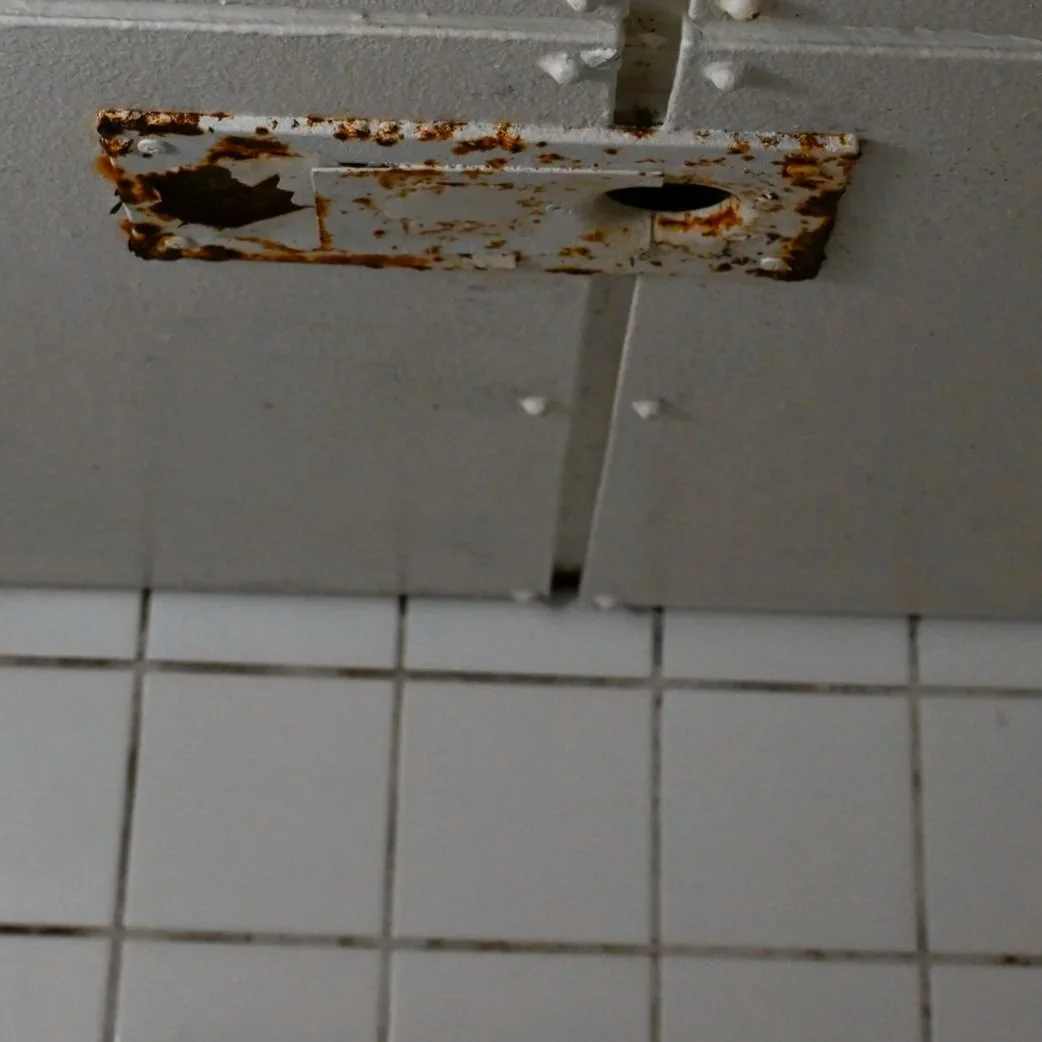
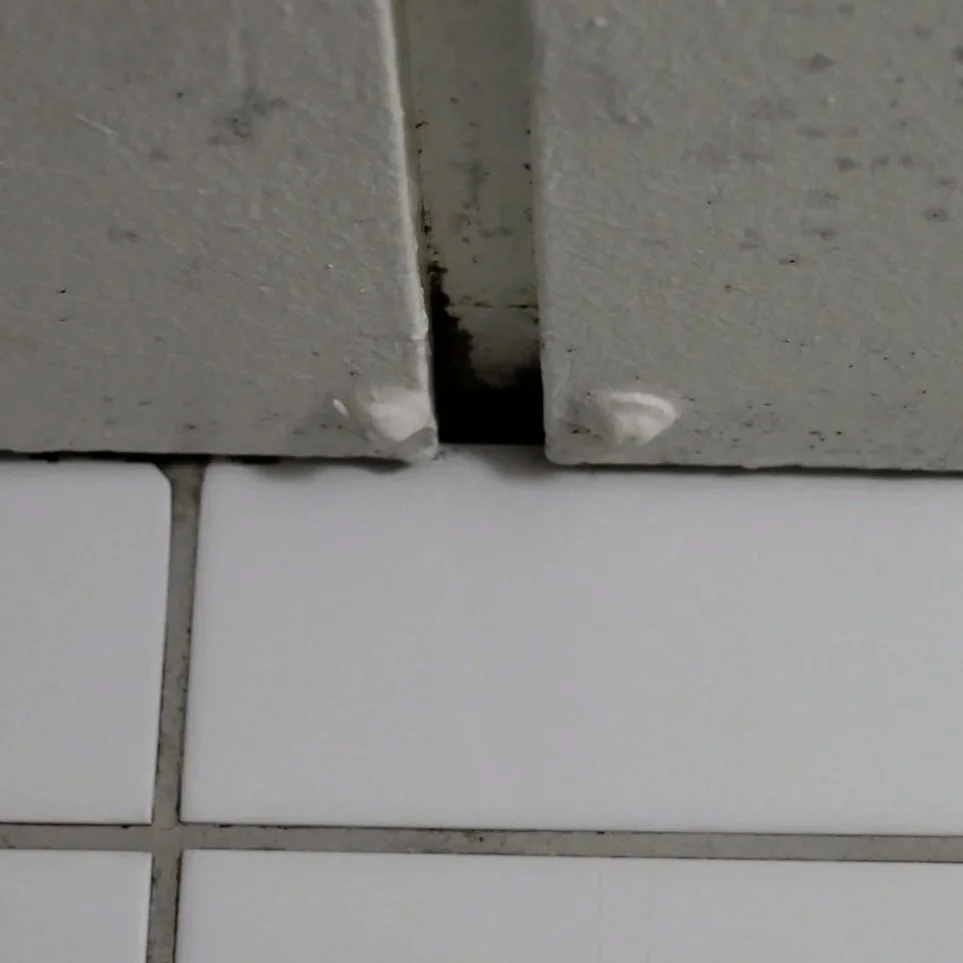
According to SiÅs, most reports of mould are about sooty mould. This is a mould that causes black and blue discolouring of surfaces that are left damp over time. Sooty mould is often seen on doorframes, ceilings and walls. According to NIBIO (Norsk institutt for bioøkonomi), sooty mould is mainly a cosmetic issue, but over time, it can cause dry rot.
FHI says that over time, problems with humidity and mould can cause allergies and airway problems. FHI recommends avoiding prolonged humidity and mould on indoor surfaces and in the construction of the building. Frequent condensation and smell of mould are good indications of poor indoor conditions.
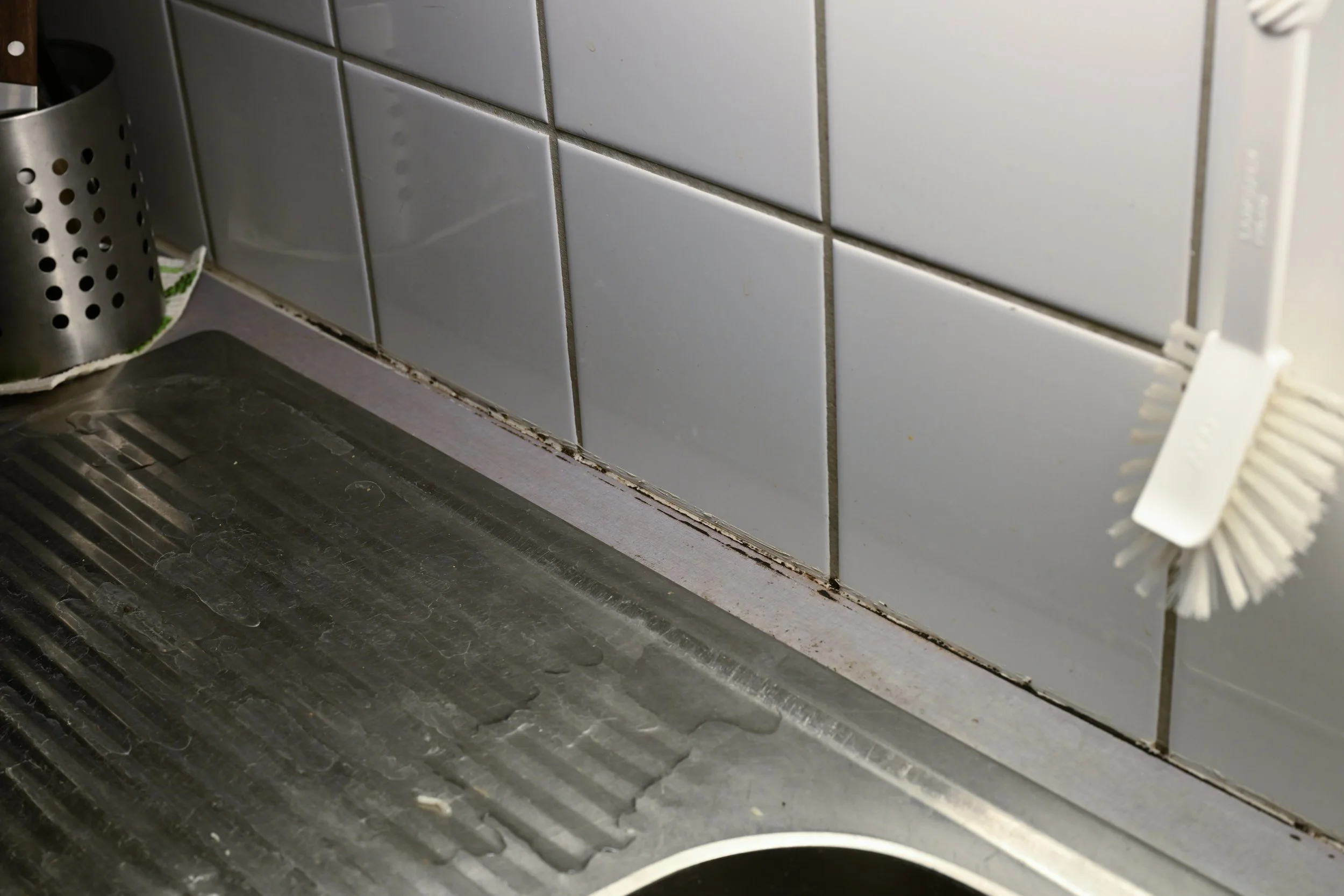
Pål Magnus Løken, director of SiÅs, says that the bathrooms in the older parts of Pentagon are places where walls and ceilings are exposed to a lot of humidity. He adds that the old student housing of Pentagon I have a limited ventilation capacity, and might suffer from a lack of cleaning. Løken says that the kitchen counters and similar surfaces are often exposed to water spills, that give good environments for sooty mould, especially in the silicone between the counter and the wall. Even after treatment, some discolouring will remain, and this does not equal living with mould. It is therefore no reason to lower the rent.
According to SiÅs, it is not true that students live with mould. If this is true, Løken says that they keep it to themselves, and has not reported it to SiÅs. He also says that old Pentagon gets washed down every summer, without them observing mould or fungi that require treatment or analysis.
The smell of mould – Pomona
August 2025, Tuva Kullvik moved into Pomona, and soon discovered the smell of mould in the bedroom. She tried airing out for two weeks, without it helping, so she reported it to SiÅs August 11th. Samples were taken by the external service Mycoteam September 19th. SiÅs gets the verification that there is in fact mould October 7th, and she is offered alternative housing the next day via a phone call. A few hours later, she gets a text message from SiÅs that she does not have to move after they had spoken to Mycoteam.
Although she was offered temporary housing, she had a number of questions about what would happen to the tenancy in Pomona if she collected the key to the temporary accommodation. Kullvik also asked, among other things, whether SiÅs considers mould during the period from 11 August to 7 October to constitute a defect under the Tenancy Act §§ 2-2 and 2-11. She wondered whether it was possible to receive a rent reduction for the period before she was offered alternative housing, and Kullvik therefore requested written responses on a total of six points. In response, she received only a brief reply stating that SiÅs did not have a timeline for further remediation before a new inspection had been carried out with Mycoteam.
On October 10th, Kullvik asked again whether SiÅs could respond to the remaining points regarding the tenancy. She eventually received answers only to the questions concerning the temporary room. It was first stated that she had to stay in the replacement room during the period in which the room would be treated. Based on this, Kullvik asked, “So I have to move all my belongings out for an indefinite period?” SiÅs repeated that she had to stay in the replacement room until they were finished treating the room in Pomona. At the same time, SiÅs said that they did not know how long Mycoteam would need. They informed her that she would be assigned a fully furnished residence and that she would only need to bring clothes and toiletries. She therefore did not collect the key to the guest accommodation until October 20th.
During the new inspection, Kullvik attended in person to get answers about the scope of the issue. There, she felt that her presence and questions were not taken seriously. After this, she heard nothing further from SiÅs and therefore chose to send a new email on November 10th. In it, she stated that the situation had had a negative impact on her mental health and also wrote that “prolonged uncertainty about housing, commuting between temporary solutions, and a lack of information have made everyday life very demanding.” She demanded an answer as to whether SiÅs acknowledged the mould as a defect in the accommodation during the period before she was offered temporary housing, and proposed an amicable solution in which she would receive a rent reduction as compensation.
On November 17th, Kullvik was informed that she had to move to the guest accommodation immediately. The report from Mycoteam concluded that the walls of the room had to be demolished and that the work would start in two days. SiÅs emphasized that all belongings in the room had to be moved out and that she would receive help with moving and storage. Kullvik replied that she was at home in Bamble and had an exam in two days, and therefore did not have time to move on such short notice. SiÅs therefore postponed the move until the day after the exam. Shortly thereafter, Kullvik sent a new email in which she once again demanded answers to her claims regarding defects under the Tenancy Act for the period before she was offered temporary housing.
SiÅs replied the following day to the email from November 10th. They stated that they had taken the necessary measures when they first became aware of the problem and therefore rejected her claims under the Tenancy Act §§ 2-2 and 2-11, under which she sought compensation. According to SiÅs, Kullvik had declined an offer of fixing the defect, which she was obliged to accept. Nevertheless, Kullvik was not offered anything before October 7th. Her claim concerned the period before she was offered alternative housing.
SiÅs emphasizes that “This shall however not apply during the period following any refusal by the tenant of an offer to repair the defect that the tenant was obliged to accept.” The offer was therefore not made until 7th October. Kullvik did not respond to the email and instead focused on her studies. She later received a new email from SiÅs stating that the window in the room in Pomona had to be replaced, and that this would therefore delay her move-in until January 19th 2026. As the window had to be custom-made, in addition to further carpentry work being required, Kullvik did not move back into Pomona until January 23rd. Overall, she says that the situation has been chaotic. From the beginning, she has felt that her concerns were not taken seriously. Nevertheless, she wishes to emphasize that SiÅs’s maintenance staff did the best they could. Kullvik wants to share what she has experienced and hopes that this will help improve communication between SiÅs and their tenants. “There has been a lack of professionalism and insufficient information, which has affected much of my daily life. It is stressful and demanding when you lack predictability.”
Section 2-11. Rent reduction
During the period the property is defective, the tenant may claim a rent reduction corresponding to the difference between the rental value of the property in defective and contractual condition. This shall however not apply during the period following any refusal by the tenant of an offer to repair the defect that the tenant was obliged to accept.
Rain and mouldgrowth
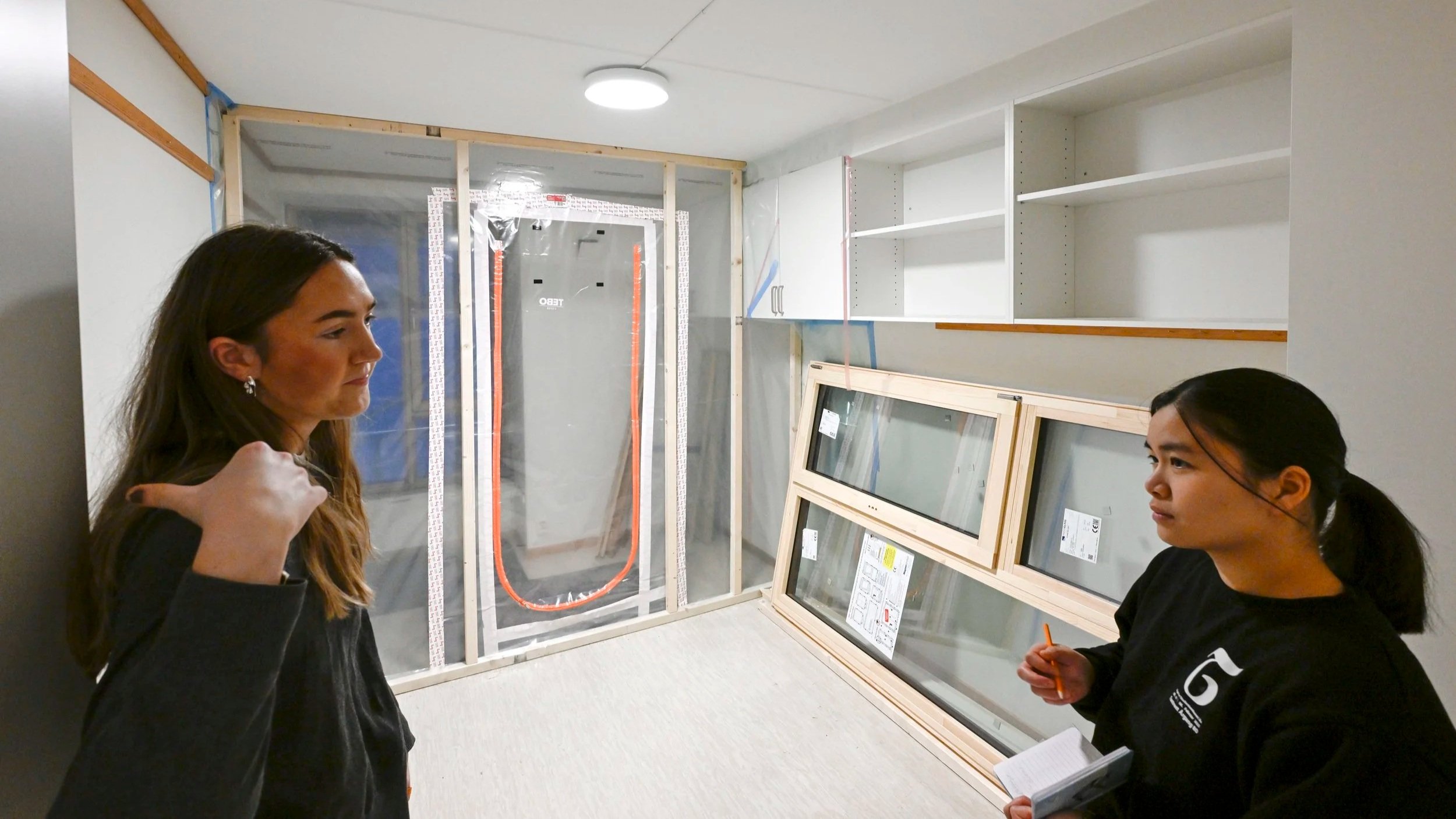
In an email to Tuntreet, Løken confirms that mould spores have been found in Pomona. He states that mould growth has occurred in the wall beneath the window. Løken believes that this is most likely a result of windows being left open during heavy rainfall. He also adds that “this is something we see in large parts of the student housing areas; windows are left open even when heavy rain is forecast.” Finally, Løken adds some general recommendations for maintaining a good indoor climate:
SiÅs’ recommendations for a good indoor climate:
Good cleaning routines. Should also include cleaning the fridge
Good routines for airing out bathroom and other rooms
Avoid puddles of water being left on doorstep, floor, kitchen counter, windowsills etc.
Keep the windows closed when leaving the apartment in case of heavy rain so that the rain does not get in
Contact SiÅs via “Min side” at Boligtorget if you need assistance