Daily chaos in the Meierikryss: 80% are single person drivers

Daily chaos in the Meierikryss:
80% are single person drivers
County Road 152. A road we all have to cross sooner or later. Not necessarily a simple and smooth event, as there are 10 500 cars passing in the span of a day. It is 16:00 o’clock, and the last lecture has ended. Traffic jam is a fact. Why is the Meierikryss entangled in the same jam almost every single day?
Journalists og photographers: Tord Kristian F. Andersen og Simen Walbekken Tangen
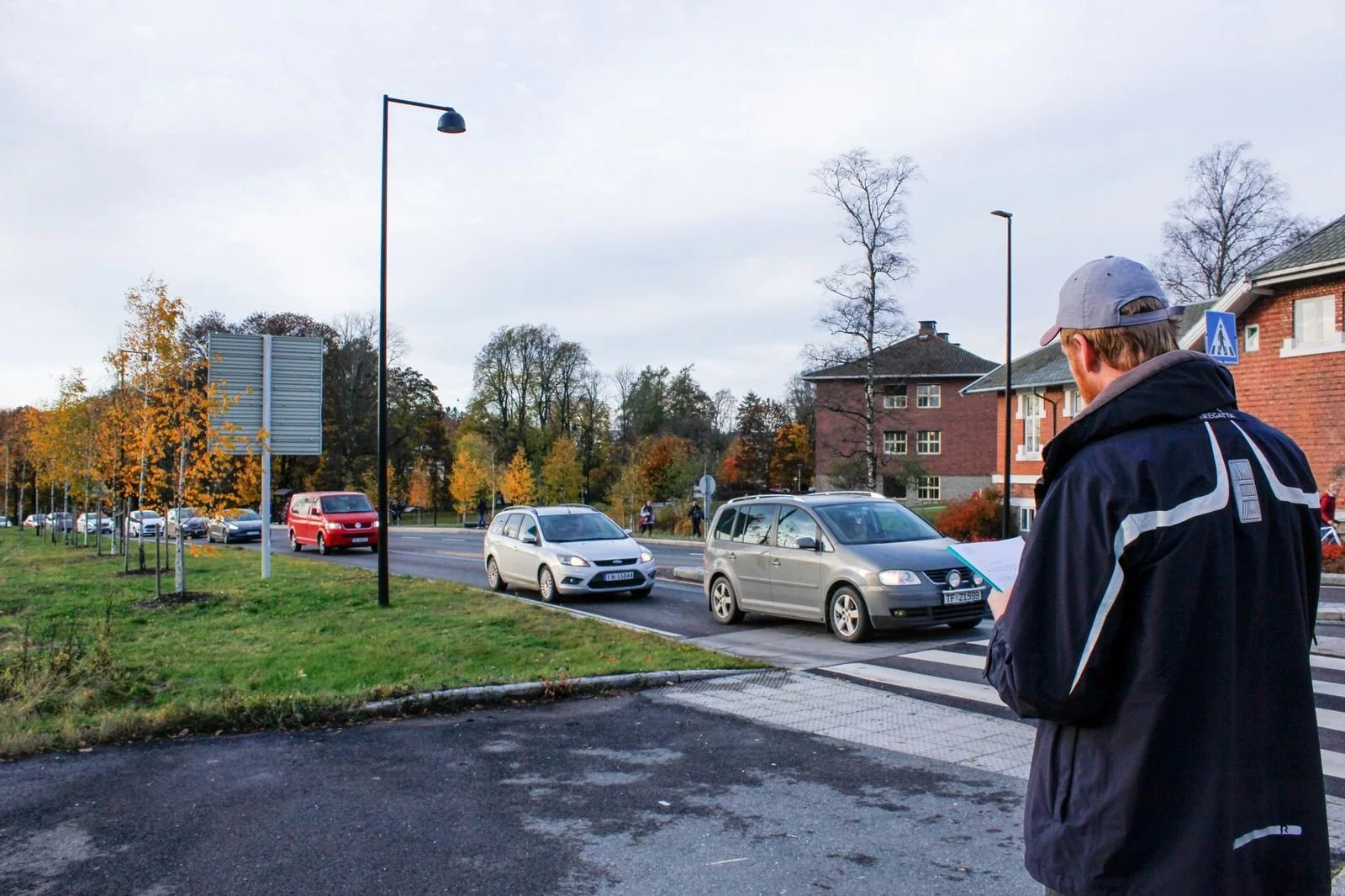
Tuntreet counts
To better understand the situation at Meierikrysset, Tuntreet took a sample from the largest traffic jam. On Thursday October 27th, Tuntreets journalists stood from 15:57 to 16:34 and counted the number of cars driving through the intersection and the number of pedestrians and cyclist that crossed the crosswalk. During the sampling we only counted passing people over the western crosswalk. In hindsight, one should also have counted passings over the eastern crosswalk, but one can estimate the same number of passings over this crosswalk. During the total of 37 minutes there where 734 passing vehicles.
80% drives alone
The count of cars was further divided into the number of single drivers, and how many cars that had two or more passengers. Of those 734 vehicles observed, 150 of them where cars with two or more passengers, while the remaining 584 cars were single drivers. The traffic is slower in the direction towards Ski. By the numbers alone we can see that 80% of all the cars driving past had only one passenger. According to Georg Ståle Brødholdt, Communications Advisor for Viken County Municipality, “90% of the vehicles are (normally) only carrying one person. This is also the case for the rest of the country. We have no indications of Ås being an exception of this in one or the other direction.” This can only mean that during one day about 9450 cars pass with only one passenger. Even if it is not as critical all the time, we would still claim that only one passenger in the car is an issue.
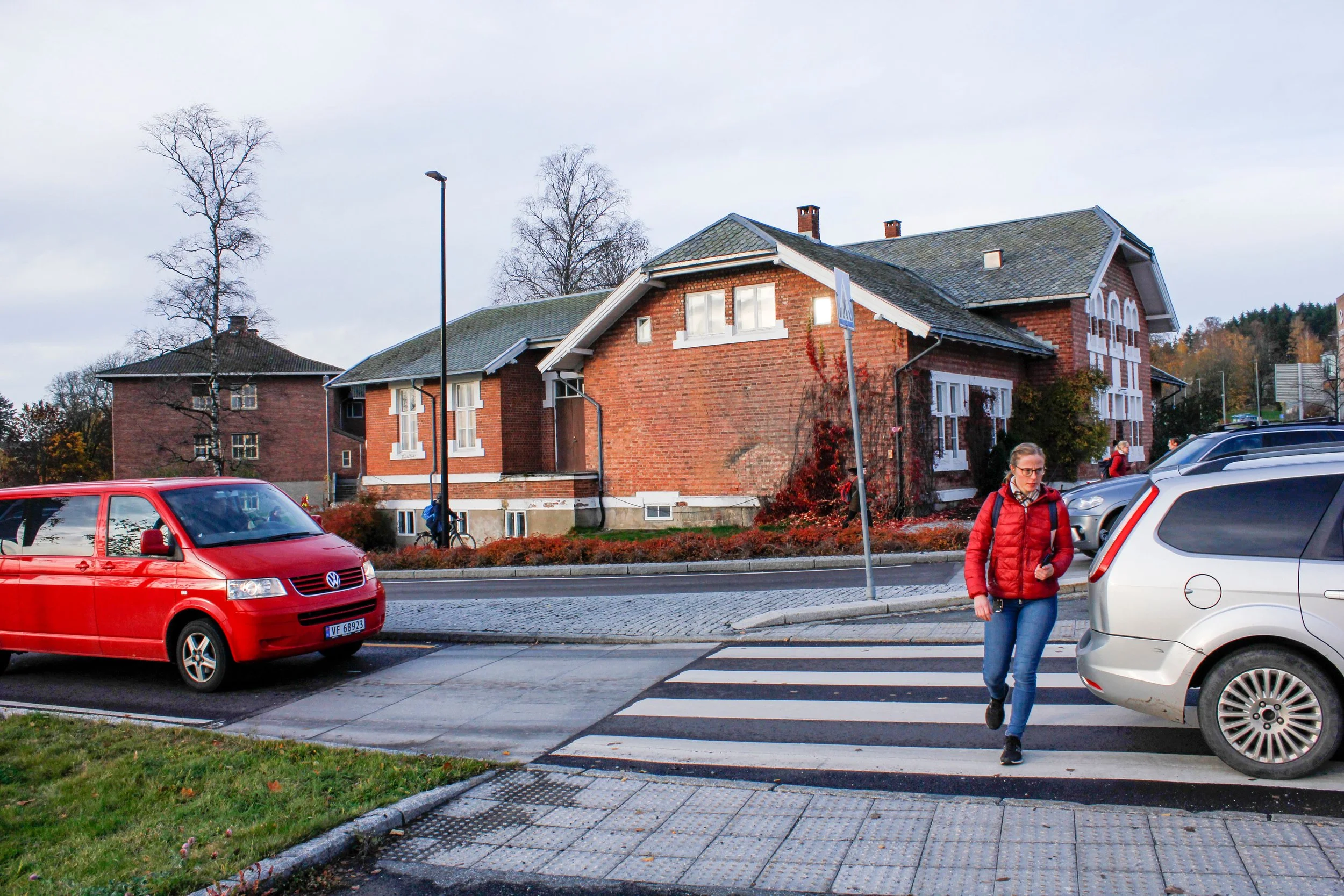
A busy intersection
According to roadmaps on vegvesen.no the county road through Meierikrysset has 10 500 passing cars in the span of 24 hours. In comparison, there are 10 000 cars passing Karl Johan every day on ring 1 in Oslo. Tuntreet got in contact with Vegvesenet for more data and discovered that 1 277 cars passed the closest measuring point to Meierikrysset, in the space between 16:00-17:00. This further strengthens the assumption that our measurements might be accurate, considering the fact that their numbers are twice the size of ours, and we were measuring for a little over half an hour.
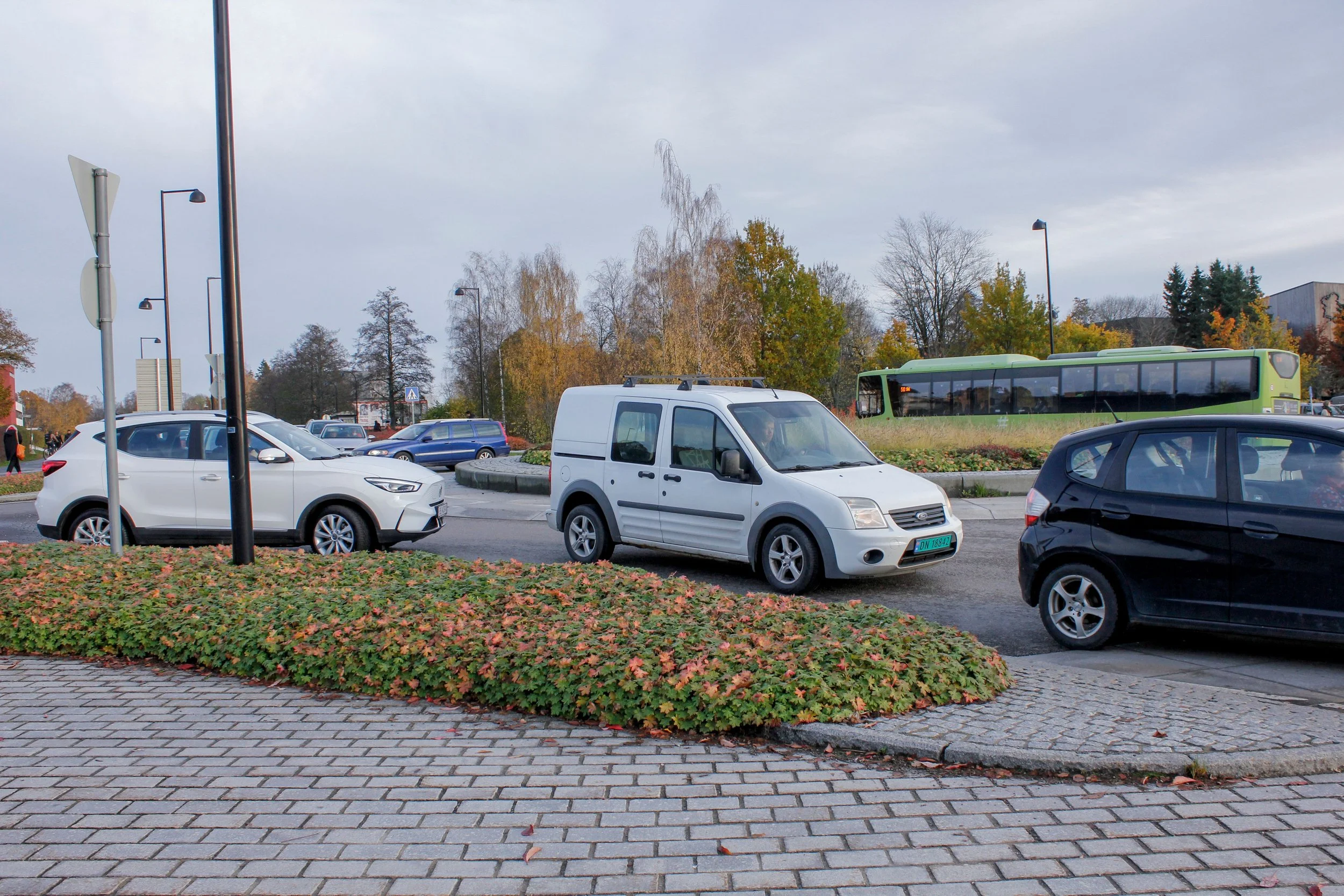
What about the bus?
Communications Chief Sofie Bruun at Ruter tells that especially Tuesday, Wednesday and Thursday stand out as busy days at the Meierikryss. Delays in this area is experienced as the reason behind the doubled amount of bus departures during the rush hours, to reduce overcrowded busses and to secure punctuality. The following graph illustrates departure times for line 510 between 15:00 and 17:00. Bruun shows that its especially the stops between Brønnerud primary school - Sentralholtet, Holstad primary school – Holstad, and Ski station that are exposed to disruptions during the mentioned times. Universitetet i Ås, the closest bus stop to the Meierikryss, is a part of the mentioned stretch.
A difficult intersection
So why is the situation still like this? There have previously been proposals of stack interchanges, underpasses, and traffic lights as possible remedies to the issue. Kjersti Sørlie Rimer, Director of Property at NMBU, says that: “It was concluded that there were no possibilities to build solutions like footbridges or pedestrian tunnels because these would be too tall/deep that the structures would effect both croplands, protected buildings and park areas…”. A bridge or tunnel would also have been longer, and Rimer explains that speaking from experiences one would still have made use of the existing crosswalk. Ås Municipality has also taken note of the problem and has pointed out Meieribygget’s status as a protected building as an issue.
One step forth, and two steps back

The problems that the Director of Property at NMBU brings forth has been carefully considered by Viken County Municipality. It’s Viken that is responsible for road 152. Brødholdt tells that since the Meieribygning is protected, “a potential new underpass would have to be put further west and it would have been quite expensive.”
In relations to traffic regulations the traffic light would have been placed further west to avoid confusions regarding yielding. This would have resulted in the crosswalk being moved at least 30 meters from the roundabout. “(…) in our experience only 10-20 meters detour is enough to make pedestrians cross the road outside of the assigned crosswalk, and that it therefore would create more traffic safety issues than it would resolve”. Because the traffic jam contributes to reduced speed, he is not worried about the current situation. “We are of course not regarding the driving-situation as a tool of traffic safety, but it is still a reality”.
Where are people going?
A question we in little to no degree has gotten a direct answer to is where people actually is driving to on this particular road. We saw a lot of company vehicles probably related to work-traffic, and company vehicles is also overrepresented by single drivers without passengers. For many this would be impossible to avoid, but it could considerably help to share a ride or to travel by public transportation. By examining the Vegkart Service we see that many of the cars probably headed to Ski. It is precisely road 152 that is recommended by Google Maps as the better alternative route for the stretch between Moss-Ski, a highly trafficked stretch, all through the bottleneck that is the Meierikryss.
One thing Brødholdt is conscious about is the driver’s duty to stop for pedestrians and the consequential stops that is created in the queue. “(…) especially if pedestrians are walking with some distance between them, then the traffic “stops” over a larger span of time”. It is then important to remember that it’s not the student’s fault that the traffic has increased beyond the roads’ capabilities. A road the majority of the students has had to cross since the early 60’s when Pentagon Student Housings was built. As the student masses has grown regular, one can safely say that the situation surely wont resolve itself in the nearest future, especially when the number of cars that want to pass through is as large as it is.