Do you hear us now? Whistleblowing for students

Do you hear us now? Whistleblowing for students
When a boundary has been crossed and safety disappears from student life, you need someone to tell. Someone to talk to. A safety net that can catch you. Studentsamfunnet in Ås and NMBU have reporting systems, guidelines and designated roles for exactly this. On paper, the systems are in place. Yet several students describe a different experience: feeling small and shouting at a system that turns its back on them.
Tuntréet spoke with both the students and the institutions to understand how some whistleblowers only faced silence in the end.
Journalist: Marie Tjelta
Illustrator: Anna Bjørke
Translator: Michelle Grabarska
Whistleblowers who weren’t heard
Tuntréet has interviewed two students who share their experiences of reporting incidents within student life at Ås.
“It felt like as if I was at war” Ingunn says.
That’s how she describes the period when she reported to Studentsamfunnet about rape committed by a volunteer in a position of power, a few years ago.
Silence.
Nothing happened.
It was only several months later, when she took the case further and reported the incident to the police, that she felt she was taken seriously.
Another student, whom we call “Nora”, describes a similar experience more recently. As a volunteer at Studentsamfunnet, she was subjected to repeated harassment by a fellow student in a position of power during a party night. She reported it to HR and received a quick response, but felt that the follow-up stopped there. She then contacted NMBU through the “Speak up!” -system and got a meeting. But again, she heard nothing afterward. To this day, Nora’s case has not been followed up by any of the reporting systems.
Silence, once again.
Meanwhile, Nora had to deal with the person she had reported while continuing in her position.
“You wait month after month, while you still have to meet [them] because of the position they hold, you wait for a response, and it never comes (…) It makes you angry, because you feel the case was never taken seriously. It feels like a slap in the face.”
A common thread for both stories was the lack of follow-up after they reported the incident. In addition, both experienced uncertainty about where to turn and what happens after reporting the incident.
“I tried to reach out to everything”, says Ingunn, and found it difficult to find the right place to turn.
She emphasizes that reporting in itself is a high threshold, and that the system demands more from the whistleblower than it should.
“Those who experience something uncomfortable often take long time before speaking up. It costs a lot to report it once. Then you don’t have the energy to do it multiple times,”
Both also describe the reporting process as burdensome. For Ingunn, it led to a period where her body went into survival mode, with much of her energy spent simply trying to be heard.
“You become very vulnerable when you have to dig around to find the right person to report to. I had to lay out the worst night of my life to several strangers just to be referred onward,” she says.
Is it reasonable that a reporting process should demand so much when someone is already in a deeply stressful situation? For Nora, it ended with her eventually having to let go of the case.
My goal was to prevent it from happening to other girls. But I can’t use all my energy on this. I have to move on.”
Both Ingunn and Nora are critical of the current HR arrangement for volunteers at Studentsamfunnet and that the role should not be fulfilled by a fellow student.
As a fellow student, you have a close connection to the student society, which can make it difficult to be completely neutral. Ingunn believes that this, together with a lack of competence, makes it difficult to handle cases with a high degree of seriousness.
“She adds that today she would not be comfortable reporting to HR. “Fortunately, I had a naïve attitude about how long and demanding the process would be.”
The stories of Nora and Ingunn er different and took place at different times, yet they bear the hallmark of the same problem and show a clear common thread of a system that does not necessarily protect the whistleblower.
Survey Among the Students
Tuntréet conducted a survey among students about their experiences with the reporting systems in Ås. With 55 responses, picture emerges: the systems do not always seem to function as they should in practice.
Speak up – and then?
More than half of the respondents say they are unsure whom to contact if something serious happens. At the same time, several perceive information about the reporting systems as difficult to access. The best-known points of contact are HR at Studentsamfunnet and Angela. The systems that are most frequently used by the respondents are HR at Studentsamfunnet/UKA and NMBU’s “Speak up!” service.
Among the respondents who say they have reported something, the vast majority of cases involve sexual harassment. Several also describe a lack of follow-up after speaking up.
“After I reported it, I never heard anything more…”
“It absolutely doesn’t seem like there were any consequences.”
“Experienced a lack of follow-up on the case”
Silence, again and again.
A trust that falters
The majority of the respondents are “Unsure” about how much trust they have in the reporting systems, while the rest are divided between “Quite a lot” and “Low trust”. Several also elaborate that they are not confident in that cases are taken seriously.
“I feel the penalties are too lenient, that you won’t get anywhere or that you will get into social problems if you report something”
“I don’t feel that sexual harassment leads to consequences for people in positions of power.”
Most respondents say they would feel most comfortable reporting to “an external/independent person”, with “an employee at NMBU” as the second choice. This leads to the question of whether HR at Studentsamfunnet should be a fellow student. 43 percent say they are unsure, while the rest are split between yes and no.
Several points at the challenges related to impartiality and competence:
“It creates an environment where many feel that those who are friends with HR are untouchable. It also creates difficult situations if HR is at a party night and behaves inappropriately, who are you supposed to report to then?”

“I feel like the report systems should be external, it’s scary to report a bad experience with someone if you know the person you’re reporting to is friends with the person you’re reporting about.”
“In more serious cases, it is unacceptable for a student without special training to handle the case.”
At the same time, some believe that a fellow student can make it easier to speak up:
“Young people relate more easily to other young people”
“It might be easier to contact someone who has more experience being a student themselves.”
Some also call for a middle ground with HR as both an external and a fellow student:
“I wish HR was solved in a more two-part way.”
“If it were to be seen as external, then there should still have been someone who had that close contact with the volunteers.”
Studentsamfunnet’s answer
Based on the criticism at Studentsamfunnet’s HR system through the interviews and survey responses, Tuntréet contacted the Leader of Samfunnet, Oskar Solberg Lægland, and the current chief of HR, Signy Tangen, to get their perspective on the matter. They have not been made aware of the specific cases Tuntréet refers to, and due to confidentiality obligations, they can’t comment on individual incidents.
The Whistleblower is left in the dark
Several students experience being left in the dark after submitting a report, without follow-up or insight into what happens next. This raises an important question: What does the whistleblower get to know, and what are they entitled to know? Throughout the interview, it becomes clear that in practice, the answer is: very little. Out of the consideration for privacy, cases are handled confidentially. As a general rule, the whistleblower is therefore not informed about which measures or sanctions, if any, are implemented.
The chief of HR, Signy Tangen, emphasizes that this is about safeguarding the privacy of everyone involved.
In some cases, according to what Tuntréet has been told, the whistleblower also receives little to no information afterward. How does HR work to ensure that the whistleblower is not left completely in the dark?
Tangen explains that HR informs them that the case is being followed up, but not much more beyond that.
“It is a bit unfortunate that the person who reports doesn’t get an answer about whether any consequences were implemented or not, but it is also to protect the privacy of the person being reported,” the chief of HR explains.
She emphasizes that everyone should feel safe to report, and that the threshold for reporting may become higher if people feel that such matters become gossip in a small student community like Ås.
“It is a practice meant to protect the privacy of both parties.”
At the same time, it is precisely this close-knit environment that makes questions about HR’s neutrality particularly challenging.
Impartiality and competence
Several students that Tuntréet has been in contact with, express concern about the impartiality and competence of a fellow student. Tangen has a clear answer to this: If HR is partial they are not involved in the case at all. In that case, the case is passed on to the Bodega Chief, Leader of Samfunnet or to an external representative in the House and Finance board (HF). Tangen also emphasizes that one can contact these directly if one wants to avoid HR completely.
At the same time, it is HR itself that assesses its own impartiality, although this can be reviewed. According to Tangen, one is automatically disqualified in matters concerning one’s own association, but at the same time she thinks that in a small community like Ås, there must be room for normal social relations.
But, does a fellow student actually have the competence to handle whistleblowing cases?
“HR never works alone.” Tangen clarifies.
She explains that she always spars with others, HR contacts either committee heads, elected representatives or external representatives from HF depending on the scope of the case. In whistleblowing cases, p-cases or other sensitive cases, it is either the Bodega Chief, leader or external representative from HF who is sparred with, precisely to safeguard privacy. She believes that multiple perspectives make it easier to reach a good solution. In addition, she feels that HR receives good training. She has access to archives of previous cases and can see how they were handled in addition to many instructions that function as a framework for proceedings.
Meanwhile, she is aware that HR has limited expertise in the more serious cases and can refer or contact NMBU and the health center if necessary.
External HR
More people have requested an external solution for HR and during the interview, it is revealed that it actually exists, it is just not that visible. If you don’t want to contact a fellow student, you can contact an external representative in the House and Finance Board directly. The email is listed in the “Speak up!” page.
Both Tangen and Lægland point out that being a fellow student can be a strength. For some, it lowers the threshold for speaking up. Tangen says that several people have contacted her on messenger and believe that they probably wouldn’t have done this to a professional employee.
Lægland concludes by saying that if you feel that a whistleblowing case was not addressed in a good enough manner, you should contact the leader, an external representative in either HF or HR, and you can try to rectify the situation.
NMBU answers
“NMBU strives to provide whistleblowers with feedback and information within the current framework, but we take such feedback seriously.”
Jan Petter Stenberg, Director of Human Resources and Organization at NMBU and member of the university’s whistleblowing secretariat, writes this in an email to Tuntréet. The university says that they are taking note of the feedback about poor follow-up and says that they will look at how their routines are followed in practice.
The same conflict between privacy and information to the whistleblower seems to arise in the NMBU whistleblower system. Stenberg explains that the whistleblower should as a general rule be kept informed of the progress of the case, if measures are taken, the whistleblower will be notified that the case is being followed up, but details may be limited due to confidentiality and privacy concerns.
Stenberg further writes that the whistleblowing secretariat is experiencing that students increasingly using the “Speak up!” system and encourages students to use it.
“Experience shows that in many matters concerning students, it can be just as important to provide advice, guidance or refer to relevant bodies as to take formal measures.”
They are continuously working to make the whistleblowing systems more accessible and understandable for students.
Someone who listens
If something unpleasant happens in student life, it can be difficult to know where to go. In those moments, it helps to have someone to turn to when you feel unsure. Marit Raaf, student life coordinator at SiÅs, is exactly such a recourse. Raaf can help students with anything in student life that may be difficult, whether it’s contacting the right institutions, reporting a concern or simply having someone to talk to.
Raaf tells Tuntréet in an email that she believes that there are many students who do not know where to report.
We ask her what she thinks a student who whistleblows needs the most in such situations. The answer is clear: to be heard.
«Being able to tell your story, without interruption, and being believed. And support and help to find a good way to deal with it,” she concludes.
The bitter reality
Being heard is the very essence of whistleblowing. If you can’t be heard, what’s the point of speaking up?
Both Studentsamfunnet and NMBU point to privacy concerns as a limitation on what can be shared with the whistleblower. Privacy should be protected, but it still raises the question: Which parties are best served in such arrangements? When the whistleblower has limited access to what happens next, it can be difficult to know whether they have actually been heard.
Many people are asking for an external HR at Studentsamfunnet. On paper, the HF external representative is an external HR, but when it seems that few students know about this, does the solution exist in reality?
Both institutions can explain how the systems are supposed to work on paper, but ultimately it is how it is experienced in practice that counts.
Regardless of the reason why students are not followed up, it can outwardly send a message that what is wrong, is okay. If student life is to be safe, whistleblowing systems must work in practice.
It starts with ending the silence.
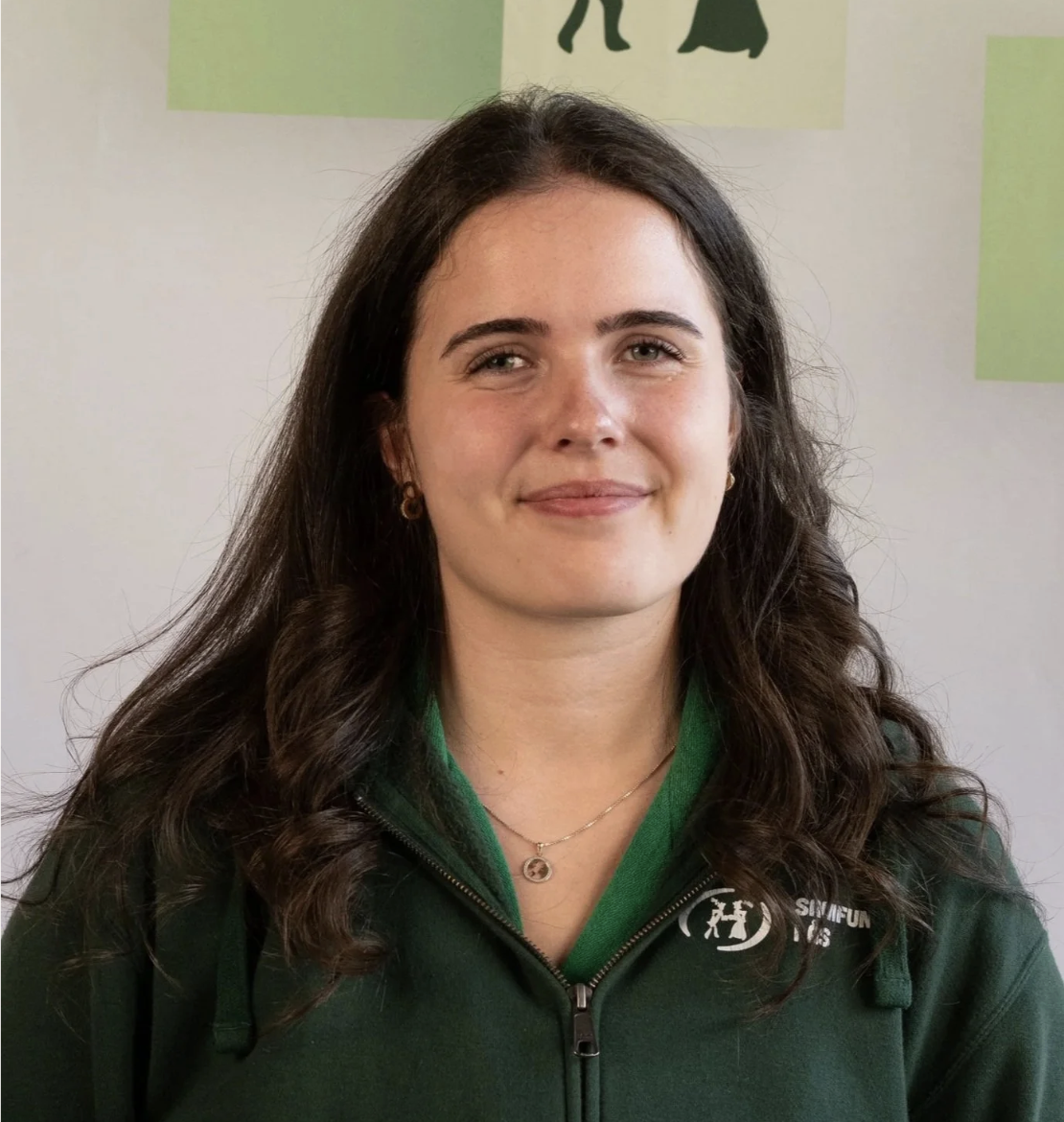
HR at Studentsamfunnet and UKA in Ås.
The volunteer’s reporting channel
The position of being the Head of Personnel is an independent position, but officially falls under the administration unit of the Studentsamfunnet and the party unit of UKA in Ås. The position is not elected, but is employed internally in the organizationby, among others, the incumbent HR, the Head of Parties, the Head of Bodega, supplemented by other elected officials in the organization. The role has a broad area of responsibility, but the main task is to be a contact person for committee heads and committee members, in addition to assisting elected officials. In conflict management, HR is involved as a “neutral party”. If you as a volunteer want to report an unpleasant experience, you can contact the the Head of Personnel.
HR’s area of authority is limited to Studentsamfunnet. In events that take place outside Studentsamfunnet’s area, for example at a house party, HR has little room for maneuver.
Speak up – report deviations!

NMBU’s whistleblowing secretariat
Serious and objectionable matters related to the study can be reported here. The whistleblowing system provides the opportunity to report both openly and anonymously about matters that are contrary to the law, internal guidelines or ethical norms, including harassment, discrimination, unacceptable behavior and other matters that may negatively affect the study environment. This may also apply to matters between students.
Matters that are mainly in the students’ private lives may fall outside the university’s follow-up responsibility, even though they may have consequences for the student’s study situation in such cases, the university’s role will often be limited to assessing support measures, providing advice or referring to relevant external bodies. rne instanser.

Student Life Coordinator at SiÅs
Somebody to talk to
The Student Life Coordinator at SiÅs acts as a contact person for students in difficult situations. Students can contact us no matter what the situation is, whether you have experienced something bad, are unsure of what to do, or just need someone to talk to.
The goal is to be a conversation partner and help to find a way forward. This may involve advice, support or help in contacting the right agencies, such as SiÅs’s housing department, the “Speak up – report a deviation!” system at NMBU, health services or abuse shelters. Sometimes it may also be to simply support the student in processing an unpleasant experience.

Angela
Help at a party
Angela is a system you can use during party nights at Studentsamfunnet if you have found yourself in an unpleasant situation and want discreet help to get out of it. To get help, you can ask a volunteer:
“Where is Angela?”
(or say something else that includes the name ‘Angela’).
This is a signal for the volunteers to get you away from this situation without further questions.