Our samfunn
Our samfunn
Intro to be read in a hoarse, British Attenborough voice:
Since the dawn of time, humans have been on the move, and migration has always been our most important survival strategy—whether to eat, reproduce, or find a new home. And for exactly the same reasons, students in Ås have flocked to Samfunnet since its founding in 1934. Countless generations of students have sought refuge from threatening syllabi, exhausting assignments, and adult responsibilities in the horizontal functionalist building. Over time, extensions have been added to shelter ever more asylum-seeking souls. Like blood through the arteries of the heart, we flow between the many rooms of Samf, sustaining its life and activity day after day, year after year.
But! Over the years as citizens of Samfunnet, we may become blind to the very details that make up the building itself, the stronghold of student life. As we drift about, more or less intoxicated, it is easy to overlook a functionalist staircase or two. So, the stage is set for a small architectural deep dive into Fløya, in search of treasures you may have missed!
Journalist: Laura Wanvik
Photographer: Jørgen Berg Yndestad
Translator: Oskar Nerheim
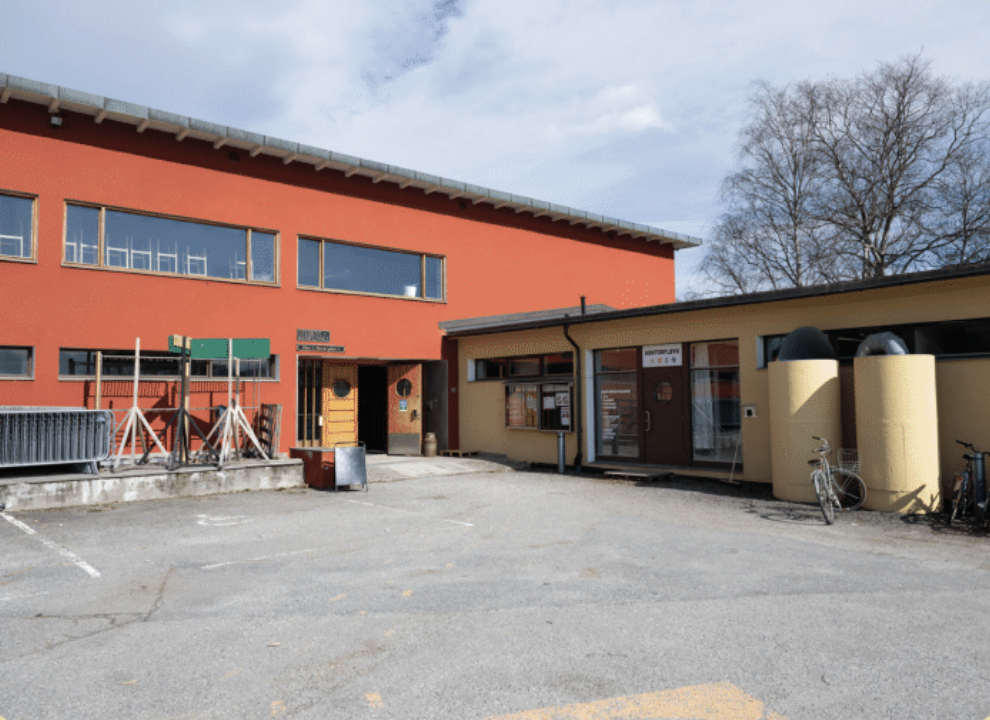
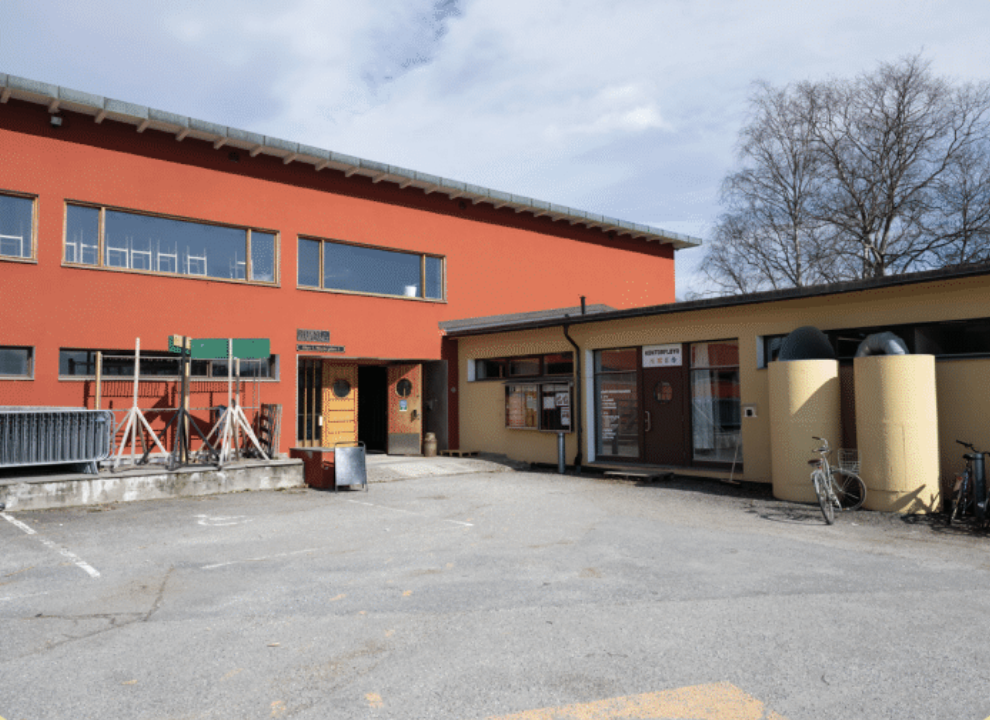
Samfunnet in red and yellow was designed by architect Thorleif Jensen and, as mentioned, completed in 1934. The building is considered one of the main works of functionalism in Norway and is listed as protected by the Directorate for Cultural Heritage in order to preserve its historical character. Functionalism dominated Norway in the 1930s, with the central doctrine that form follows function! In the case of Samfunnet, the function was to be a sanctuary for students, where engagement and volunteerism could flourish.
And perhaps that is why Thorleif included a rose garden in his original plans? For the first 30 years of its life, the Rose Garden was indeed an actual garden, but due to poor lighting conditions, not much flourished there (imagine forgetting to check sunlight conditions! amateur move).
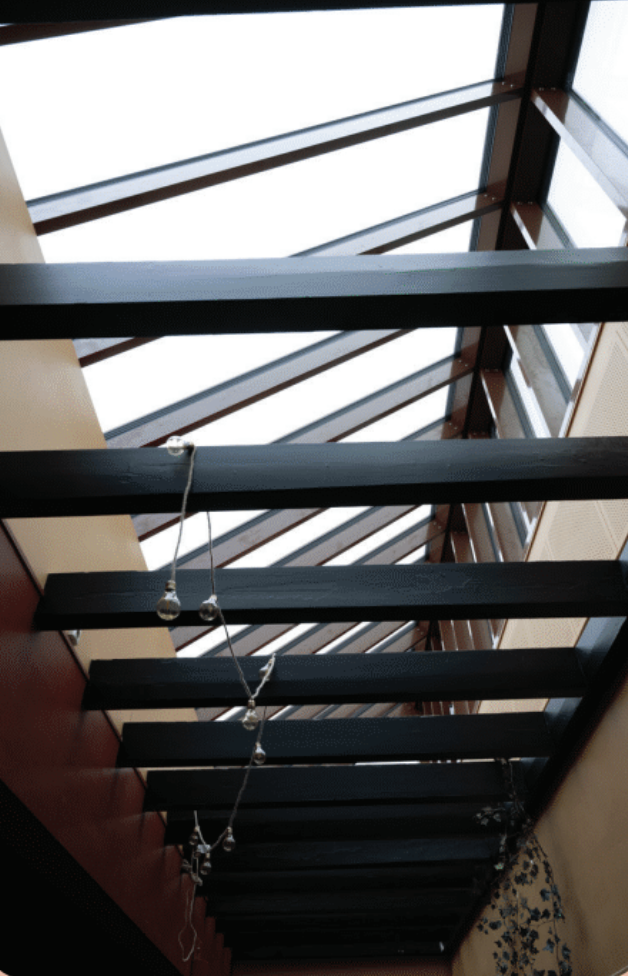
Therefore, when O.G. Samfunnet was merged with Aud. Max. in 1981, the garden was given a roof. The original open design is still easy to trace in today’s Rose Garden, as the roof retains the classic pergola structure from its days as a garden, with light streaming in through angled windows.
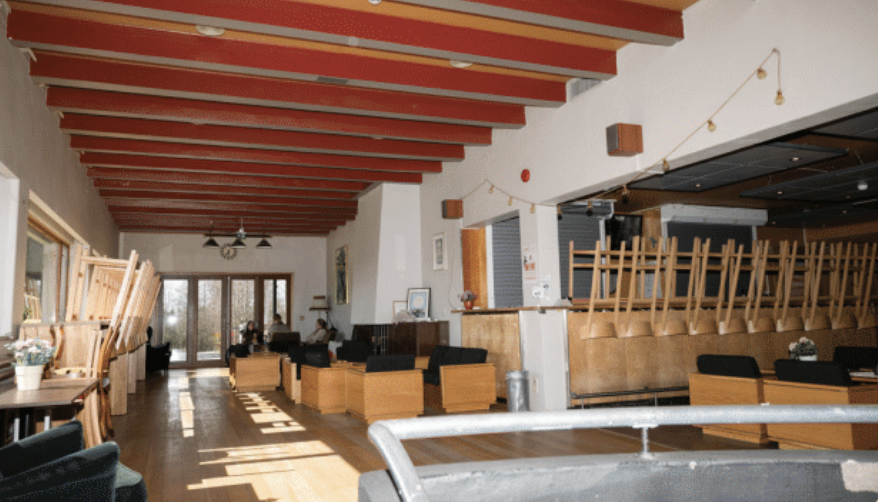
Moving on from the Rose Garden, we find Café Klubben, formerly just called (and, to be honest, what I thought it was still called) Klubben. In the past, Klubben was only open to members of Samfunnet and served as their common living room. What we today know as the Choir Room used to be a dining hall for daily meals—breakfast, dinner, and supper—with the kitchen located on the first floor. When Klubben was restored in 1996, it had suffered years of declining attendance because students preferred cooking their own meals in the space. With Snøhetta landscape architect Lars J. Bjerge leading the renovation, the venue transformed from a club into a café and received a major upgrade in both material quality and simplicity of design. Still, the original style has been well preserved, as is clearly visible in photos from the 1970s.
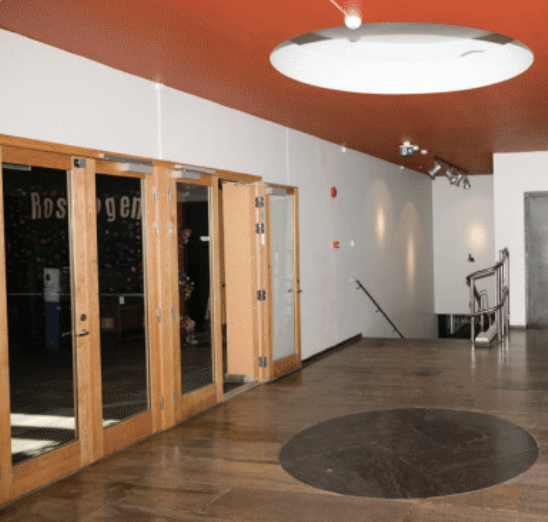
Further into the building, we find the quintessential functionalist circle-in-a-square ceiling at the entrance to Festsalen. Our man, Funkis-Jensen, was concerned with contrasts in both colors and shapes, which is clearly expressed in the ceiling as well as on the building’s façade. “He said: reincarnation, circles and squares,” to quote Ari Bajgora, or should we instead think of da Vinci’s Vitruvian Man when standing beneath it? The circle as the heavenly and the square as the earthly—with Samfunnet somewhere in between?
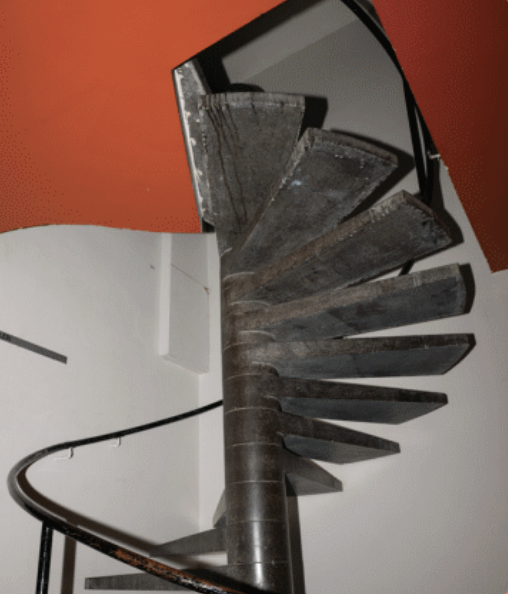
In any case, if you wish to get closer to the heavens, you can always run up the spiral staircase in the same entrance area, which leads to the gallery in Festsalen. This was the first of its kind in Norway! A spiral staircase of this type means that all steps are attached to a central column—the spindle—forming a corkscrew shape upwards. In many ways, this staircase is the very definition of functional architecture: aesthetics and efficiency in BEAUTIFUL harmony. It is everything: space-saving, optimal use of height, flexible placement, and a visually striking element. Just like the dream woman?
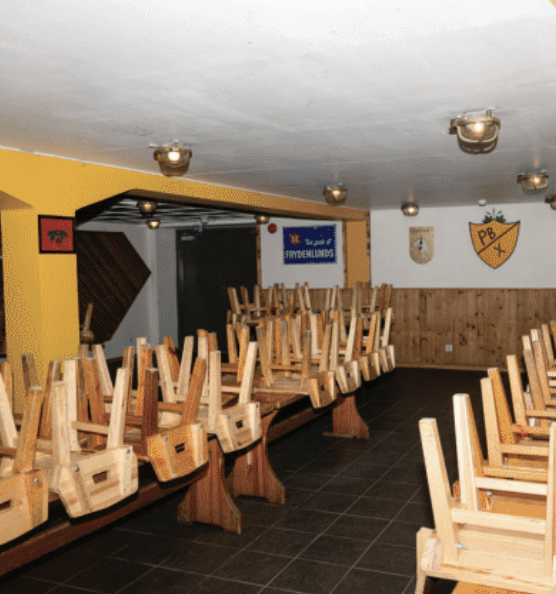
If, on the other hand, we take the stairs down from Festsalen, we find our beloved Bodega! And hey, did you know it was originally used as a root vegetable cellar for the kitchen on the same floor!? It wasn’t until 1952 that the room gained its function as a party venue, and it was later expanded to its current size after a major student volunteer effort in 1974, when they even laid the flooring themselves. The Bodega’s long wooden tables and low chairs are undeniably part of its character, and it is hard to imagine the space without these distinctive seating arrangements. Interior architecture is architecture too!
I would like to take this opportunity to quote a few lines from the Bodegaologist:
Welcome to a renewed Bodega,
A tavern grand as a virginal colleague,
Yet also experienced from days of old,
A gleaming diva in new footwear
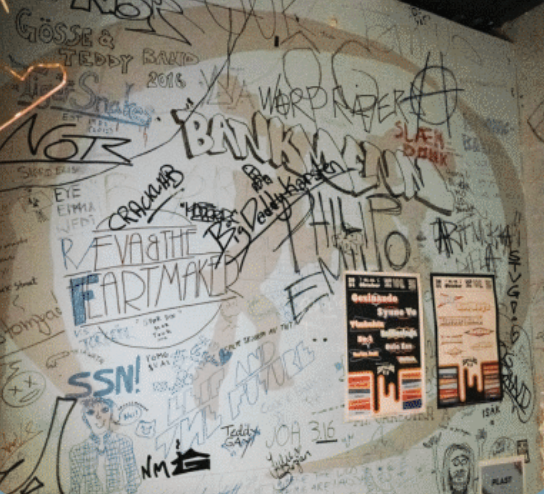
When we finally make our way to Anton Hjeltnes vei, we arrive at the newest part of Samfunnet! Aud. Max., as is well known, was completed in 1970, and the welfare facilities connecting it to O.G. Samfunnet came just under ten years later, in 1981. From the not-so-narrow Hjeltnes path, we reach the highlight of the tour: the secret backstage room, where all UKA and MiniUKA performers have prepared before facing the student crowd. Many have adorned the walls with their signatures, with the timeless Thorvald and Tora forming the backdrop. Further in, on the way to Halvors, we pass the bottle-cap version of our two lovebirds, something I have walked past weekly for two years without ever really noticing.
And with that, our little tour through good old Fløya comes to an end, but the hunt for hidden gems never stops! Keep your eyes open next time you head to Samf, and you may find that there are more devils in the details than you might think:)