DGB: Doing great broadly, or Den grønne studentbevegelsen?
DGB: Doing great broadly, or Den grønne studentbevegelsen?
Through Den grønne studentbevegelsen (DGB), the norwegian students are now climbing the barricades for the climate.
Journalist: Anna Gjems French
Translator: Helene Edith Nylehn
Photographer: Marie Tjelta
Together against oil
After the stone was droppen in Oslo in summer has the rings of Den grønne studentbevegelsen spread to Trondheim, Bergen and now also to Ås. Den grønne studentbevegelsen is an umbrella organisation with amongst others Gina Gylver as initiator, which was established in early summer with the intention of creating a broad alliance of students who care about the climate and environment.
Gylver tells Tuntreet that she herself missed climate activism when she started university. The climate activism is often large in elementary schools, but Gylver emphasizes the importance of maintaining young people’s commitment to climate engagement as they move on to university. She believes it is crucial that those who have the most up-to-date knowledge and are about to enter the labour market have an understanding and a desire to contribute to a climate-friendly future.
The media constantly points to a declining climate engagement among younger people and the defeat of climate issues in favour of wealth tax in the election, but Gylver can confirm that climate engagement is far from dead. She points out that it’s easy to feel lonely in one’s own commitment if one sits in small groups and broods over the problems. According to Gylver, both the media’s portrayal of declining climate engagement and a lack of gathering places that make you feel like a part of a big and powerful community to blame for many people feeling powerless in the climate struggle. This is some of the reasons she wanted to start DGB.
Gylver also describes that the climate engagement has been alienated for a bunch of students because it has been strongly associated with civil disobedience, extreme views and maybe a little weird style and differentness. She thinks all of these are important for the climate engagement, but that it is important to show that its not only these things that amounts to climate engagement. She wants for DGB to be a place where anyone can come with their climate engagement, nose ring or not, but that this is not where the most extreme actions will be arranged.
Now you might be wondering what the purpose of another environment and climate organisation is? An important cornerstone of Den grønne studentbevegelsen is exactly this, a movement. Tannum describes DGB as a sort of umbrella organisation for the environment organisations, without a membership fee and with a flat structure.
Smart heads and strong hands in green industries
Not only is the university the cradle of knowledge, it is also the baptismal front of student engagement. Gylver puts forth the climate issue as a forgotten issue on the student protest agenda, but that it is time for students to climb back on the barricades for the climate. She believes it is important that the students take the lead. She naturally points to this generation as having extra responsibility and opportunity, because they were the ones who went on school strikes, and it is also this generation that is rapidly entering the workforce.
On a local level, driving force behind Den grønne studenbevegelsen at Ås, Rebecca Tannum says that it is an important ambition to hold the university accountable for maintaining its self-appointed title of Sustainability university. What does it really mean to be a sustainability university? When the student movement was founded, two clear demands were put forward for the movement to fight for, that the oil companies should stop looking for oil and that all Norwegian universities should become oil-free. Although NMBU is not part of the academic agreement, research projects are being carried out with support from Equinor. Gylver believes it’s scary to allow Equinor into academia because it helps legitimate Equinor as a company that is committed to sustainability. She believes it is important to remember that Equinor is a company that operates with 90% fossil energy, even though they hide behind a marketing image that promotes them as a sustainability machine.
Equinor is still a popular employer for newly educated students, Tannum emphasises the importance of not tying all wise heads and strong hands to oil. She specifies that we as a society must realise that it is the earth that cleans us, feeds us and that we must work consciously to avoid destroying this basis for life.
Green pilsner
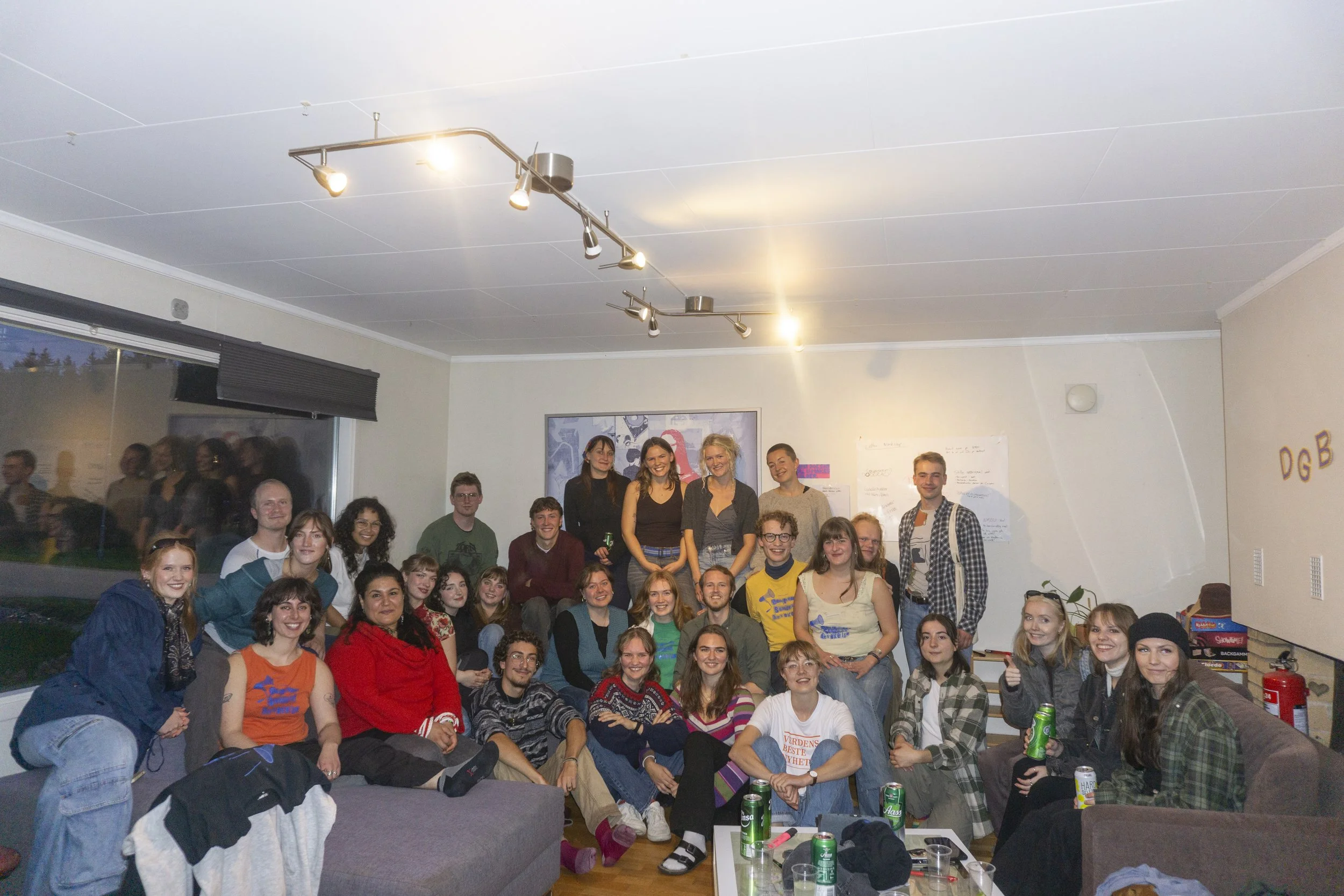
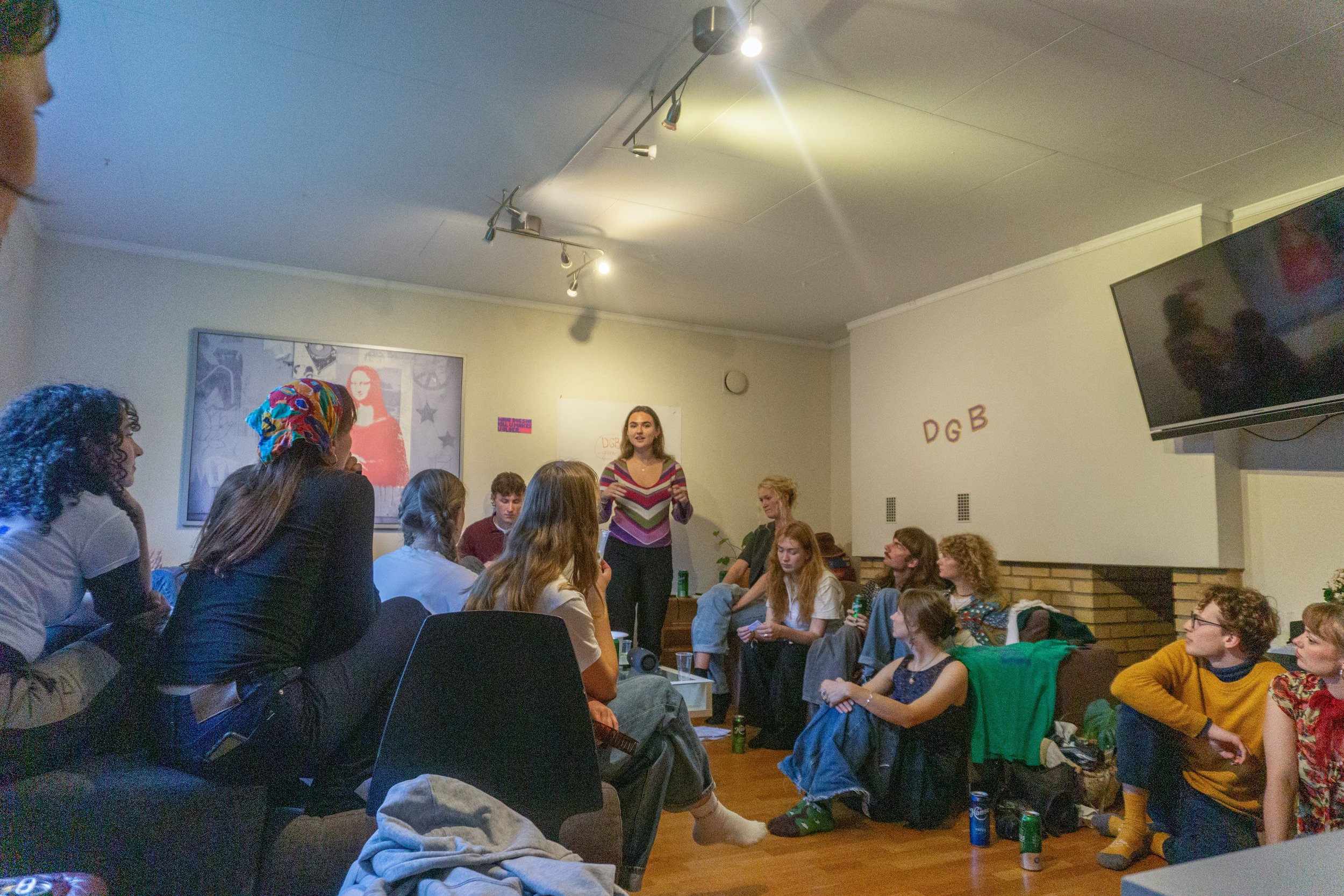
Friday the 19th of September climate-conscious students gathered in a cozy living room in Lyngveien. There they sat close together with a common desire for climate justice, a dawning hope for a sustainable future and a cold beer in hand. They had gathered to crack open a green beer together with Den grønne studentbevegelsen.
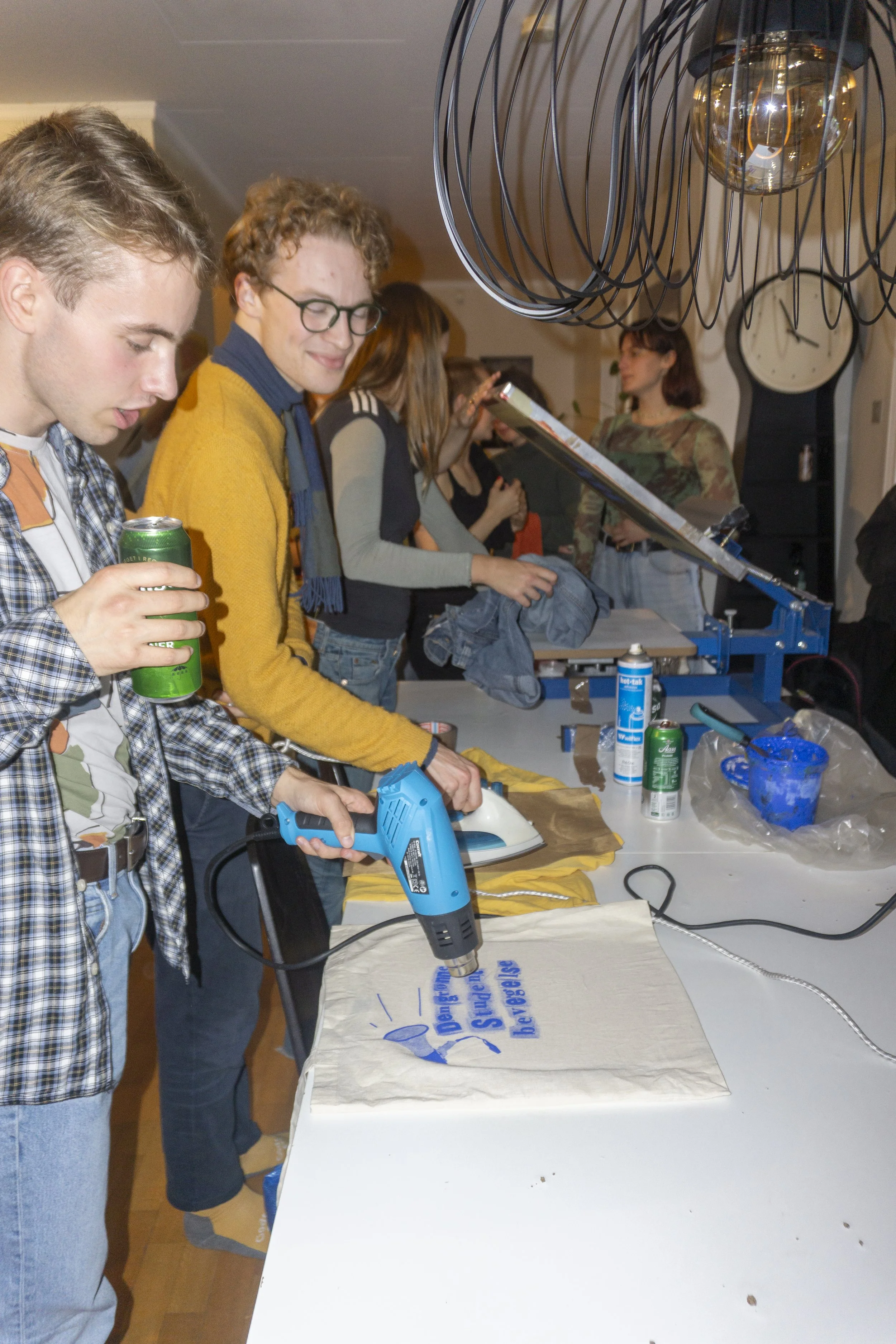
The Ås branch of the national movement was founded in the start of September and this meeting was their first gathering. On the agenda for the meeting were expectations, hope and merch-workshop. The mood in the room was unmistakable; the student rebellion is now taking up the climate cause.
It is clear from the Ås students’ expectations of the movement that there is a desire to work together and create low-threshold events, like a beer with friends that can break out into impulsive discussions about climate. It is a well-known fact that time is short and the calendar is full. That is why Den grønne studentbevegelsen has an ambition to promote a relaxed attitude “We want to have commitment without a knot in our stomachs” explains founder Gina Gylver. She also says that they try to have a flat structure without a leader, based on the philosophy of ‘Doocracy’. Anyone who has an idea and the desire to do something should be able to take the initiative to plan the events they want.