Women’s Health – What is it?

Women’s Health – What is it?
What exactly is women’s health, and why is it so heavily discussed in politics and media these days? Young women will, maybe unknowingly, have experienced what the word means through doctor’s appointments, contraceptives, and other health-related matters. Why is women’s health so important for the feminist movement? We will answer this question now.
Journalist: Silje Bie Helgesen
Translator: Aleksander Mæland Munkejord
Photographer: Synne Louise Stromme
Illustrator: Oda Braar Wæge
Women’s health is the health of women. The female body works, reacts, and sometimes gives signs and symptoms differently from the male body. The health care systems of today often consider all bodies to work the same way, regardless of gender. This can cause many women to get diagnosed incorrectly, getting medication that is not tested on women, and they risk not being taken seriously when their symptoms do not match the book. The world knows too little about the female body. The Norwegian Women's Public Health Association (NKS) have fought to resolve this lack of knowledge and have been doing research on the field since 1916. NKS manages 20-25 million NOK in research funding every year and are currently running 44 different research projects. We spoke with Elisabeth Swärd who is responsible for research at NKS to get an explanation of the effects of women’s health.
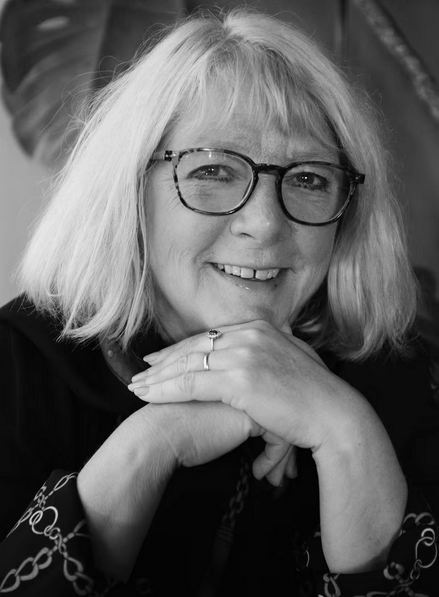
Elisabeth Swärd. Photo: Private
“Gender is more than biology.”
Equality is related to women’s health. “Everyone in Norway has the right to safe and good health care, and that is why we need knowledge about the differences between genders”, she explains. To have equal health care, women’s bodies cannot be treated like men’s, because they are not the same!
Unfortunately, there is a lack of gender equality within research and innovation. There is a lack of knowledge about illnesses that women suffer from, but it is also a real problem that women are not treated correctly for sicknesses that affect both sexes. She explains that there are large differences between the sexes when it comes to diagnostics and treatment.
We need to see the differences and the lack of research from a historical perspective to understand why things are the way they are
Historically, most medical research has been based on the male body. Women have also been excluded from medicine trials. Thalidomide was given as a remedy for nausea during pregnancies, and the side-effects were severe for the mothers and their children. This led to a fear of using women in medical research. In animal experiments, male animals have been used because menstruation messes up the experiments. Swärd emphasizes that research has improved, but that there are challenges in the medical care system, as we simply do not know enough about the female body.
Contraceptives as Power

Foto: Synne
The birth control pill came in 1967. The feminist movement worked hard to legalize contraceptives, so that women could decide for themselves when they wanted to get pregnant. Originally, the pill contained five times higher doses of hormones than the current one does. Due to a lack of research on women’s bodies, there were not enough knowledge about the possible side-effects. Swärd says that the pill probably would not have been approved today, but that it is a calculated balance between the positive and negative effects of contraceptives, and the goal of preventing pregnancies. The positive effects are related to sexual health, women’s rights, and the control over one’s own body.
To place this in the current worldview, we can see that women’s health and contraception are part of two of UN’s Global Goals. By giving women in developing countries the power over their own reproductive health, it contributes to improving the society as a whole. This is related to the right and opportunity to complete their education, to work for their own income, and the ability to break free from the role as a reproducing, stay-at-home individual. Swärd is clear about the fact that contraception and “family planning” are topics that are dismissed in societies dominated by men. This happens because there is so much power in having control over women’s reproductive health, and that is why contraception can help put the power in the right hands.
«We need to provide sovereignty over one’s own pregnancy.”
This is a heavily discussed topic in many countries, including Norway. It is evident that rights to one’s own body has seen a negative development globally. “Women had more rights in the 60s and 70s than they have today”, she says. This is proven in particular at UN’s meetings about the Convention on the Elimination of All Forms of Discrimination Against Women.
“There is not enough research on contraceptives and the dangers of their side-effects.”
While parts of the world are still struggling to provide women with contraceptives, Norway is one of the few countries that can take it one step further, and discuss and remedy the dangers of the side-effects. Swärd says there is a difference between short-term and long-term contraceptives. Short-term contraceptives like pills and vaginal rings cause higher risks of blood clots, cardiovascular diseases, breast cancer and other side-effects. Long-term contraceptives like IUDs and implants carry less of these risks. This is useful information when choosing contraceptives. Keep in mind that any hormones you get are hormones which already exist in the body, and they are natural.
The right to rule over one’s own pregnancy is still debated in Norway in 2022.
Norway is one of the countries in the world with the most equality, but even here we see serious debates regarding women’s choices of pregnancy. Why? Swärd explains that, once again, this is related to one thing in particular: power. Politics, rights and knowledge development are all topics that can be related to contraception.
She says that we need to keep in mind the differences between the genders, and that it is important to be a community actor with a voice, both in politics and in the field. The ministry has established a women’s health committee, of which Swärd is a member. Their task is to map out the knowledge gaps on women’s health in Norway and propose improvements. She points out that the challenges regarding contraceptives are among the topics they discuss.
“It is important that Norway, as a society with relatively decent equality, leads the way in a global perspective.”
We have conducted a survey at NMBU where 123 women have participated. 64.2 percent responded that they use contraceptives, where most use the pill, IUD, or implant. 75.9 percent experience negative side-effects, where menstrual disturbances, mood swings and reduced sex drive are the most common. Among those who had previously used contraceptives, 95.7 percent responded that the pill caused depression and mood-swings, to a large extent.
The Covid-19 Vaccine
“Women’s own experiences must be used as sources for knowledge; it takes too long before they are taken seriously.”
Swärd mentions that the Covid-19 vaccine is an example of this. Many women reported that they experienced pain and menstrual disturbances as side effects, but it still took a lot of time before the Institute of Public Health took it seriously. Situations like this are dismissed, claiming that menstrual disturbances are normal and are not necessarily related to the vaccine, like the Medicines Agency debated on “Dagsnytt 18” last summer.
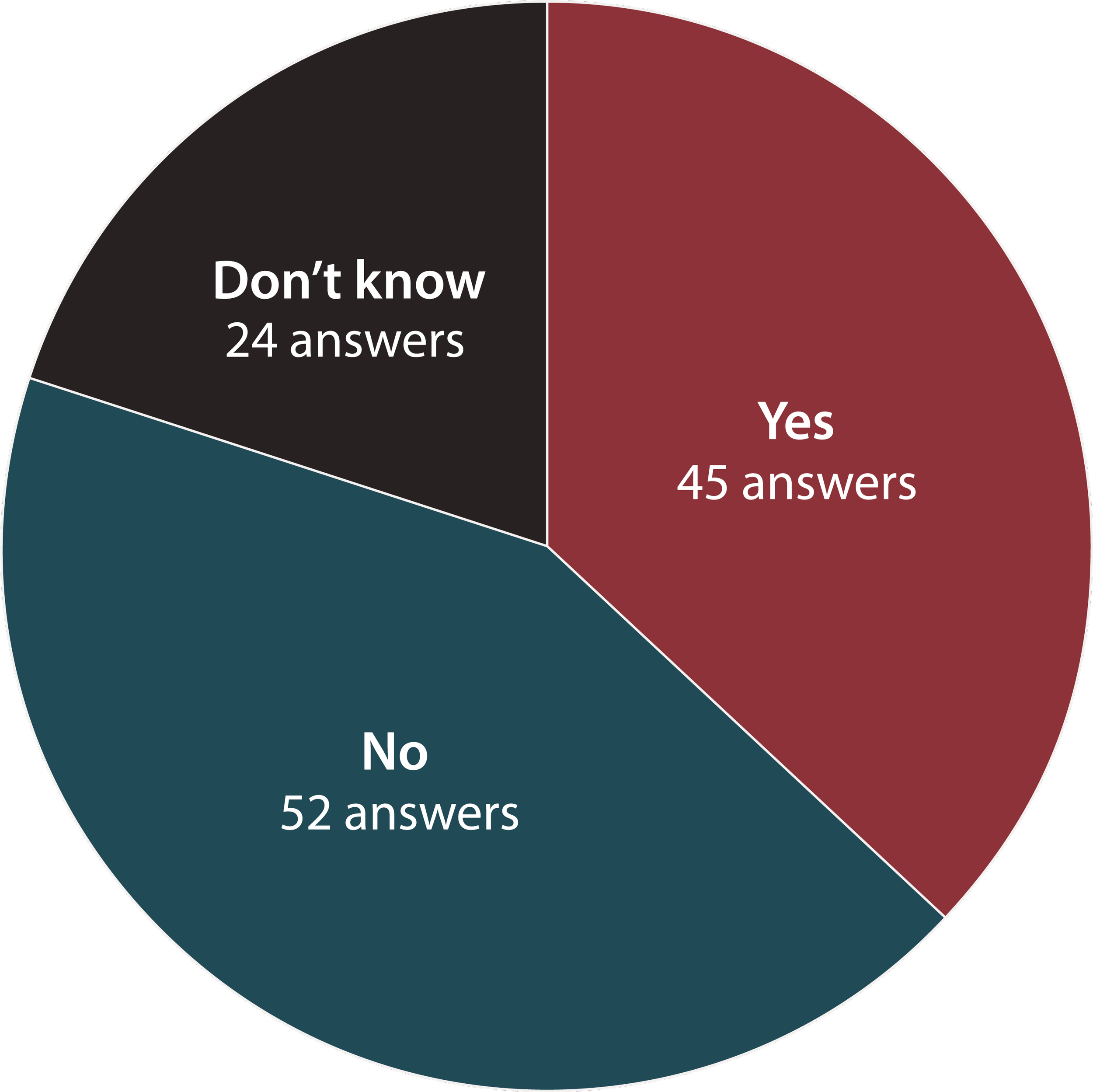
Have you experienced side-effects fromt he vaccine related to women’s health? 121 anwsers
In the survey, 98.4 percent responded that they have taken the Covid-19 vaccine, and most have gotten the third dose. 43 percent claim to have experienced side-effects from the vaccine. 75.4 percent have experienced menstrual disturbances, while 30.4 percent have felt strong pain in their uterus.
Swärd says that these pains and disturbances could have other causes, but that there is a lack of belief in that women know their own bodies the best. She says that we do not know if these side-effects will affect fertility, as we do not have enough research. There is still a lot that we do not know about the differences between the sexes, regarding the covid disease and the vaccine.
Stories from meetings with the health care system
I have struggled a lot with problems related to my period (stomach pain, extreme mood swings, think slightly bipolar). The doctors thought that the problems were just because of my psyche, and they assumed I was just being a sensitive woman. But after I started taking POP-pills after years of pain, on my own initiative, all the issues disappeared. I think that women’s health related to menstruation, not only during the period, but in the whole cycle, should be taken more seriously
I have not had any experiences where I have been treated badly or criticizably by the health care system
It took me 8 years toget diagnosed with endometriosis/adenomyosis. And then another 1 ½ year before a working treatment.
I had trouble getting believed when I wanted help because of pain. It was either trifled with, or the doctor meant it was my own fault and placed the responsibility on me. It took years and many doctors before I found one that actually listened and gave me the help I needed
I feel like there is so much we do not know about ours elves, that when it comes to asking questions to health workers, I don’t know what to ask.
I feel well taken care of and heard, but this can be because I have a female doctor and have been to a female gynecologist
In my experience, my doctor takes me very seriously no matter what. I once visited the youth health center in my municipality for a pregnancy test (for the first time in my life, that is), and the workers there seemed to assume this was something I had done a million times (maybe not that serious, but still a negative experience for me). After this I have only used my general practitioner, and the health station here in Ås since the doctor is in my municipality, but she always responds quickly to my inquiries and ALWAYS follows up if I need anything<3