Mental Health and Accomodation- How Should The University Meet People Who are Struggling?
-Mental Health and Accomodation-
How Should The University Meet People Who are Struggling?
How is it to attend university when you are struggling? Is a leave of absence the only solution, or should there be even more room for accomocation in education? Tuntreeet interviewed the student Kristin Stubberud, who is in this situation herself, in addition to the study advisor Anne Svinddal and the health center in Ås.
Journalist: Othelie Eliassen
Translator: Kjell Ertesvåg
Photographer: Juliette Ambrogi
Illustrator: Synne Louise Stromme
Constraints and Tight Frameworks
Kristin Stubberud hails from a creative sphere, and has studied at an art school. In addition, she has worked independently over several years with her own projects in film, text, photography and art. She came to NMBU in 2020, which turned out to be a completely different experience. Even though the digital education during covid worked surprisingly well in terms of flexibility, she quickly understood that basic structure of university was heavy and quite square. When life in addition became hard during the study period, this structure became even heavier to deal with.
In the spring of 2022, we suddenly turned back to traditional, in-person education. “It became too much for me. It was unnatural having to deal with 80% attendance demands in several of the courses, it honestly felt like returning to secondary school. I tried, but overstepped my limits, and it had consequences. I am not made for this kind of systematic structure. I need freedom and trust to trigger real curiosity. And I need it perhaps extra when I’m not feeling good.”
Contact With the Lecturers
After the summer of 2022, Kristin had to make a decision. The autumn semester consisted mostly of physical and mandatory attendance. “I noticed something didn’t work when the semester began. The train kept running but I felt left behind, utterly winded.” She therefore contacted a study advisor, which she found really helpful and encouraged her to keep an open dialogue with her lecturer. “I was originally thinking of taking a leave of absence, as this is the first solution presented. But after a few good conversations with the study advisor I decided to rather try and contact the lecturers in my courses.”

The lecturers’ reactions turned out quite different from one another. ‘Two of them were positive. I mainly felt they appreciated that I reached out. But the one bad experience, when I decided to be vulnerable, was a painful experience. It felt like running into a brick wall, where the answer was that they didn’t understand how this would work out, and I was once again urged to take a leave of absence instad of receiving facilitation.”
Kristin explained how it all made her feel like the problem. It felt like everyone managed just fine except her, she explained. “Alot of these feelings can be avoided if the lecturer choose to meet vulnerability with openness,” she says. “It feels like the lecturers are afraid of thinking outside the planned schedule.”
Can the University become more humane?
Kristin believes the system of judging everyone according to a uniform set of requirements is obsolete. During the pandemic we had a hybrid system. Why not bring the experience along with us? “We went through a disaster, it was a golden opportunity to make changes, but it doesn’t seem like it was taken seriously enough. There wasn’t room to process, reconsider and find back,” Kristin thinks.
If we take a look at the SHoT survey results for 2022, 35% of students say they experience psychological problems, and 20% have suicidal thoughts. 11% says they haven’t followed a normal progression in their studies. More than half of all students are also afraid of verbal examinations, or speaking up in professional contexts. To read more about the SHoT survey 2022, visit studenthelse.no.
Here, Kristin is not afraid to put the responsibility on the university: “Taking these numbers into the evaluation of the education is extremely important. It is clear that the rigid traditions at a university does not serve the new world we live in.”
The Way Forward
The rest of Kristin’s studies remain. “I’m still not sure if there is room for the person I am.” At least she has a doctor’s note for the absence this semester, and is still in contact with her lecturers.
Kristin comes with an open proposition for improvement: “Learn from other schools and institutions which have a more spacious philosophy. Look at what perspectives of human life that are the foundation. Mental health and learning is unavoidedly tied together. The university has an old-fashioned machine-like view of human life, it is so clear that this hard structure must crack soon. I thought covid would do that job, but a stronger hammer is clearly needed.” In addition she adds that she would love to join this work at NMBU, if she is invited.
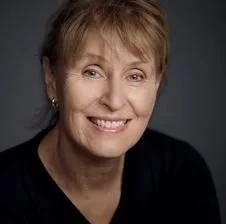
Anne Svindal. Photo: From nmbu.no
The study sdvisor’s point of view
Tuntreet has also contacted the study advisor Anne Svinddal in order to hear her perspective. Svinddal has worked for NMBU since 2001, and has been a study advisor since 2007.
The study advisor is aware that being a full-time student is a demanding task, and that the times we are living in only makes it worse. “It has become harder to be a student. The economy isn’t doing great, and hasn’t for a while. I believe it’s important to pay attention to the daily concerns of the students and change the lectures accordingly to better accommodate them.”
“My experience is that the lecturers wish that the students are physically present as much as possible. Digital lectures does not provide the same experience as having active students in the classroom,” Svinddal says. She all highlights that they understands that there are different need for accomodation, for example a doctor. There is great well-will and care among the lecturers. A lot of things can be handled within the demands in the learning objectives as long as there aren’t too many individual wishes – then it can quickly become impossible.
The students’ responsibility
Svinddal tells how she knows some people don’t have an easy time contacting the study advisor but she is happy when they do. “One possibility is to take direct contact with the lecturer. There is often cooperative work between the lecturer, the student, and me, and usually we’re able to resolve any problems. We can also give the students access to other services, like the student health station.”
The greatest challenge is those who aren’t able to reach out in the first place. “Those who retreat, pull themselves away, and disappear. They are the ones we are really trying to help.”
What could NMBU do?
Svinddal is occupied with constant updates and schooling of the study advisors, and informed us about a national study advisor seminar that recently took place. “The seminar carried undertones of the students’ mental health problems. Only eight study advisors from NMBU showed up, which I felt was far too few. NMBU must take the continous schooling of study advisors seriously, including us who have years of experience under our belts. We have to stay in touch with our assignment, but also keep our limitations in mind. It gives the impression of greater professionalism and makes us more confident at our jobs.”
Tuntreet has requested a comment on the matter from study director Ole-Jørgen Torp. He himself has not been invovled and do not know Kristin’s case, but says, “Svinddal has given good advice and councelling to the student, and has accounted for the challenge in these types of cases.”
Torp tells that “NMBU experiemce an increasing demand for individual follow-up and a need for more adapted accomodation. This is an important task that must recieve increased attention in the time forward, but it also demands resources.”
The study director also highlights that in 2021 an action plan was passed by the rector for universal design and strenghtening the learning environment 2021-2026. In the action plan, prioritized areas of effort are named as activites and measures that are to be implemented in 2023.
“For every activity/measure, there is a definition of which units (faculties and/or departments) that have the main and sub-responisbilty for making sure these are further concretised and followed up in order to reach the sibsidary goals,” Ole-Jørgen explains. “We focus a lot on this, but can always become better.”
The Health Station
One of the services given to students is the Health Center for Youths and Students in the centre of Ås. We sent them a request and asked about the rumors regarding the long waiting lists, and the difficulties of receiving help.
The health station says that nowadays there is a long wait for psychic evaluations. There are other factors at play, but the usual cause is “long-lasting illnesses in employees that can’t be replaces, an increase of a 1000 students that have to be supported by the same budgetary restraints, and students who don’t even attend their appointments, or drop out on short notice.”
Regarding the question of what NMBU could do, the health station said this: “We have been in contact with both SiÅs and NMBU in order to see how we can resolve this problem together in the best way possible. There will be a meeting on Friday this week we will discuss this, among other things.”
Regarding the difficulties in getting help they said this: “In principle, you will receive a spot in the queue for an evaluation appointment just like the majority of those who contact us.”
The health center brought up the Student Telephone: “It is an excellent option if you need help quickly, and you don’t have to wait in line here with us.” They also mentioned “Studenter spør”: “There you can read other students’ questions regarding their own health, and put down your own questions and receive answers from professionals.” Finally, they mentioned Studentlivssenteret that SiÅs created on the campus area.