Unethical use of AI at the “Sustainability university”?

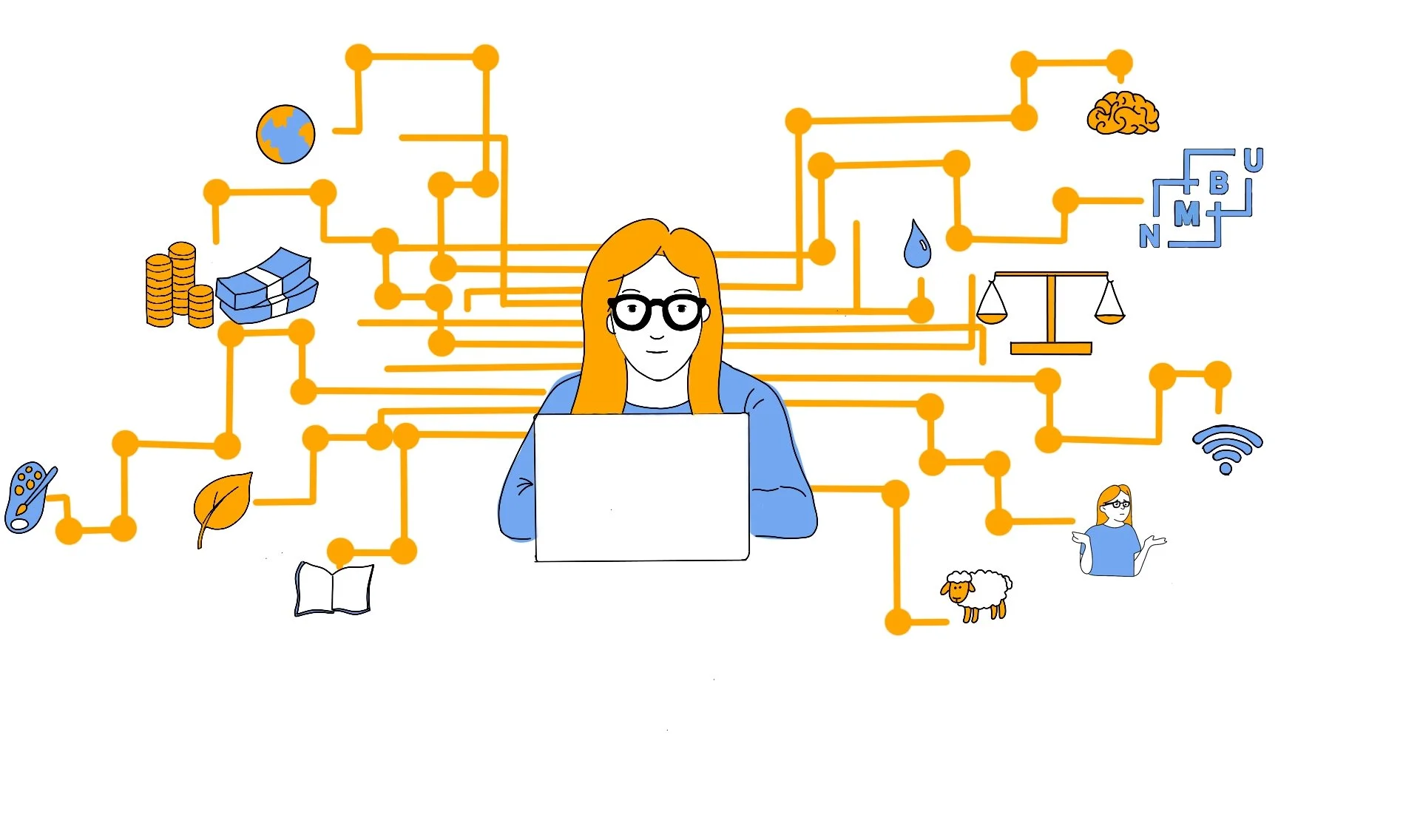
Unethical use of AI at the “Sustainability university”?
Reader: Yotam (Beny) Ben-Chaim
Illustrator: Marwa Nader
NMBU’s mission is to contribute to the well-being of the planet” Is the sentence written on this universitie’s website and that it is proudly announced to new students during orientation. But with equal pride, NMBU advocates and encourages the use of GenAI without decrying it.
For those who don’t know, all Generative AI (refereed to as GenAI) such as ChatGPT, Google Gemini and so forth are based on information scraped from the internet and other sources. Most of the material scraped is protected by copyright and use of it requires payment to the rightful owners of the information - usually the people who created it. However in it’s creation, the people who created it never once bothered to pay the people who’s information they used, and Sam Altman of OpenAI himself said they would have never been able to make it if they paid all the people they owed money to.
If that wasn’t enough to make the tool ethically reprehensible, there is also the environmental side. Almost all of these tools run on data centers that are either in 3rd world countries or other cheap-land areas, and the water it uses for cooling is typically siphoned from local sources, taking water from improvised communities and destabilizing ecosystems.
And to add salt to the wounds, the more people use these tools, the more the companies worsen their behavior; just the other week Google scaled back from 100% renewable energy and changed the goals & policy only because of use of it’s Gemini tool and how energy intense it is.
Just because those tools are useful and accessible does not mean they should be used. Every time they are used, it serves as a normalization for using a tool which is hypocritical to humanity persisting, improving the environment, and intellectual rights. Its use says: “it’s okay to steal from other people if the product of the stealing is beneficial enough to me”.
Shouldn’t academia, the place preparing the people of the future and the place creating information for the general public, the place that should be smartest and most cutting edge, be leading by example? What does it say about a university that declares proudly on it’s website that it advocates a tool that it knows works contrary to that?
I think we shouldn’t casually treat their existence as an option, instead reserving it for specific use cases instead of something as easy as a web-search. They should come with hazard markings and warnings in the same way cigarettes do.
Next time, think before you use these tools. Consider which author or artist you like you are condoning stealing from and the animals that may die from lack of water.